Well-water treatment cost depends on the test results and the work needed at the property. Two tanks in one quote and four in another may address different concerns. Compare the testing, source work, equipment, installation, and maintenance separately before comparing totals.
If a bid leaves testing or drain work blank, ask whether it is excluded or not yet priced. A cheaper headline total may cover less work. Give bidders the same results and household requirements so their proposals can be compared fairly.
Begin with the problem statement
Write the concern in plain language. Recurring orange deposits, an odor pattern, a specific laboratory finding, or a change after well work. Keep observations distinct from measured results. A contractor should be able to see which part of the project is based on evidence and which part still needs investigation.
CDC recommends annual private-well testing for total coliform bacteria, nitrates, total dissolved solids and pH, with other testing guided by local conditions. An unusual event or safety concern may call for additional action. Contact the laboratory or local health department about the right panel rather than treating a single nuisance test as a complete check.
Use a laboratory with the appropriate certified scope. The EPA directory points to state certification programs. Ask for a written sampling plan when the project needs more than one location. Testing before and after equipment serves a different purpose from testing at one convenient faucet.
Split the budget into five parts
| Project part | Examples of questions to price separately |
|---|---|
| Investigation | Which tests, inspections and professional visits are needed? |
| Source work | Does the well itself require assessment or remediation? |
| Household treatment | Which stage addresses each established need? |
| Installation | What plumbing, drainage, power and access work is included? |
| Ownership | What consumables, testing, service and replacement tasks recur? |
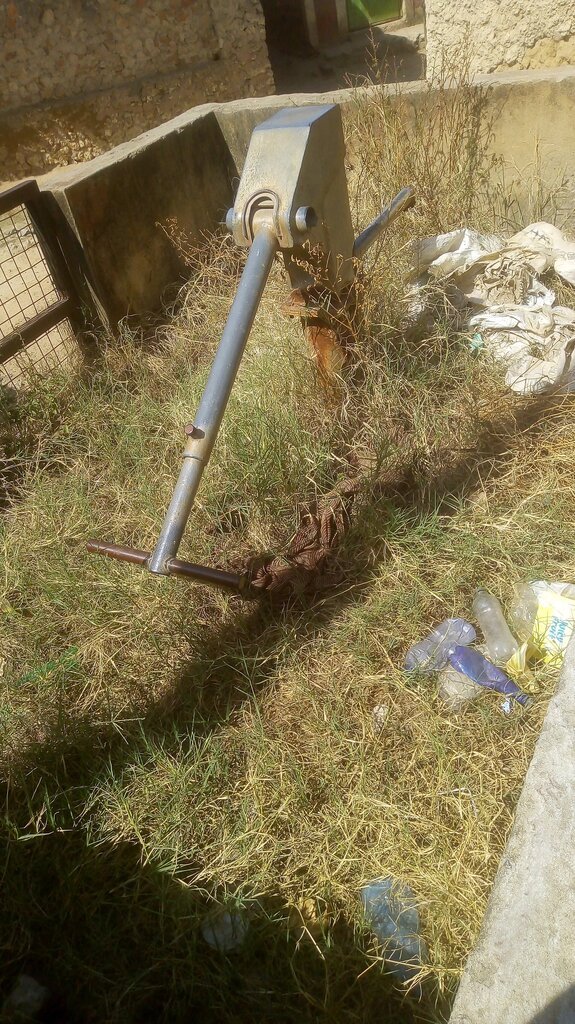
The photograph above is a documentary image of a well pump in a different setting. It isn’t a proposed US installation, a condition report for your well, or evidence of what your project should cost. The budget must follow the actual inspection and design, not a feature photograph.
Source work and household treatment should remain separate lines even if one company proposes both. If another bidder offers only equipment, the separation makes the scope difference visible. Otherwise the lower quote can appear attractive simply because it leaves part of the work unanswered.
Give each proposed stage a reason to exist
Ask the designer to connect every stage to a finding, an equipment requirement or another explicit purpose. A sequence with more tanks isn’t automatically a better design. Nor does a compact package prove that several different concerns have been addressed.
The Water Quality Association’s residential design guidance begins with water information, treatment scope and household demand. For your quote, request the same chain in writing. Incoming conditions, intended outcome, selected model, operating requirements and how the result will be checked. If a stage is there to support another stage, that role should be clear.
For example, a proposal might include a pretreatment stage for a downstream device. Ask what condition makes that stage necessary and how its maintenance affects the rest of the arrangement. Don’t remove it from the budget just because it doesn’t address the original complaint directly.
Use a scope matrix to compare bidders
Set up a sheet with the project lines on the left and one column per bidder. Enter “included,” “excluded,” “not answered,” or the actual quoted amount. Avoid entering zero where the bidder has simply not supplied a figure. An unanswered item is a question, not a free service.
Include laboratory testing, exact equipment models, installation labor, drain work, electrical work, removal of old equipment, start-up, owner training, follow-up sampling and warranty support. Add any well work separately. Ask about travel charges or access assumptions where they are relevant to the property.
A meaningful comparison also identifies who coordinates the project. If two trades are required, who checks that their work meets the equipment requirements? Who is responsible for start-up after both are finished? Coordination is part of the scope even when it isn’t a line called “coordination.”
Build the recurring-cost calendar
Request a model-specific list of consumables and service tasks. Depending on the design, there may be cartridges, salt, lamps, chemicals, media service, testing or other items. Don’t apply a schedule from another product simply because the two systems look similar.
For each task, record the trigger, expected responsible person, part number if applicable, estimated cost and where the estimate came from. Some entries may be based on elapsed time, others on use or a performance check specified by the manufacturer. Keep those distinctions intact.
Create a yearly budget using your actual quoted items. Then add foreseeable one-time work separately. A worksheet can compare a five-year planning period, but it should state that the period is a choice for comparison rather than a prediction of equipment life.
Decide what must happen before the purchase
A project can have useful stages. Gather records, complete testing, agree on the design, confirm site work, install, verify, and hand over maintenance instructions. Ask which steps can change the equipment selection. Buying early to capture a discount can create a mismatch if later findings alter the design.
For a safety-related finding, ask the local health department and qualified professional about immediate actions and suitable follow-up. A project budget isn’t permission to continue using water contrary to their advice. Keep any interim arrangement outside the permanent equipment comparison so its cost and role remain clear.
Use our well-water treatment planning guide for the broader design conversation and laboratory report guide for organizing results. If iron or odor treatment is proposed, the iron and sulfur guides supply more focused proposal questions.