A new treatment system is an installed piece of equipment. Whether it meets the intended water-quality goal is a separate question. Verification connects the specific concern, the operating arrangement and an appropriate measurement instead of relying on a new cartridge or a reassuring sales demonstration.
This guide is a planning framework for household treatment checks. It does not supply a universal commissioning procedure. Agree on the actual method with the laboratory, equipment provider and relevant health authority, using the manufacturer’s instructions and the household’s documented concern.
Name the job you want to verify
Start with a sentence specific enough to test. “We want to check the treated kitchen outlet for the identified constituent” is more useful than “we want to prove the filter works.” A system can have several stages serving different purposes, and one measurement may not evaluate all of them.
Keep the original laboratory report or supplier information in the file. Identify which entry prompted the treatment decision. If the objective is an aesthetic change, say that; if the objective involves a health-related contaminant, make that distinction clear to the laboratory and professional interpreting the result.
The CDC home-filter guidance emphasizes choosing treatment for the relevant concern. Verification should follow the same principle. A test selected because it is convenient may not answer the question that justified the purchase.
Identify the arrangement actually installed
Record the complete component models, replacement parts and treated outlets. If the delivered equipment differs from the proposal, ask the provider to update the documentation. A test record should describe the actual installation rather than a design that was discussed but never installed.
Keep the operating instructions, performance documents and handover notes together. Ask which conditions need to be established before a verification sample is collected. Do not invent a flushing time or startup sequence by combining instructions from several unrelated devices.
If a stage can be bypassed, ask a qualified professional to explain how the intended sampling arrangement will be confirmed. This article is not a direction to move valves. The objective is a clearly identified sample, not amateur experimentation with unfamiliar plumbing.
Agree on sampling points before ordering bottles
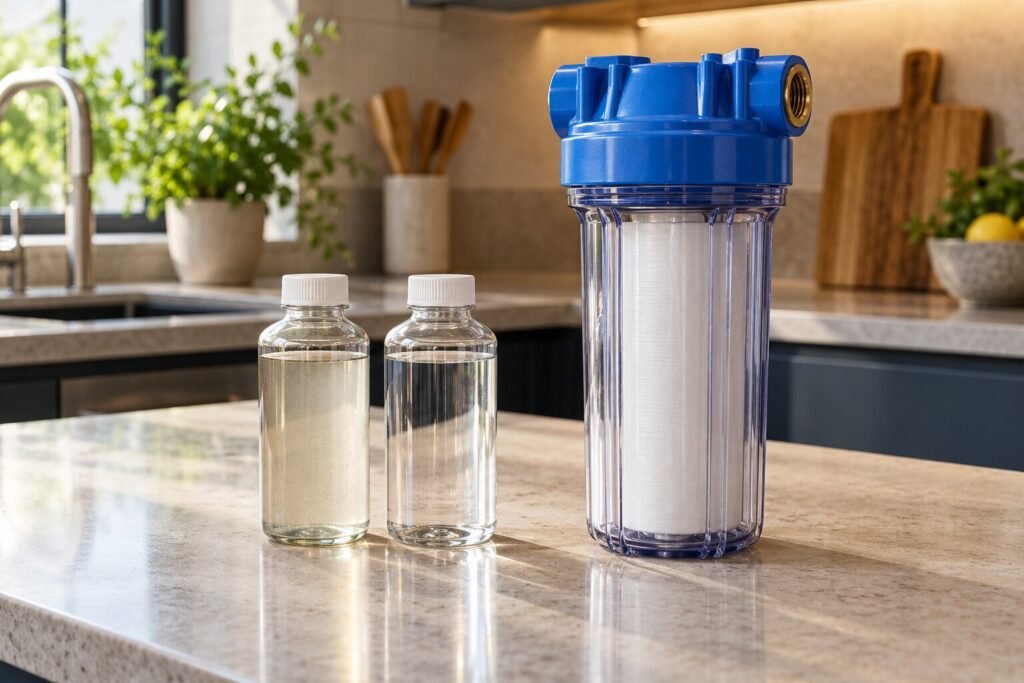
A feed-water point and a treated-water point can help answer different questions. Ask which points are appropriate for your verification goal and how they will be identified in the report. Avoid vague labels such as “before” and “after” without a description of where each bottle was filled.
A hypothetical plan might label one sample as the identified untreated supply and another as the designated treated drinking outlet. The laboratory and provider then confirm whether those points suit the analysis. That is more useful than collecting from two convenient taps and later guessing their relationship.
Explain whether household equipment changed between the samples. A comparison needs enough context to be interpreted. If the conditions were not comparable, keep that limitation in the record instead of presenting the result as a controlled product test.
Ask the laboratory to define the method
Use the EPA laboratory directory to locate the relevant state contact. Ask whether the laboratory is certified for the drinking-water analysis you need and which instructions apply to each sample.
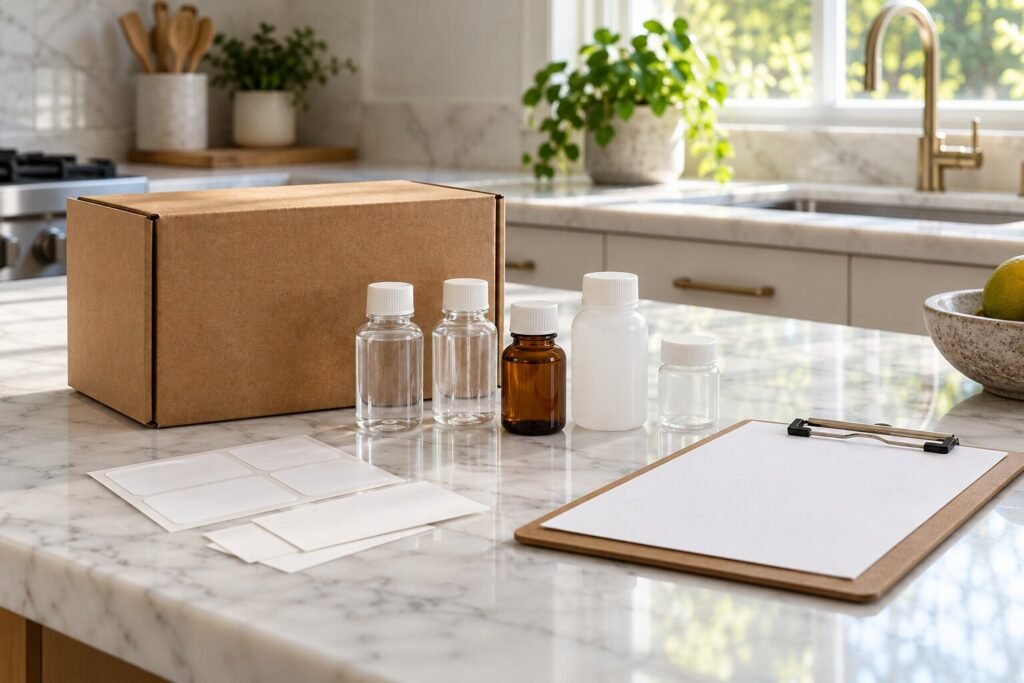
Request the container, preservation, collection and delivery requirements in writing. Different analyses can have different procedures. Do not substitute a meter reading for a specific laboratory result simply because both involve a number on a display.
Ask which reporting limits and units the laboratory will use. The professional interpreting the result should know whether the method can answer the intended question. This conversation is especially useful before paying for a panel that contains many unrelated entries but omits the actual target.
Set interpretation responsibilities in advance
Name the person or authority who will decide what the verification establishes. Ask which reference or objective will be used and what happens if the result is uncertain or unsatisfactory. A report delivered without an interpretation plan can leave the household unsure whether to keep using the arrangement.
If interim precautions were given, ask the issuing authority what evidence is needed before changing them. Do not assume that equipment installation, a paid invoice or a laboratory appointment ends those precautions. The relevant decision must follow the agreed evidence and advice.
Keep roles clear. The installer knows the arrangement; the laboratory knows the analytical method; a health authority can provide relevant health guidance. One person may cover several roles, but the file should state who is responsible for each decision.
Avoid overclaiming from a single successful result
A satisfactory result describes the sample and conditions recorded in the report. It does not promise the same performance forever or independently validate every component. Continued operation still depends on the applicable maintenance and verification plan.
Do not describe a household sample as an independent product review. Unless a formal evaluation actually occurred, state what was checked: the identified outlet, date and analysis. Keeping that language precise helps the next owner understand the evidence without mistaking it for a broader certification.
If you share information with a service provider, include the complete report and sample record. Cropping away qualifications or replacing a below-reporting-limit notation with “zero” can change the meaning. Ask the laboratory to explain unfamiliar symbols before summarizing them.
Put future checks alongside maintenance
Ask the relevant professionals what future checks are appropriate and what events should prompt earlier contact. A change of equipment, an unexpected result or a significant source-water event may raise a new question, but this blog cannot supply a universal schedule for every installation.
Store the agreed plan beside the service calendar. Each entry should identify the task, responsible person and record expected when it is complete. “Check filter” is too vague if the actual obligation is replacement plus a separately arranged water analysis.
Keep the evidence after each service event. A receipt can show that a part was purchased; it does not necessarily show which part was installed or whether the intended follow-up occurred. Ask for clear service notes and link them to the current equipment identity.
Compare what two quotes include
When comparing treatment proposals, ask whether startup verification is included, what analysis it covers and who pays for any required repeat. Put excluded laboratory work on a separate budget line rather than assuming it is contained in the installation price.
Ask whether the provider supplies a written sample-location description and a maintenance plan. A lower price may omit work another quote includes. That difference should be visible before you decide, even when both providers propose apparently similar equipment.
Our treatment-cost guide can help organize the project budget. Use the same concern and laboratory information for each provider so that the comparison reflects the same job rather than different assumptions.
Build a concise handover record
The cover sheet can contain five entries: treatment objective, equipment identity, designated outlets, verification report and next responsibility. Behind it, keep the original analysis, manufacturer instructions and service documents. The cover sheet helps navigation without replacing the evidence.
Mark outstanding tasks as outstanding. If the report has not arrived, do not write “verified” because the sample was collected. If a professional needs to interpret a qualified result, keep that status visible until the discussion occurs.
Verification is most useful when it forms a clear chain from concern to measurement. That chain helps you understand what the arrangement has demonstrated, what it has not demonstrated and what must happen to keep the household record current.
Sources and further reading
Created with AI assistance and linked primary sources. We have not inspected your home, tested your water, or independently tested products. For safety concerns, consult your local health department or a qualified professional.
Read our editorial policy →