pH describes how acidic or basic water is. Alkalinity describes its acid-neutralizing capacity. Hardness mainly reflects dissolved calcium and magnesium. These properties can appear together on a report, but one reading doesn’t substitute for the others.
Hardness and alkalinity may both be expressed as mg/L as calcium carbonate. They still describe different properties. Keep the full label beside the result, and don’t treat a pH number as a concentration in the same units.
Put the three terms on separate lines
pH describes how acidic or basic water is on the pH scale. Alkalinity concerns its ability to neutralize acid. Hardness usually describes dissolved calcium and magnesium. The USGS water-quality resources and hardness explanation provide the underlying definitions.
The practical lesson is that one result can’t stand in for all three. A hardness test doesn’t provide a full description of water chemistry. A pH reading doesn’t tell you the hardness concentration. Keep those boundaries visible when someone says that a single test shows the water “needs balancing.”
Ask for a written statement of the property being discussed. If a proposal switches from hardness to pH without explaining the connection, pause and request clarification. The person providing the proposal should be able to describe which result supports each part of the plan.
Keep the units and reporting basis
A report may express hardness or alkalinity on a stated basis such as milligrams per liter as calcium carbonate. That basis is part of the result. Don’t discard it while copying numbers into a shopping worksheet. Ask the laboratory to explain unfamiliar notation rather than interpreting the shorthand from memory.
pH is reported differently from a concentration result. The displayed values shouldn’t be compared as if they share a common unit. A pH value of seven and a hardness concentration of seven aren’t two competing measures of the same condition.
Your worksheet can have columns for property, value, complete unit or basis, sampling point, date and question. Leave the interpretation column blank until the meaning is clear. A tidy spreadsheet with incorrect labels creates more confusion than a notebook containing complete information.
Begin with the household question
If the concern is recurring scale, describe where you see it and how you identified it. If the concern is plumbing corrosion, identify the observed change and ask a qualified professional what investigation is appropriate. Neither observation should be converted directly into a chemical prescription.
Write one question at the top of the file: “What explains deposits on these fixtures?” or “What evidence is needed before changing treatment?” That keeps testing attached to a purpose. A broad panel may be useful in some investigations, but the size of the panel doesn’t determine whether it answers your question.
Keep household observations factual. Record the location and timing of a stain without assigning its cause. “Blue-green mark appeared near this drain” is a better starting note than “our pH is destroying the pipes” if no investigation has established that conclusion.
Ask how and where measurements were made
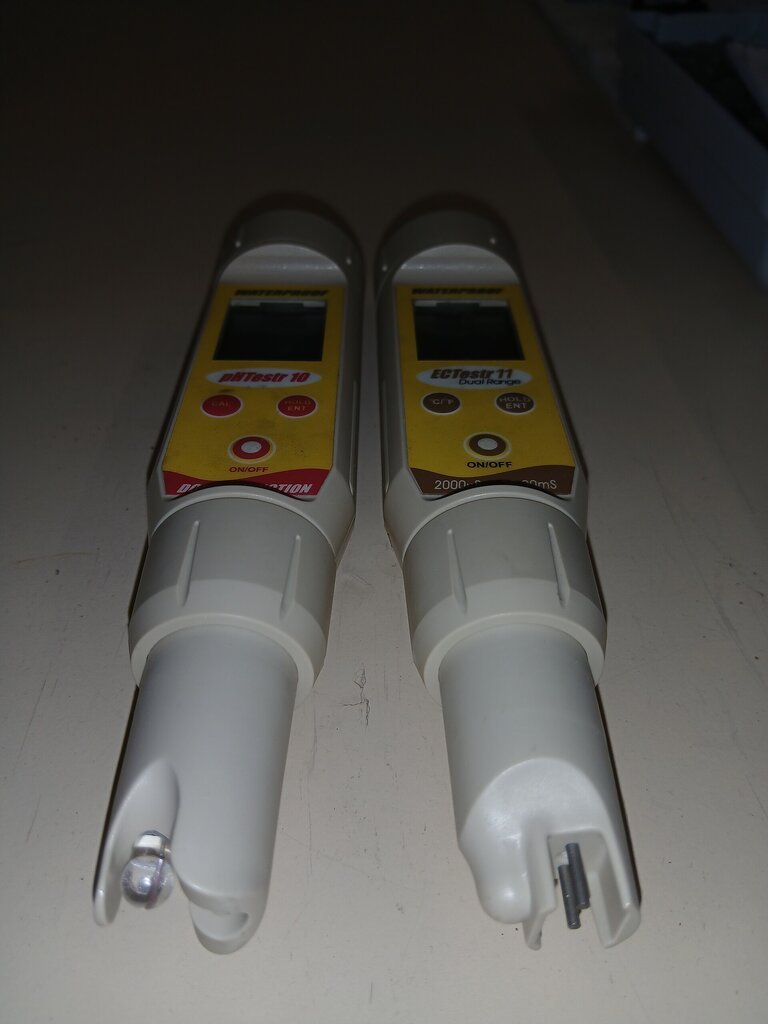
The meaning of a result depends partly on the sample and measurement method. Ask whether a value came from a field instrument, strip or laboratory analysis, and whether the collection instructions were followed. The EPA home-testing guidance offers context for choosing testing assistance.
A hypothetical homeowner might have a strip result from a kitchen tap and a laboratory result from a different point in the system. Before treating the difference as a contradiction, compare the sample locations and the methods. The two records may not describe the same water under the same conditions.
If a parameter must be measured promptly or under particular conditions, the laboratory should tell you how to arrange that. Don’t store a jar indefinitely and assume every later measurement describes the original tap condition. Ask for the procedure that suits the actual analysis.
Separate comfort concerns from health questions
An aesthetic or operational concern and a health-related contaminant question can coexist. Resolving one doesn’t automatically resolve the other. A softer feel doesn’t establish reduction of a particular harmful substance, and a pH result isn’t an all-purpose safety certificate.
EPA’s secondary-standards guidance gives context for properties associated with taste, appearance and equipment effects. Read that alongside any locally applicable advice. Avoid turning a general reference into a diagnosis of your own installation.
When seeking advice, separate the sentences: “We have this measured property” and “We are concerned about this possible exposure.” That gives the laboratory or health department a chance to identify what evidence is still missing rather than accepting the first property as an answer to the second concern.
Read a treatment proposal property by property
For each proposed component, ask which measured condition it addresses. Request the expected operating range, maintenance obligations and verification method. A plan should explain why the chosen equipment fits the source water and household use, instead of simply listing several tanks.
For a softener conversation, use our softener decision guide and keep hardness separate from the rest of the report. For a broader arrangement, our system-order planning guide helps organize questions without pretending there is one sequence suitable for every home.
If a seller proposes more than one stage, ask what changes after each stage and which results will be checked. The answer should define a practical handover record. An unexplained before-and-after photograph isn’t equivalent to a documented measurement plan.
Sources
- USGS , Hardness of Water
- EPA , Home Drinking Water Testing
- EPA , Secondary Drinking Water Standards
- USGS , Water quality
This guide is AI-assisted and includes reference links. We haven’t tested your water or independently tested products. Follow local health advice and the instructions for your own equipment.
Read our editorial policy →