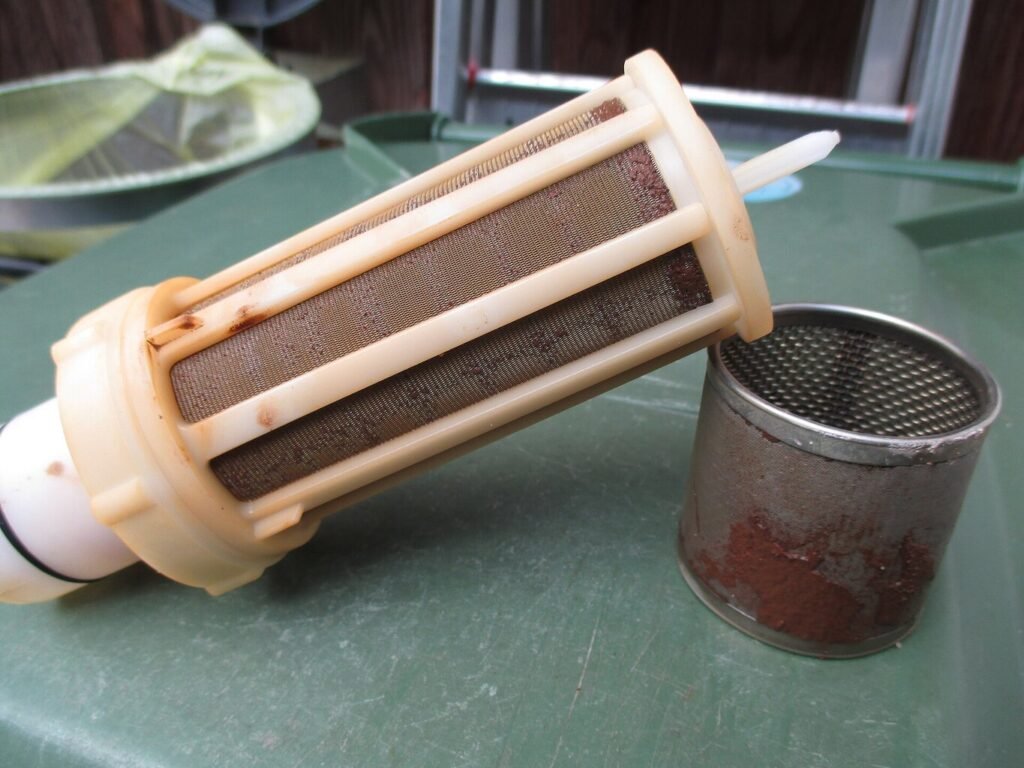
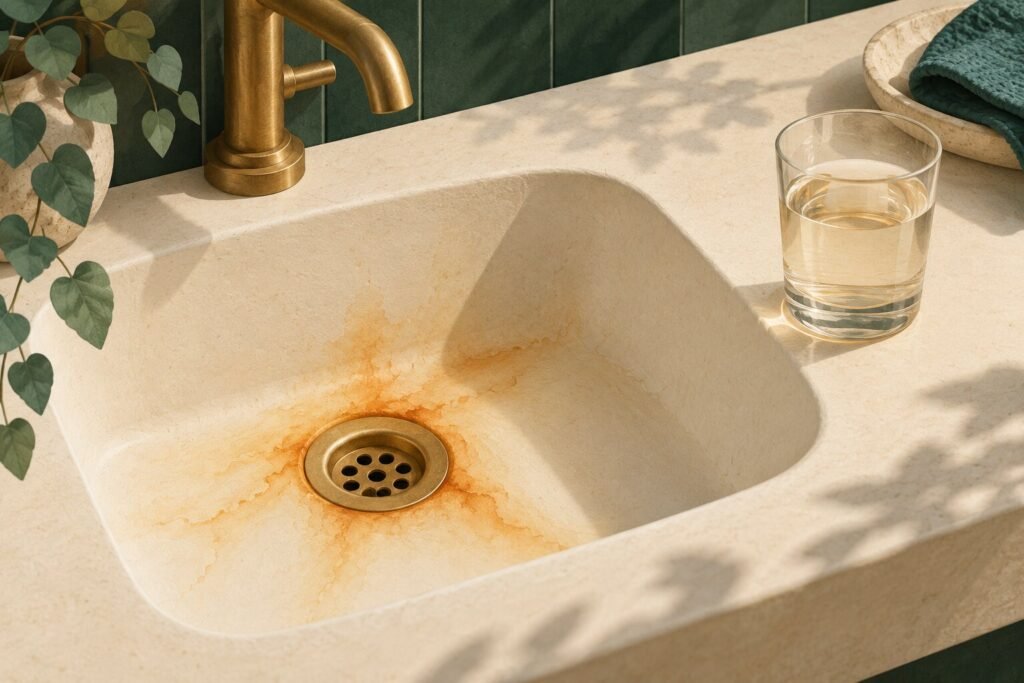
Orange stains can suggest iron, but they don’t tell you which treatment will work. Dissolved iron and iron particles behave differently. A sediment cartridge can catch suitable particles, while dissolved iron may need a different process before it can be removed.
Give the installer a water analysis and explain when the discoloration appears. A sample taken after an existing filter may not describe the raw water entering a new system. Keep routine well safety testing separate from the staining investigation.
Notice when the color appears
Water containing dissolved iron can appear clear when drawn and later develop discoloration as conditions change. Other water may already contain visible rust-colored particles. These observations can help describe the problem to a laboratory or treatment professional.
Write down whether it happens at every tap, only on hot water, or after the house has been unused. Also note any plumbing work. These are clues about where to investigate, not a home test that identifies every source of staining.
Test before selecting a treatment method
The Minnesota Department of Health explains why different forms of iron can require different approaches. A laboratory and qualified professional can help decide which measurements are useful for your situation, including other aspects of the water that affect treatment performance.
Explain any existing softener or filter when arranging the sample. A result taken after treatment may be useful for checking that equipment but may not represent the incoming supply. If you use a private well, keep the broader well-water testing routine in place as well.
Why one “iron filter” isn’t like another
A sediment filter catches certain particles. It doesn’t automatically capture iron that remains dissolved. Other treatment approaches involve changing the dissolved iron into a form that can be filtered, with operating requirements that depend on the system and the water.
A softener can address some iron conditions within the equipment’s stated limits, but that doesn’t make it a universal iron solution. Ask for the manufacturer’s requirements and a documented explanation of why the proposed equipment fits your result. Iron can also complicate maintenance.
Be particularly careful with broad promises such as “removes all iron.” Ask what form and concentration the claim covers, what flow is supported, and what maintenance is required. If a pretreatment stage is proposed, ask which result justifies it.
Slime and odor need a separate conversation
Slime or deposits in a well-water system may raise the question of iron bacteria. A rusty stain by itself doesn’t establish that diagnosis. Let the lab or well professional know about the observations rather than applying a cleaning or chemical treatment based on an internet description.
Well disinfection needs a site-specific procedure, including the dose, contact time, and follow-up checks. Have a qualified well professional explain the plan and follow local guidance.
Make the quote specific enough to compare
- Which test result is the system designed to address?
- What form of iron does the proposed process handle?
- What other water conditions affect performance?
- What happens during periods of higher household demand?
- Which consumables, cleaning steps, and service visits are required?
- How will treated-water performance be checked?
Keep the answers in writing. A lower equipment price is difficult to evaluate if the maintenance plan or pretreatment requirements are missing. Compare the entire proposed treatment train and its operating responsibilities.
Keep aesthetics and safety separate
A cleaner-looking sink is a meaningful household improvement, but it doesn’t prove all water-quality concerns are resolved. Iron-related staining and a drinking-water safety assessment answer different questions.
If there are health concerns, unexplained changes, or an abnormal laboratory finding, involve your local health department or qualified well professional. For odor rather than staining, the sulfur-smell guide can help organize the next conversation.
Sources
- Minnesota Department of Health: Iron in Well Water
- CDC: Guidelines for Testing Well Water
- CDC: About Choosing Home Water Filters
This guide is AI-assisted and includes reference links. We haven’t tested your water or independently tested products. Follow local health advice and the instructions for your own equipment.
Read our editorial policy →