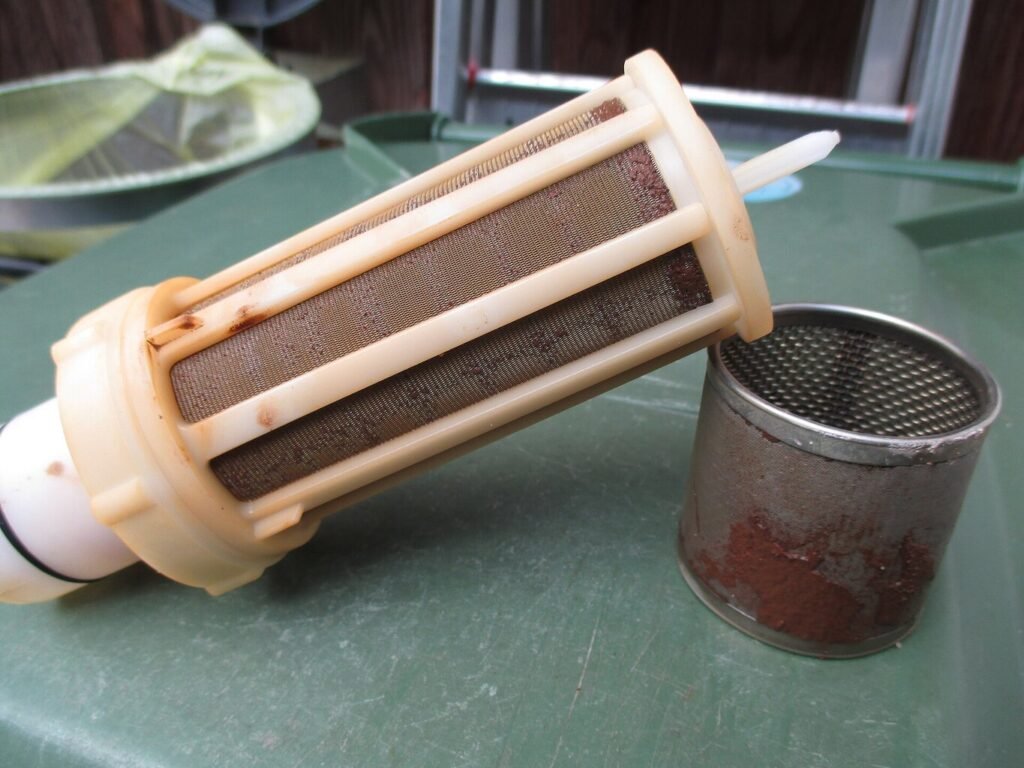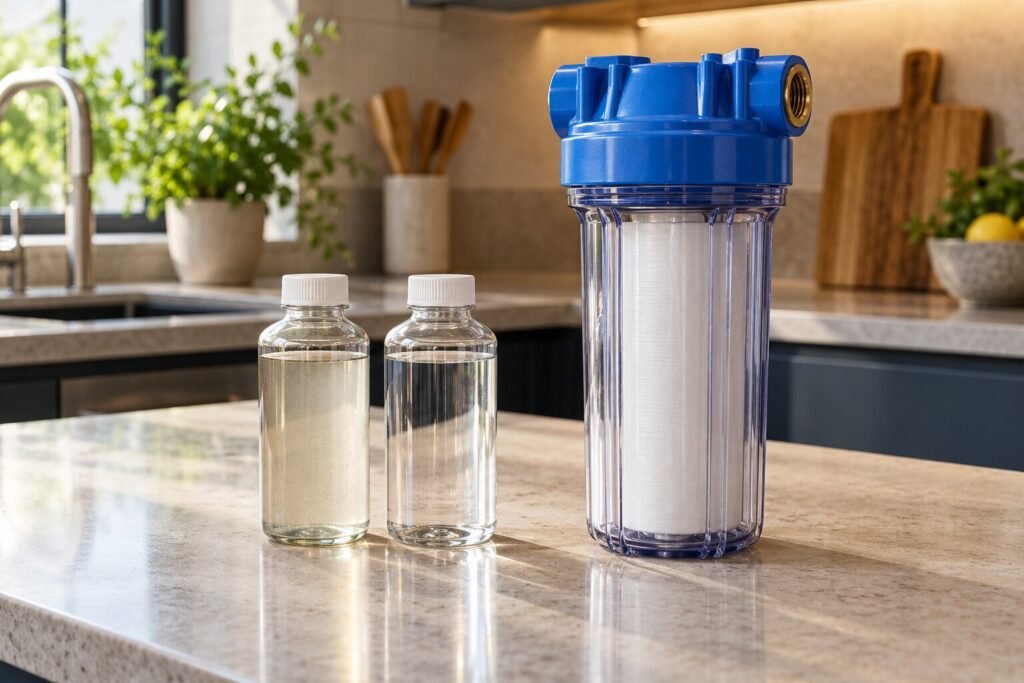

For a rotten-egg smell, first check whether it comes from hot water, cold water, or both. Hot-water-only odor can involve the heater. Odor across cold-water taps calls for a different investigation. A whole-house filter won’t necessarily solve an issue inside a heater or one sink’s drain.
Notice the smell in a clean glass away from the sink. If the glass doesn’t smell but the sink does, describe that difference to a plumber. Don’t remove heater parts or change safety settings to test an odor theory.
Compare hot and cold water
Notice whether the smell occurs in cold water, hot water, or both. An odor limited to hot water points toward a different investigation than one present in untreated cold water throughout the house. A water heater is a possible part of the explanation, not an automatic diagnosis.
Repeat the observation at more than one location. If one sink smells but other taps don’t, ask whether the drain or local plumbing could be involved. If you collect observations in a clean glass away from the sink, you may be able to describe the pattern more clearly.
Avoid unsafe experiments with hot-water equipment. Removing components or altering heater settings can affect equipment safety and operation. Have a qualified professional evaluate proposed changes.
Account for your treatment system
If a softener or filter is already installed, note where it sits in the plumbing and when it was last serviced. The Minnesota Department of Health describes why the source of sulfur-related odor needs to be distinguished before choosing a remedy.
Tell the professional whether untreated taps smell different from treated taps. Don’t assume an outside faucet bypasses treatment without checking. Also note whether the odor began after maintenance, a long period away, or work on the well.
Don’t use smell as a safety test
A noticeable odor doesn’t identify every contaminant, and water without an odor isn’t necessarily safe. Private-well owners should maintain appropriate testing beyond the odor investigation. See the well-testing plan for the annual baseline and event-triggered checks.
Ask the laboratory which tests can answer the suspected source question, and how the sample should be collected. Some measurements are sensitive to collection and handling. A sample taken casually from a treated tap may not answer a question about the raw well supply.
Match the remedy to the finding
When the issue is associated with the heater, the evaluation may focus on that equipment. When it is associated with the source water, a treatment professional may discuss a suitable process based on measured conditions. Existing treatment or plumbing can require its own maintenance investigation.
This is why a cartridge marketed for “taste and odor” shouldn’t be assumed to solve every sulfur-like smell. Capacity, contact time, incoming conditions, and the manufacturer’s specific performance claims all matter. Ask how the proposal relates to your actual observations and test results.
Bring a short record to the appointment
- Public water or private well?
- Hot water, cold water, or both?
- All taps or particular locations?
- Before treatment, after treatment, or unknown?
- New odor or longstanding pattern?
- Recent well work, flooding, heater service, or treatment maintenance?
A description such as “hot water at two bathrooms, beginning after a period away” is more useful than simply “bad water.” It gives the professional a starting point while leaving room for proper investigation.
Know when to seek prompt advice
If the change follows flooding, suspected contamination, or a well problem, contact your local health department or qualified well professional promptly. Ask whether to use an alternative water supply while testing proceeds. Don’t rely on a guessed filter choice to resolve a potential safety issue.
Once the source is identified, get the proposed remedy and maintenance requirements in writing. Agree on how its effect will be checked so a temporary improvement in smell doesn’t end the investigation too soon.
Sources
- Minnesota Department of Health: Hydrogen Sulfide and Sulfur Bacteria in Well Water
- CDC: Guidelines for Testing Well Water
- CDC: About Choosing Home Water Filters
This guide is AI-assisted and includes reference links. We haven’t tested your water or independently tested products. Follow local health advice and the instructions for your own equipment.
Read our editorial policy →