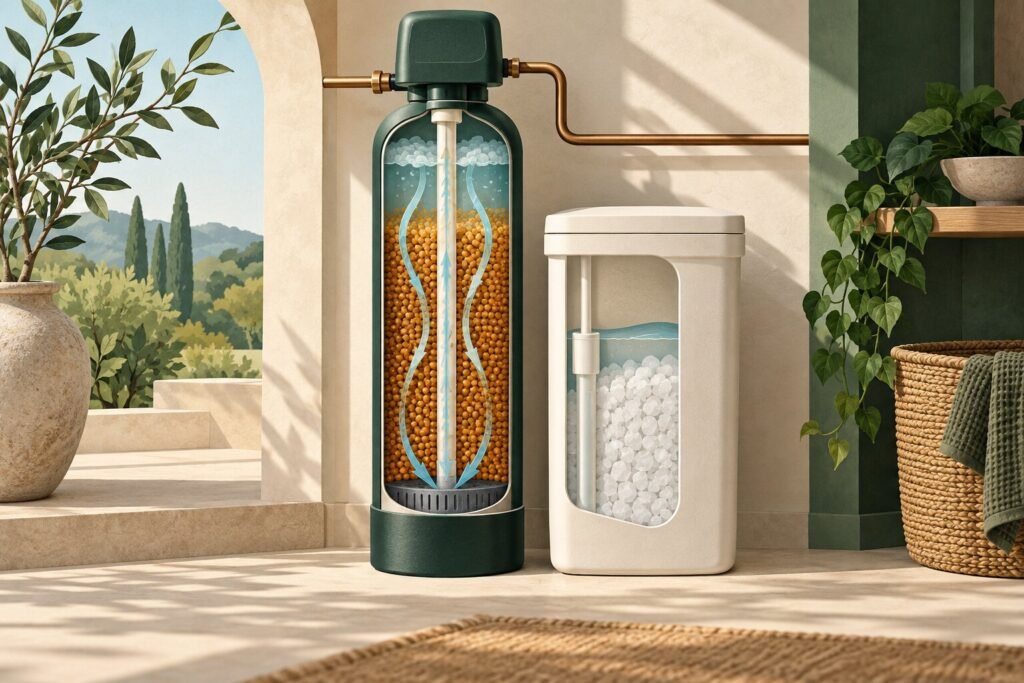
A conventional water softener uses ion exchange to reduce dissolved calcium and magnesium. Water passes through resin, which takes up hardness ions in exchange for sodium or potassium ions. Regeneration restores the resin so it can keep softening water.
The salt supplies the brine used during regeneration. It isn’t simply mixed into drinking water as table salt. Sodium-based softening does add sodium through ion exchange, so discuss drinking-water choices with your clinician if sodium restriction matters to you.
Start with the hardness problem
Calcium and magnesium contribute to water hardness. Depending on the water and household conditions, hardness can be associated with scale and cleaning difficulties. These are useful reasons to investigate softening, but visible deposits alone don’t measure the incoming supply.
Use a hardness test and record the units before asking for a system recommendation. A regional hardness map can’t supply the actual number for your house.
The ion-exchange cycle
Inside a conventional softener, water contacts resin that exchanges hardness ions. Over time, the resin’s usable operating capacity is consumed. Regeneration restores its ability to soften water using the process specified for that equipment.
In many residential systems, salt is used to prepare the regenerant solution. Salt in the storage tank isn’t simply being poured into the household supply as table salt. Nevertheless, the exchange process changes the water chemistry, so a household with specific dietary or water-use concerns should ask an appropriate professional about the implications.
This outline explains the principle. The correct settings, salt type, maintenance, and operating instructions depend on the model and the incoming water. Don’t assume a setting from another home will fit yours.
Why capacity and flow are different questions
A quoted grain capacity and a stated service flow describe different aspects of equipment. A household may need a system that can manage hardness load and serve the expected demand without operating outside the performance conditions.
Ask the supplier how they selected the operating capacity, regeneration approach, and flow rating. Provide the measured hardness and relevant test findings. A large headline capacity alone isn’t a complete design explanation.
Softening isn’t universal filtration
A hardness claim doesn’t automatically establish removal of lead, microbes, nitrates, or another contaminant. Those concerns need appropriate testing and treatment claims of their own. A softer feel in the shower can’t verify drinking-water safety.
Some water conditions, including certain iron-related issues, can affect what is appropriate for a softener. Review the manufacturer’s limits and discuss pretreatment if relevant. Our iron guide explains why the form of iron matters.
Be precise about “salt-free” claims
Products marketed for scale management may work differently from an ion-exchange softener. A claim about changing scale behavior isn’t automatically a claim that calcium and magnesium have been removed or that measured hardness will fall.
Ask what the device is intended to change, what result can demonstrate that change, and which independent certification or testing supports the exact claim. Compare the claimed outcome rather than comparing names alone.
Plan for living with the system
- Read the operating and maintenance instructions for the exact model.
- Understand how regeneration is triggered and what it requires.
- Keep relevant water-test results and service records.
- Ask what household demand the system is designed to support.
- Know which taps are treated and which bypass the softener.
- Discuss any installation or discharge requirements with a qualified local professional.
When comparing proposals, insist on a clear separation between hardness reduction, other treatment stages, and optional features. It is easier to maintain a system when you understand what each part is there to do.
Sources
- USGS: Hardness of Water
- NSF: Standards for Water Treatment Systems
- CDC: About Choosing Home Water Filters
This guide is AI-assisted and includes reference links. We haven’t tested your water or independently tested products. Follow local health advice and the instructions for your own equipment.
Read our editorial policy →