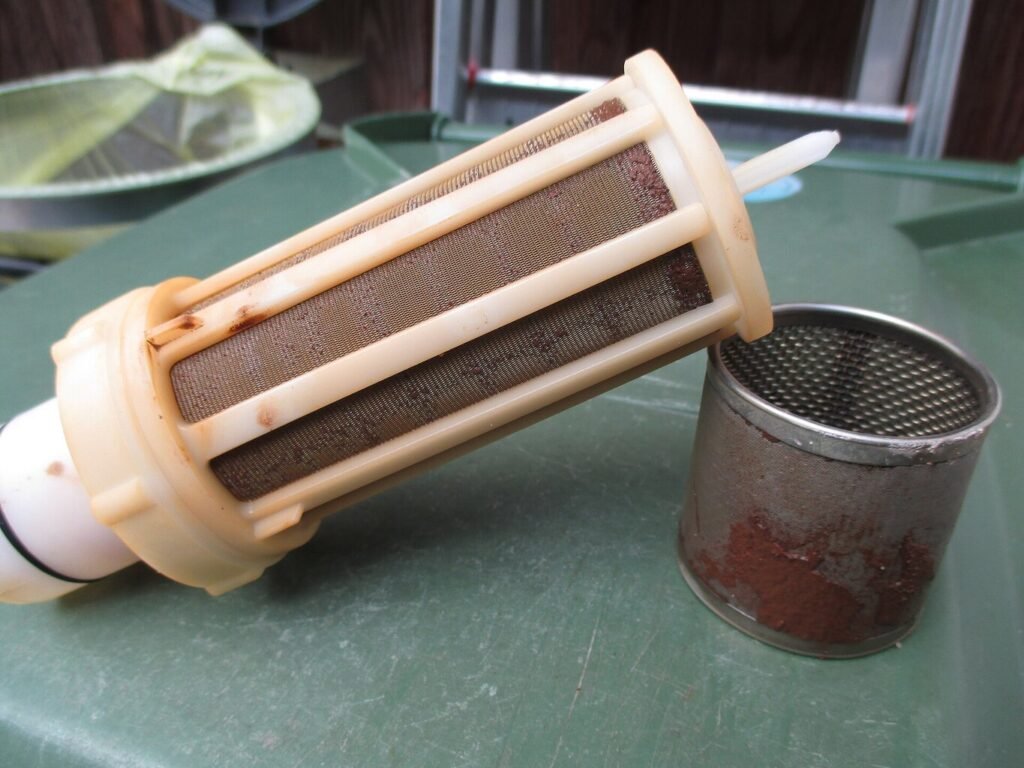

Start water softener maintenance with the manual for your exact model. Keep the approved regenerant available, check the supply as directed, and pay attention to leaks or error messages. Don’t change settings or add cleaner just because spots have returned.
Salt availability is one part of operation. If softened-water hardness rises, the control settings, regeneration, source water, or equipment may need checking. Give support the model number and service history rather than repeatedly adding salt.
Find the manual before changing anything
Photograph the model and serial label, identify the control valve, and obtain the matching instructions. If equipment was installed before you moved in, ask the original installer for a settings and service record. A general description such as “standard softener” isn’t enough to select a cleaning product or change a cycle.
Minnesota’s health department advises installation and maintenance according to the manufacturer’s directions, including instructions before adding chemicals. Use that as the boundary for routine care. Avoid copying a sanitizing recipe or cleaner dose from a system that merely looks similar.
Create a one-page equipment record
| Keep this information | Why it helps |
|---|---|
| Model, manual, installer contact | Identifies the correct instructions and service route |
| Hardness input and operating settings | Provides a reference if performance changes |
| Approved regenerant | Prevents guessing about compatible supplies |
| Service and replenishment dates | Makes changes easier to trace |
| Untreated and treated test records | Separates source-water changes from equipment questions |
Leave a copy near the equipment if the location is dry and suitable. Keep a digital copy of the manual as well. If more than one person handles supplies, agree on who updates the record.
Turn the manual into a household checklist
For each manufacturer-specified task, note the interval or condition that triggers it, the approved supplies, and whether it is an owner task or a service task. Don’t substitute a monthly schedule for a condition-based instruction, or vice versa.
- Check the supply level in the way the manual describes.
- Record visible leaks, warnings, or unusual operating behavior.
- Keep the equipment accessible for inspection and service.
- Use the model’s instructions for cleaning, inspection, and restarting after interruptions.
- Arrange any service the manual assigns to a qualified technician.
These are categories for a checklist, not instructions to open pressurized equipment. If you can’t identify the correct procedure, stop and ask the manufacturer or installer.
Investigate a change with evidence
If familiar mineral deposits return, note when they appeared and whether the unit shows a warning. Collect the model details and recent supply or service history before calling. Ask which checks you can perform safely and whether a new hardness measurement would help.
Don’t assume that adding more salt, increasing a setting, or buying a cleaner is the right first response. A technician needs to distinguish an operating problem from a change in source water or a problem elsewhere in the home.
Make the handover useful
After service, request a short written note. What was found, what was changed, and what to watch next. Record any revised settings with the date. That note prevents a future visit from starting with a mystery appliance and an undocumented adjustment.
Our regeneration guide helps frame questions about cycle timing. For the underlying process, see how softeners work. The aim is a repeatable routine for your model, not a drawer full of generic maintenance advice.
Sources
- Minnesota Department of Health: Home Water Softening Frequently Asked Questions
- Water Quality Association: Residential Water Treatment Design
This guide is AI-assisted and includes reference links. We haven’t tested your water or independently tested products. Follow local health advice and the instructions for your own equipment.
Read our editorial policy →