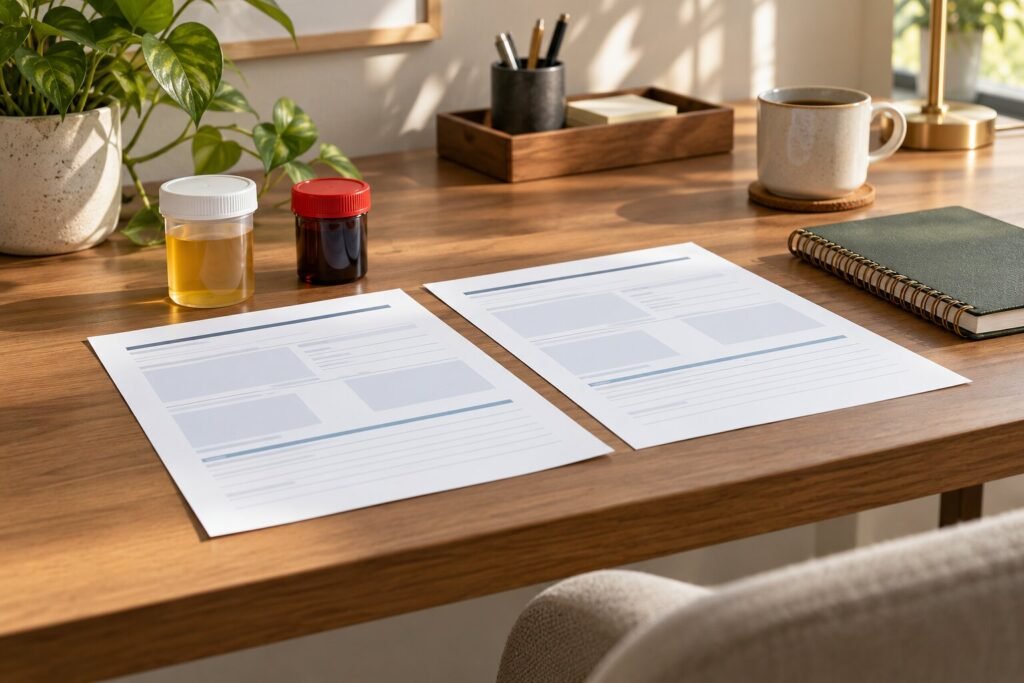
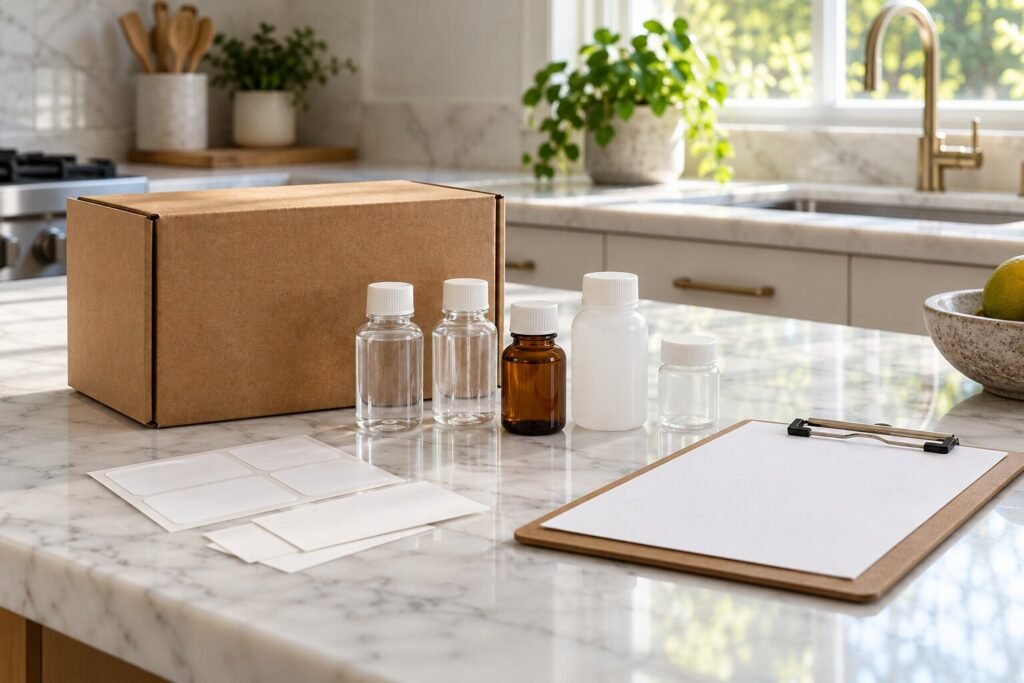
A laboratory sample can lose much of its usefulness before it reaches the laboratory. The problem may be an incorrect bottle, unclear label, unsuitable collection method or delivery that does not meet the lab’s requirements. The easiest time to prevent those problems is before opening the kit.
This guide is a planning checklist, not a universal sampling protocol. Different analyses have different requirements. Use the receiving laboratory’s written instructions for the exact test you ordered, and ask it to clarify anything that is missing.
Call before choosing a collection day
Confirm that the laboratory performs the intended drinking-water analysis and ask about its receipt hours. A convenient collection time is not necessarily a convenient delivery time. Weekends, holidays and shipping schedules can matter to the plan.
Tell the lab whether you will deliver the sample yourself or send it by courier. Ask when it must arrive and whether it can be accepted on the day you propose. Do not collect first and then discover that the receiving office is closed.
The EPA certified-laboratory directory helps identify state contacts. Ask about certification for the particular analysis rather than assuming that a laboratory performs every test under the same approval.
Match every bottle to its intended analysis
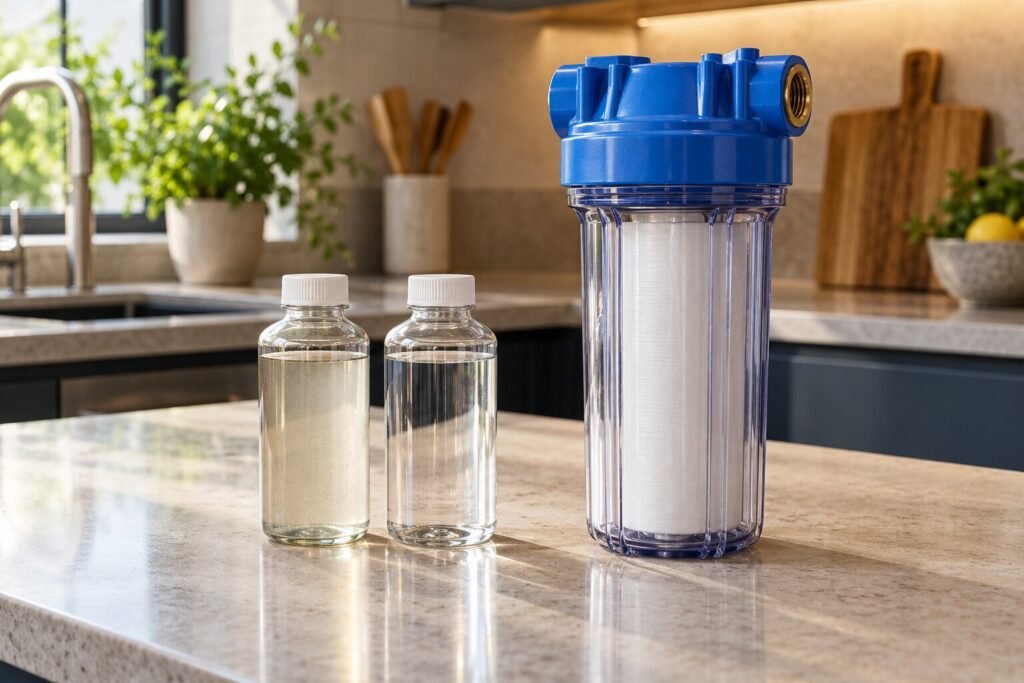
Keep the kit’s labels and instructions together. A bottle supplied for one test may not be appropriate for another. Do not substitute a washed beverage bottle because it looks clean, and do not combine samples to save space unless the laboratory expressly instructs you to do so.
Ask whether the supplied container has any preservative or preparation that must remain in place. Never rinse, empty or alter it on your own. Follow the kit instructions and seek clarification if the bottle seems different from the written description.
EPA’s sampling guidance illustrates why containers, preservation and timing are method-dependent. The receiving lab’s procedure should control your actual collection rather than a generic checklist copied from another test.
Identify the exact tap before starting
Write the sampling location in ordinary language that another person can understand. “Cold kitchen faucet downstream of identified filter” is more useful than “house.” If the location is uncertain, ask the laboratory or a qualified professional how to identify the intended point.
Tell the laboratory what equipment is present and what question the sample should answer. A source-water investigation and a treated-tap check may require different locations. Do not assume the most accessible tap is automatically the right one.
Ask about any preparation of the outlet and timing of household water use. These instructions depend on the analysis. Do not combine a first-draw instruction from one test with a flushing instruction from another because both appeared in search results.
Prepare the paperwork while the kit is closed
Check the required identifiers, collection date and time, sample location and analysis request. Ask how the laboratory wants labels written and whether a form must accompany the bottles. Fill in what you can beforehand, leaving actual collection details for the moment they occur.
Use consistent names on the bottle and form. If you collect more than one sample, identify them distinctly. A laboratory should not have to guess which bottle represents the treated outlet and which represents the source.
Keep a personal copy of the completed record. A photograph can help preserve the form, provided it does not replace paperwork the laboratory needs. Store personal addresses and contact information privately.
Follow the transport instructions exactly
Ask about packing, temperature requirements and the permitted delivery interval. Do not choose a universal number of hours from a blog. The requirement depends on the analysis and the laboratory’s procedure.
If the plan changes after collection, contact the lab before sending the sample. Tell it the actual timing and conditions. An honest account helps it decide whether the sample is usable; editing the collection time to fit a deadline undermines the entire result.
For courier delivery, keep the tracking reference and expected arrival. Ask what to do if the package is delayed. A shipment marked delivered does not automatically establish that all analytical acceptance conditions were met.
Check acceptance before interpreting a result
Ask whether the sample was accepted without qualifications. If the laboratory flags a collection or delivery issue, request an explanation of how that affects interpretation. Do not remove the qualification when sharing the report with an installer.
Keep the sample record with the final report. This lets a future reviewer understand where, when and how the evidence was obtained. The number alone cannot reconstruct an incorrect or undocumented collection.
If recollection is necessary, ask which part of the process should change. Use the replacement instructions instead of simply repeating the same routine. A rejected sample can become a useful correction if the reason is understood.
Make the next collection easier
After the report arrives, save the laboratory’s current instructions and contact details. Record practical information such as receipt hours and the collection-to-delivery arrangement that worked. Check those details again before a future test rather than assuming they never change.
The goal is a sample the laboratory can analyze and a record someone else can interpret. Good planning cannot establish water safety on its own, but it can prevent avoidable confusion about the evidence you paid to obtain.
Sources and further reading
- EPA — Certified Laboratories for Drinking Water
- EPA — Sampling Guidance for Unknown Contaminants in Drinking Water
Created with AI assistance and linked primary sources. We have not inspected your home, tested your water, or independently tested products. For safety concerns, consult your local health department or a qualified professional.
Read our editorial policy →