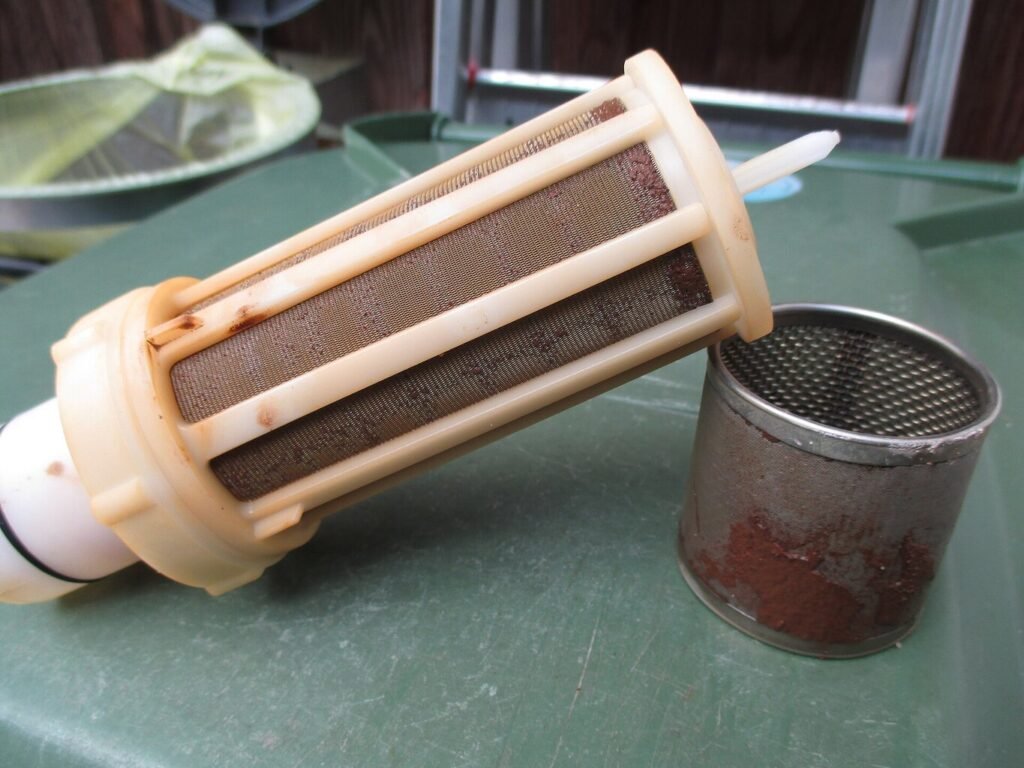
An RO system may have prefilters, a membrane, and a postfilter with different service requirements. Don’t treat filter replacement as one universal job. Identify each stage in your system’s manual and use its permitted part and replacement trigger.
A manufacturer may specify one interval for prefilters and another way to assess the membrane. Apply the instructions for your own model, including sanitation and leak checks. If you don’t know the service history, ask support how to establish a baseline.
Identify the complete system and every service stage
Find the system’s model and current manual. Record any separate identification for the cartridge set or membrane assembly. An under-sink photograph can help you remember the arrangement, but the manufacturer’s stage descriptions are the reference for ordering and service.
Create one row per component that the manual tells you to maintain. Use its actual name and permitted part number. Don’t rename every item “filter,” because that makes it hard to tell which task was performed during a later service visit.
| Record field | What belongs in it |
|---|---|
| System model | Full model and manual revision or support link |
| Stage | Manufacturer’s stage name or number |
| Permitted replacement | Exact component identification |
| Service trigger | Time, use or check specified by the manual |
| Procedure reference | Manual section or professional service requirement |
| Completed work | Date, part installed, checks and person performing the task |
Keep the record with the system, not only in one person’s email. The next household member should be able to see what is due and where the instructions are without guessing from a cartridge color.
A manufacturer example isn’t a universal schedule
GE’s RO support guidance discusses a usual six-month replacement interval for its pre-filter and post-filter components and a separate approach to membrane service. That’s an example from a particular manufacturer. It shouldn’t be copied into a different system’s calendar without checking that system’s documentation.
A membrane isn’t automatically due whenever another cartridge is changed. Nor should an owner assume it never needs attention because water continues to flow. Follow the actual model’s service triggers, operating conditions and specified checks.
If you have inherited a system with no history, write “unknown” for the previous service date rather than guessing. Contact the manufacturer or a qualified service provider about how to establish a baseline. An uncertain history is a reason to gather information, not to invent a past replacement date.
Gather the instructions before opening anything
Make sure you have the permitted parts and the complete procedure, including any required isolation, depressurization, sanitation, flushing and leak checks. These details differ by system. A generic video can’t establish that its procedure fits your exact model.
Use a technician if the manual calls for professional service or you can’t confirm the procedure. Under-sink equipment includes drinking-water connections and pressurized components. Follow the model’s instructions for isolation, sanitation, and return to use.
Plan access before the appointment or owner task. Clear the area, protect stored belongings from any water released as part of the instructed procedure, and have the service record available. Those simple preparations make it easier to follow the correct process without distraction.
Use performance checks within their actual limits
A manufacturer may specify a conductivity or TDS-related check as part of system maintenance. Such a check has a particular purpose and method. It isn’t a laboratory analysis for every substance, and a favorable reading doesn’t confirm that all possible concerns have been removed.
For a specific contaminant, verify the exact model’s claim and ask an appropriate laboratory or professional how the result should be evaluated. NSF’s standards guidance supports looking at the particular reduction claim, not treating “RO” as an assurance of every outcome.
EPA WaterSense information can help when comparing point-of-use RO efficiency and eligible product information. It doesn’t replace your model’s replacement procedure, and it doesn’t mean that every RO system carries a WaterSense label.
When taste or delivery changes after service
Write down what changed and when. Was it immediately after the cartridge replacement, after a long period without use, or after another plumbing event? Keep that observation distinct from a conclusion about the cause.
Check the manual’s required post-service steps and contact support with the model, installed parts and completed work. Don’t replace the membrane simply because a different stage was recently serviced, and don’t assume a new cartridge guarantees that every issue has been resolved.
If you notice a leak, stop using the equipment as directed by its manufacturer and obtain suitable help. For a safety concern about the water, follow laboratory and local health advice rather than relying on a taste comparison.
Related guides
Sources
- GE Appliances , Reverse Osmosis Filter Maintenance.
- EPA WaterSense , Point-of-Use Reverse Osmosis Systems.
- NSF , Standards for Water Treatment Systems.
This guide is AI-assisted and includes reference links. We haven’t tested your water or independently tested products. Follow local health advice and the instructions for your own equipment.
Read our editorial policy →