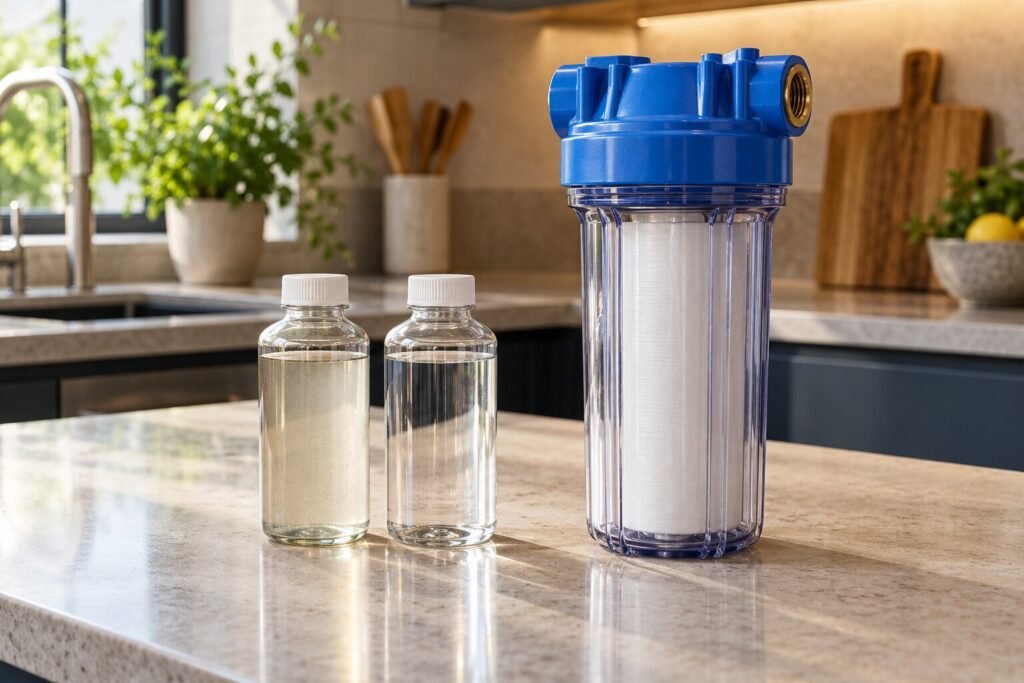
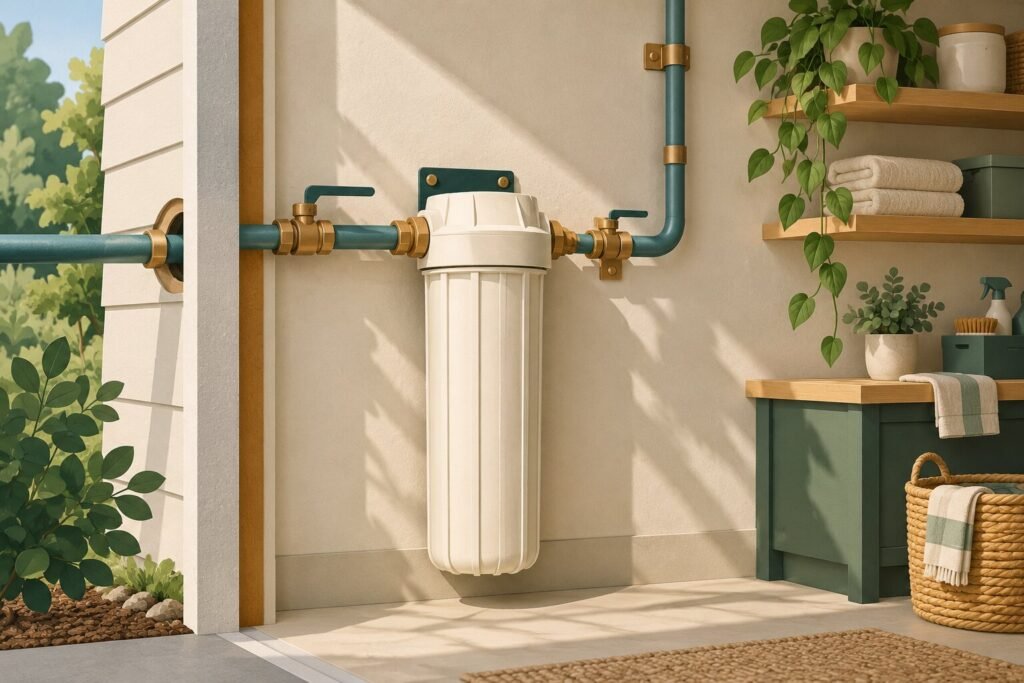
Choose a whole-house filter by the problem it needs to solve. Sediment, chlorine taste, hardness, and a measured contaminant are different jobs. The phrase whole-house describes where treatment happens, usually near the incoming supply, rather than everything the equipment can remove.
Treatment at one drinking-water faucet may be enough for some goals. Scale throughout the house or another concern affecting several water uses needs a broader discussion. Ask the installer to identify which outlets each proposal covers.
Separate the problem from the product category
A sediment cartridge and an activated-carbon system aren’t interchangeable. Neither should be assumed to perform the job of a conventional softener. “Filter” is a broad word, and a long list of marketing claims is less useful than an exact, verifiable reduction claim.
The CDC recommends choosing treatment around your water and the substances you need to address. For public water, begin by reviewing information from your utility and investigate a specific concern with appropriate testing. For a private well, establish a testing plan rather than selecting equipment from the appearance of a glass.
Decide whether every tap needs treatment
Point-of-entry treatment can be relevant when the target concern affects water used throughout the home. Point-of-use treatment addresses water at a particular location, such as a drinking-water tap. The better choice depends on the issue, not on which system looks larger.
Ask what exposure or household problem you’re trying to change. A drinking-water concern and mineral scale in a shower may call for different approaches. If a proposal includes both whole-house treatment and an under-sink unit, each stage should have a stated purpose.
Understand the limits of carbon and sediment treatment
Activated carbon can address certain contaminants or aesthetic concerns, depending on the device and its design. It isn’t a blanket solution for all dissolved substances, hardness, or microbes. Contact time, capacity, and maintenance affect performance.
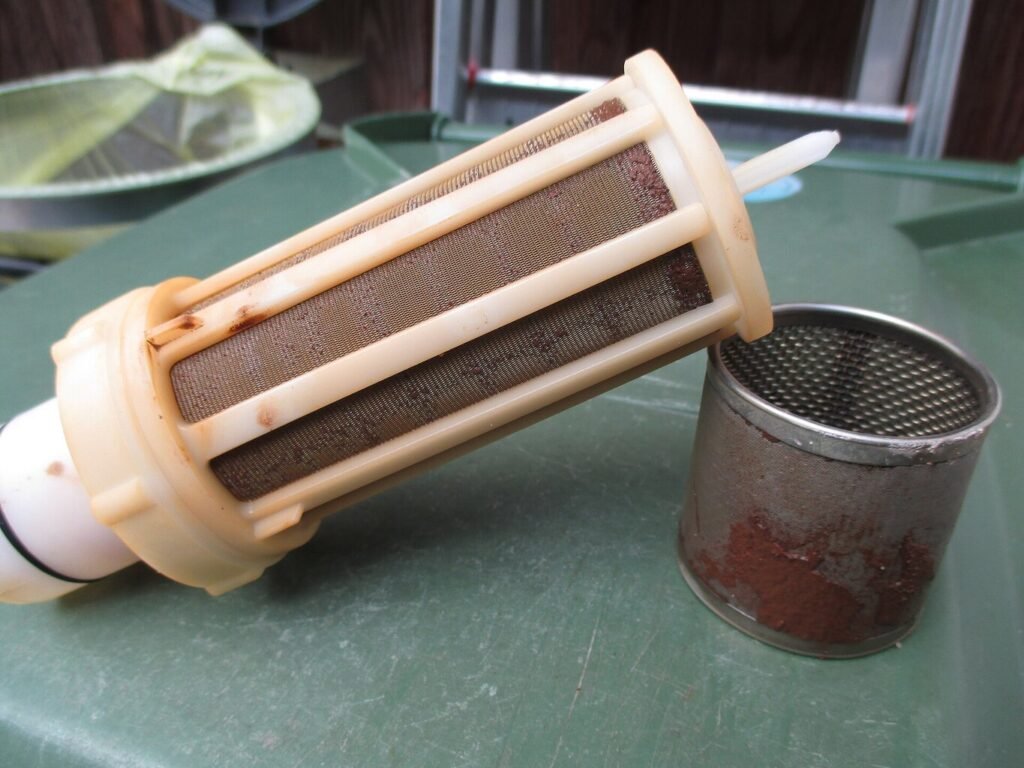
Sediment filtration targets particles within its design limits. A cartridge’s micron rating doesn’t by itself establish removal of a dissolved contaminant. Ask what the rating means, which performance claims are verified, and what conditions the device requires.
Rather than assuming “more stages” is better, request an explanation of what each stage adds. An unnecessary cartridge creates an additional replacement job without necessarily solving an additional problem.
Check the exact certification claim
A standard number identifies a category of performance requirements. It doesn’t make every certified product equally suitable. Confirm the exact model and specific reduction claim in the certification listing. A mark on a similar-looking unit isn’t enough.
The certification checklist explains how to read those claims. Avoid treating “tested to” and “certified by” as automatically equivalent descriptions.
Ask about flow and upkeep before signing
- What service flow is stated for the intended treatment claim?
- How is household demand considered?
- What pressure change should be expected under the proposed operating conditions?
- How often are cartridges, media, or other components serviced?
- Which plumbing, drain, electrical, or space requirements apply?
- How will you know when treatment performance needs attention?
Keep the manufacturer’s specifications with the quote. Ask whether the proposal covers installation, required pretreatment, service, consumables, and post-installation checks. A useful quote is a plan for operating the system, not simply an equipment price.
A practical order for the decision
Define the problem, obtain relevant information or tests, identify the treatment scope, verify claims, and then compare complete proposals. If two suppliers recommend different equipment, ask each to connect the recommendation to the same test results and goals.
A whole-house system can be a sensible part of a home’s water plan. Its value depends on how clearly its job has been defined, and whether the household can maintain it.
Sources
- CDC: About Choosing Home Water Filters
- NSF: Standards for Water Treatment Systems
- University of Georgia Extension: Activated Carbon Water Filtration Devices
This guide is AI-assisted and includes reference links. We haven’t tested your water or independently tested products. Follow local health advice and the instructions for your own equipment.
Read our editorial policy →