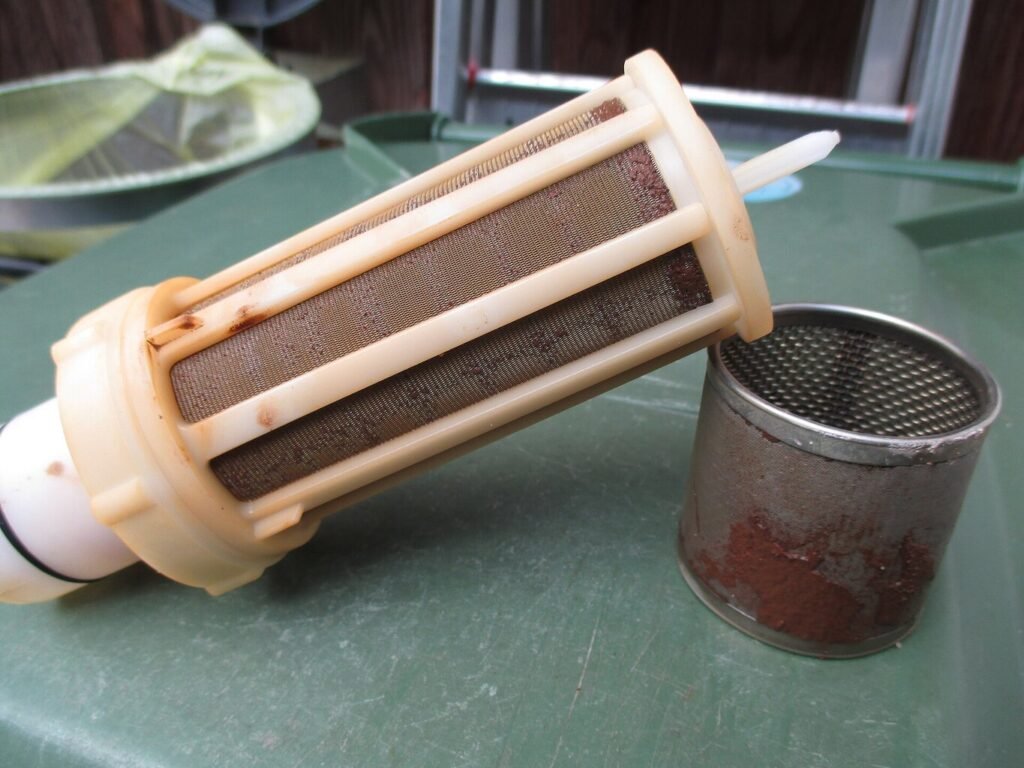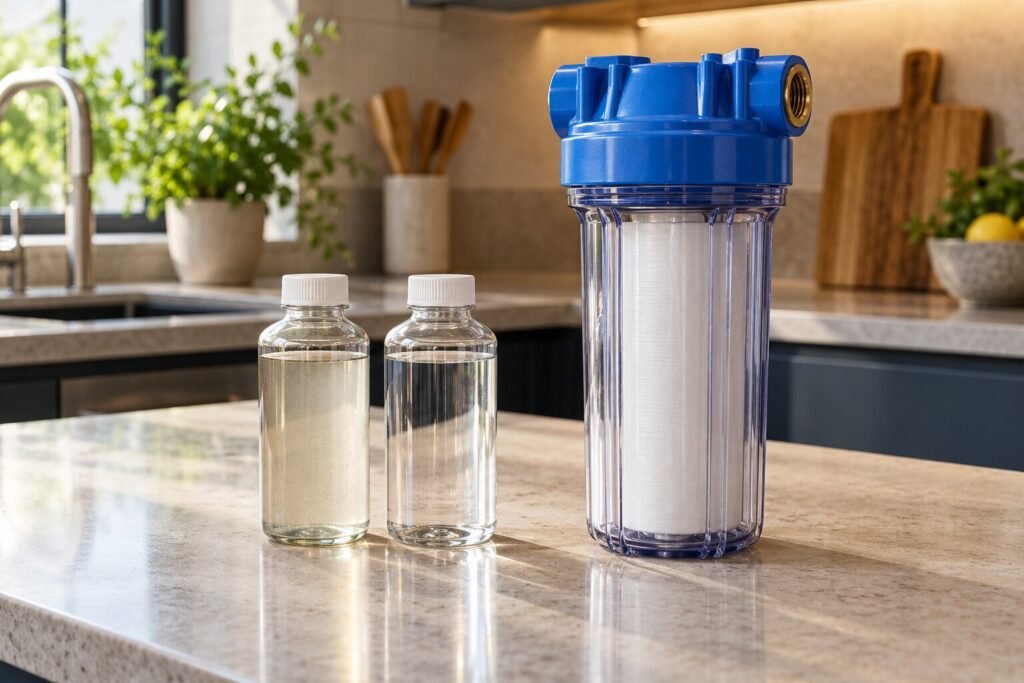

When you find grit or flakes in tap water, check which fixtures are affected and whether it happens with hot water, cold water, or both. One faucet points to a different starting place from several cold-water taps. A filter may catch particles, but it won’t explain why they arrived.
For a public supply, ask the utility about work, main breaks, or current instructions. For a well, describe the change to the well contractor and ask about testing. Follow any advisory rather than treating a cartridge as the solution.
Make a quick observation log
Write down when the change began and what was happening around that time. Include plumbing work, a utility notice, a power interruption, or well service if relevant. Describe what you can actually see. Coarse grains, flakes, rust-colored particles, or cloudiness. These descriptions help a professional investigate. They aren’t diagnoses.
| Observation | Useful question |
|---|---|
| Only one fixture affected | Does the fixture or its branch plumbing need inspection? |
| Hot-water taps affected | Should the water heater and hot-water plumbing be checked? |
| Several cold-water taps affected | Is the issue upstream of those fixtures? |
| Change after work or disruption | What follow-up does the utility or well contractor recommend? |
Check accessible observations without opening pressurized plumbing or disturbing equipment. Photos and dates are often enough for an initial call. Don’t dismantle a heater or well component to find the cause yourself.
Use the right first contact
For a public supply, ask the utility whether there is a known disturbance, whether other customers reported a change, and what instructions apply. A notice or flushing procedure from the utility should take priority over a generic internet tip.
For a private well, contact your well professional and local health department as appropriate. Describe whether the issue follows pump operation or recent work. Ask what inspection and sample locations would help distinguish a source problem from a plumbing problem. The well-testing checklist is a place to organize the conversation.
Keep particles separate from dissolved concerns
A device selected to capture grit isn’t automatically a device selected to address dissolved substances or microorganisms. Ask for the actual treatment purpose in writing. Rust-colored particles also warrant a different discussion from ordinary sand. Our iron guide explains why test information matters.
Resist the claim that a dirtier cartridge proves the incoming water was dangerous. It shows that material collected in that cartridge. What the material is, why it arrived, and whether other concerns remain still need investigation.
If a filter is proposed, ask about ongoing operation
- Which particles is the proposed device intended to capture?
- What inlet conditions and household flow can it support?
- How will you know when it needs cleaning or replacement?
- Can replacement cartridges be obtained reliably?
- What remains unresolved after the particles are removed?
Our sediment-filter selection guide covers the questions behind micron ratings. Keep the source investigation alongside the filter proposal. Removing visible grit can improve everyday use, but it shouldn’t become a reason to ignore a continuing change at the well or supply.
Sources
- CDC: About Choosing Home Water Filters
- CDC: Guidelines for Testing Well Water
- Minnesota Department of Health: Iron in Well Water
This guide is AI-assisted and includes reference links. We haven’t tested your water or independently tested products. Follow local health advice and the instructions for your own equipment.
Read our editorial policy →