
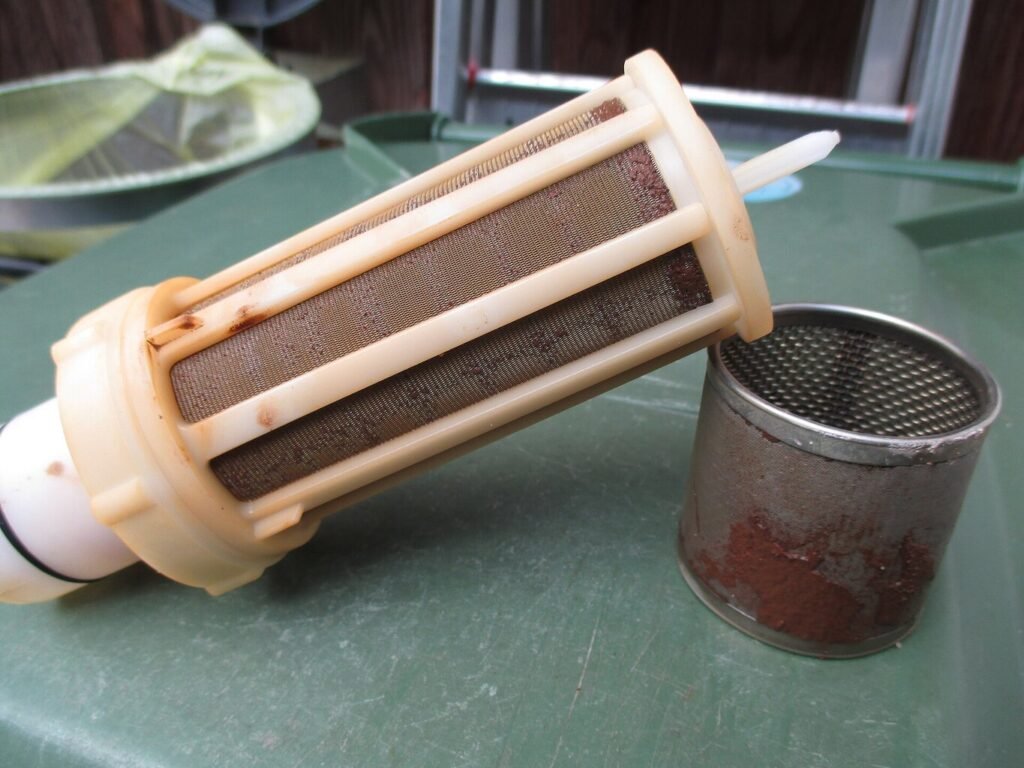
For a cartridge-only cost per gallon, divide its price by the gallons treated before the applicable replacement trigger. Time limits can matter as much as rated capacity. Installation, service, water, and other parts belong on separate budget lines.
If the instructions specify both a time and a volume trigger, follow the applicable earlier trigger. A household that uses little water may replace a cartridge before reaching its rated gallons. Don’t divide by gallons the cartridge won’t actually treat.
Start with the exact replacement component
Identify the system model and the cartridge specified for it. A similar-looking replacement may not preserve the same documented reduction claims. Keep the component identity beside the price so that a bargain for a different cartridge doesn’t enter the comparison unnoticed.
Check which stages are included. Some arrangements have one replacement component. Others have several parts with different service requirements. A package containing only one stage shouldn’t be compared with a quote covering the entire arrangement as if the scopes were identical.
Ask the provider which accessories or service tasks accompany replacement. Seals, specialist labor or other items may be relevant to the actual arrangement. Record only documented requirements rather than adding an arbitrary percentage to hide uncertainty.
Copy both capacity and time limits
Read the service instructions for the exact component. If replacement is required at a volume or time limit, whichever comes first, both limits belong in the calculation. A stated capacity isn’t necessarily the volume your household can use before a calendar limit is reached.
The CDC filter-selection guidance provides context for maintenance and selecting the appropriate job. The manufacturer’s model-specific instructions should determine your actual replacement plan. Don’t extend service because the water still tastes acceptable.
If the instructions list conditions that affect service, note them separately. Ask the provider how the household’s source water and use fit the published conditions. The worksheet should show assumptions openly rather than converting a rated number into a guaranteed lifespan.
Estimate the water that actually passes through it
For a designated drinking-water outlet, estimate the treated water used for drinks, cooking and other permitted uses. Keep units consistent. A gallon-based capacity and a liter-based estimate need a correctly stated conversion before they can be compared.
Separate whole-house water use from use at a single treated outlet. A utility bill may describe far more water than passes through an under-sink drinking-water filter. Using the entire bill in that calculation can make the estimate look precise while measuring the wrong scope.
You can improve the estimate by tracking ordinary use for a short, representative period. Record the method and its limitations. Don’t encourage waste by running water just to measure it, and don’t let an unusually busy weekend become an undocumented annual assumption.
Work through a fictional example
Suppose a fictional cartridge costs 60 dollars and its instructions require replacement after 600 gallons or six months, whichever comes first. Suppose the household uses two gallons of treated water each day. For this illustration only, use 180 days as the six-month planning period.
The household would use about 360 gallons in that period. The calendar requirement arrives before the stated volume limit, so the planning volume is 360 rather than 600 gallons. Dividing 60 dollars by 360 gives about 17 cents per gallon for the cartridge alone.
These figures are invented to explain the method. They aren’t a price quote, a real product’s instructions or a prediction for your home. The example shows why using the full rated volume can understate cost when the household reaches a time requirement first.
Change one assumption at a time
Now imagine the same fictional component with household use of four gallons per day. At that assumed rate, 600 gallons would be reached in 150 days, before the illustrative 180-day time limit. Cartridge cost divided by the planning volume would be 10 cents per gallon.
The difference doesn’t mean heavier use makes the equipment inherently better. It means a fixed component cost is spread over a different volume under the stated replacement rule. Maintenance still follows the instructions, and the intended reduction claim must still fit the water concern.
Vary the daily-use estimate and the component price separately in your worksheet. If a small assumption change substantially alters the apparent winner, mark the comparison as sensitive to that assumption. Avoid presenting the lowest scenario as the expected result without explaining why.
Add the costs the basic division excludes
The cartridge-only figure excludes the equipment purchase, installation, any required professional service and relevant verification testing. List those items separately. It is useful to see an operating figure and a project figure rather than combining everything into an unexplained headline.
For a multi-stage system, calculate each documented replacement requirement. If schedules differ, show each schedule rather than treating the most frequently replaced part as the whole system. Ask for the current component list if the proposal uses vague terms such as “annual service kit.”
Also identify charges specific to the arrangement, if applicable. Don’t assign water, power or service expenses without evidence that they apply and a defensible estimate. The purpose is transparent budgeting, not a mathematically impressive total built from invented inputs.
Compare products for the same job
Before comparing cost per gallon, check that the products address the same intended concern under suitable conditions. A low-cost component with a different reduction claim isn’t automatically a cheaper way to accomplish the same job. Use our certification guide to keep the claim specific.
Compare the same ownership period and the same treated-water use. Record whether installation and testing are included. If one proposal omits a required task, add that task visibly rather than silently accepting the smaller total.
There’s no paid promotion or affiliate recommendation in this guide. Brand recognition can help you find documentation, but it doesn’t replace the exact component, claim and service rule that the budget needs.
Sources
This guide is AI-assisted and includes reference links. We haven’t tested your water or independently tested products. Follow local health advice and the instructions for your own equipment.
Read our editorial policy →