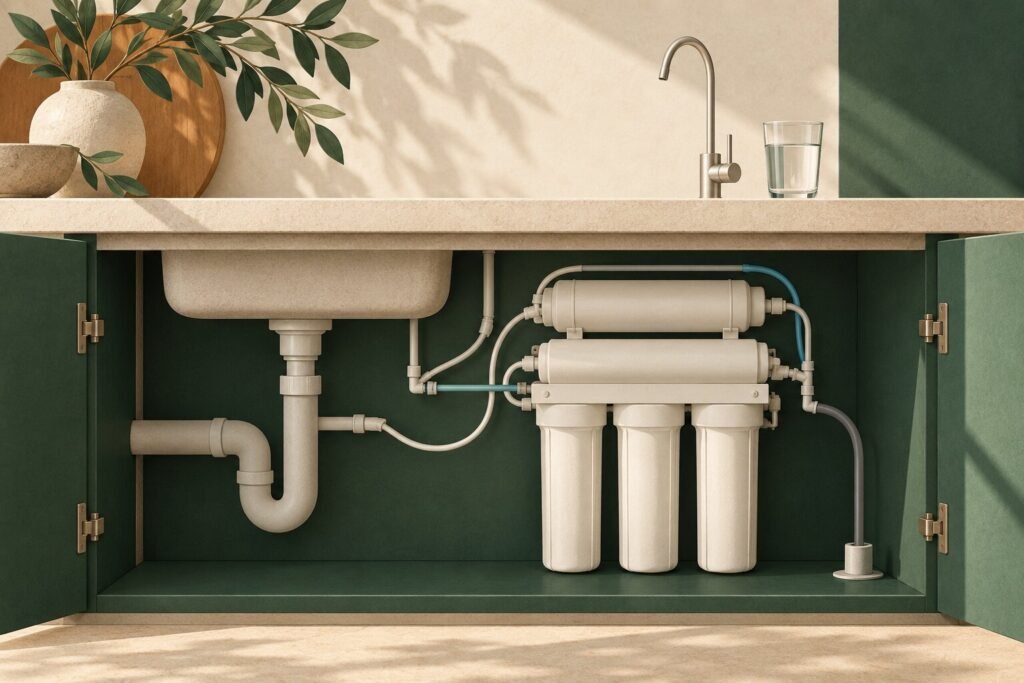
An under-sink reverse-osmosis system produces treated water and a separate reject stream. Compare both the contaminant claims and the water-use information for the exact model. A high output figure doesn’t, by itself, tell you how much incoming water is needed.
A ratio stated as reject water to treated water means something different from the reverse order. Check what the manufacturer measured and under which conditions. Don’t compare unlabeled ratios or assume a laboratory rating will be identical in every kitchen.
Decide what you need the system to address
Begin with your water source and the relevant concern. A treatment recommendation should connect to appropriate information or test results. Clear water, a pleasant taste, or a fashionable appliance can’t establish that the right treatment has been chosen.
A point-of-use system is different in scope from treating all the water entering the house. If the concern involves uses beyond the drinking-water tap, ask whether a point-of-use approach addresses the actual need.
Verify the exact reduction claims
NSF/ANSI 58 applies to reverse-osmosis drinking-water treatment systems, but the specific certified reduction claims need checking. Don’t infer every possible contaminant claim from the standard number alone.
Match the model and required components to the current certification listing. Our verification checklist shows how to record the relevant details. A certified component isn’t automatically a certification of a different complete system.
Use WaterSense as a specific check
EPA WaterSense has a labeling framework for point-of-use RO systems that addresses efficiency and performance requirements. Check whether the exact model is currently WaterSense labeled rather than relying on a seller’s general description of “water-saving” technology.
The scope is point-of-use equipment. Don’t apply it as a blanket claim about whole-house RO. Nor should a WaterSense label be used to skip checking whether the model carries the particular contaminant reduction claim you need.
Ask how the system will operate in your kitchen
- What inlet-water conditions does the manufacturer require?
- What treated-water output is stated, and under what conditions?
- How are the reject-water connection and local installation requirements handled?
- Which filters or other components need replacement?
- What maintenance and sanitation instructions apply?
- How will you check performance after installation?
These details affect whether the system fits your home and how it will be maintained. Don’t guess the required installation arrangement from a photo. A qualified installer should assess the space, plumbing, and manufacturer’s instructions.
Compare complete ownership, not one headline
Equipment price alone leaves out replacement components, service, and any installation requirements. Request a written breakdown and avoid using an unsourced internet price range as if it were a current local quote.
Compare systems against the same target concern. If carbon filtration would be proposed instead, ask what verified claim each option offers for that concern. Different processes shouldn’t be ranked as universally better without specifying the job.
For a broader starting point, use the filter-selection guide. If you own a well, keep the testing routine in place even after installing treatment.