A carbon filter’s chlorine claim doesn’t automatically cover chloramine. Chloramine reduction is slower and depends on the device’s design and contact time. Ask your utility which disinfectant it uses, then check the exact model’s supported claim for that target.
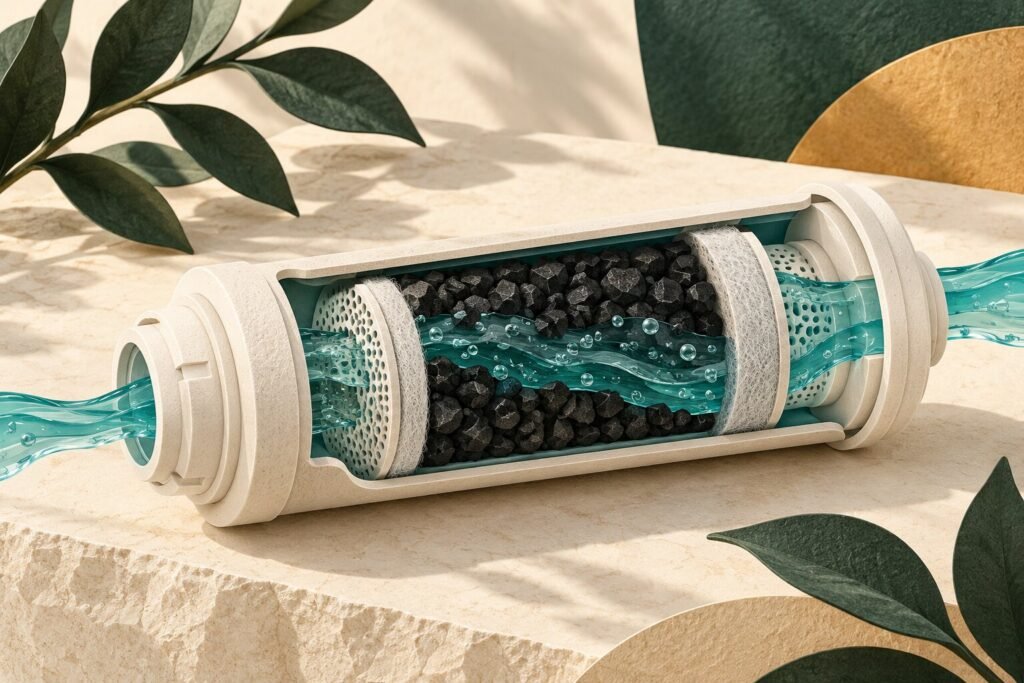
Activated carbon can adsorb some substances and reduce disinfectants through reactions at its surface. Different devices use that material differently. The performance sheet and certification listing are more useful than the fact that a cartridge contains carbon.
Ask which disinfectant your utility uses
Look for the utility’s annual water report and current treatment information, or contact the utility directly. EPA explains that community systems provide annual consumer confidence reports. Use the report as a starting point for your supply, while asking the utility about current conditions if you have a recent change or a specific question.
Write down whether your comparison concerns chlorine taste and odor, chloramine reduction, or another claim. These are different questions. Don’t let a general phrase such as “improves water quality” stand in for the one you need answered.
Separate the media description from verified performance
Activated carbon can adsorb certain substances, while chlorine and chloramine reduction also involves a chemical reaction at the carbon. University of Georgia Extension explains that chloramine reduction proceeds more slowly than chlorine reduction. Contact time and device design therefore matter. A chlorine claim shouldn’t be assumed to include chloramine.
A bag of media or a dark cartridge doesn’t identify what the complete appliance will accomplish in your home. Compare the exact claim under its stated operating conditions.
Ask for the exact model’s performance data and current certification listing for the relevant claim. NSF’s standards guide distinguishes standards and specific reduction claims. A standard number without the model and claim is an incomplete comparison.
Build a short claim-checking sheet
| Item to record | What to check |
|---|---|
| Concern | The named disinfectant or other verified target |
| Complete model | The listing matches the appliance and required cartridge |
| Claim | The actual relevant reduction claim, not a general label |
| Operating conditions | The stated flow, capacity, and inlet requirements |
| Replacement instructions | How and when service is required for that model |
If a seller quotes a cartridge listing, ask whether it applies to the complete arrangement being offered. Keep the document and the date checked. Our certification guide walks through the same process in more detail.
Choose the treatment scope deliberately
List the taps and uses you want included, then ask the installer which arrangement addresses that scope. A kitchen drinking-water concern and a whole-home proposal shouldn’t be compared only by purchase price. Ask what each option would treat, what it would leave unchanged, and what responsibilities come with it.
For an installation affecting the whole house, include a discussion of the consequences of removing the supply’s disinfectant and how the system should be maintained. Ask for the model’s written requirements rather than assuming that larger equipment simply lasts longer.
Don’t make taste the maintenance indicator
Keep the specified replacement conditions in your household record. Ask how the device’s use should be tracked and what to do after interruptions or service. A pleasant taste isn’t evidence that every performance claim remains satisfied, and it can’t establish drinking-water safety.
- Can you obtain the correct replacement cartridge locally or reliably online?
- Who handles sanitation or service steps you can’t perform?
- What documentation should be retained after a cartridge change?
- How should a continuing complaint be investigated?
Use the whole-house selection guide for broader proposals. The strongest carbon comparison is a checked claim for a defined job, supported by a maintenance plan you can follow.