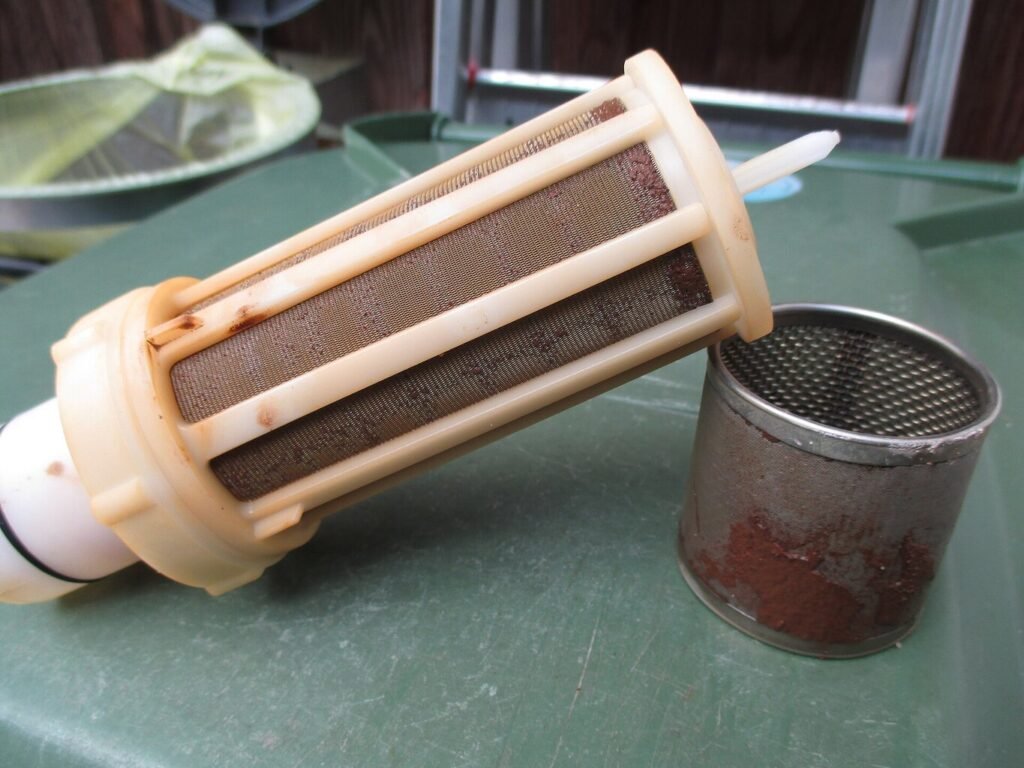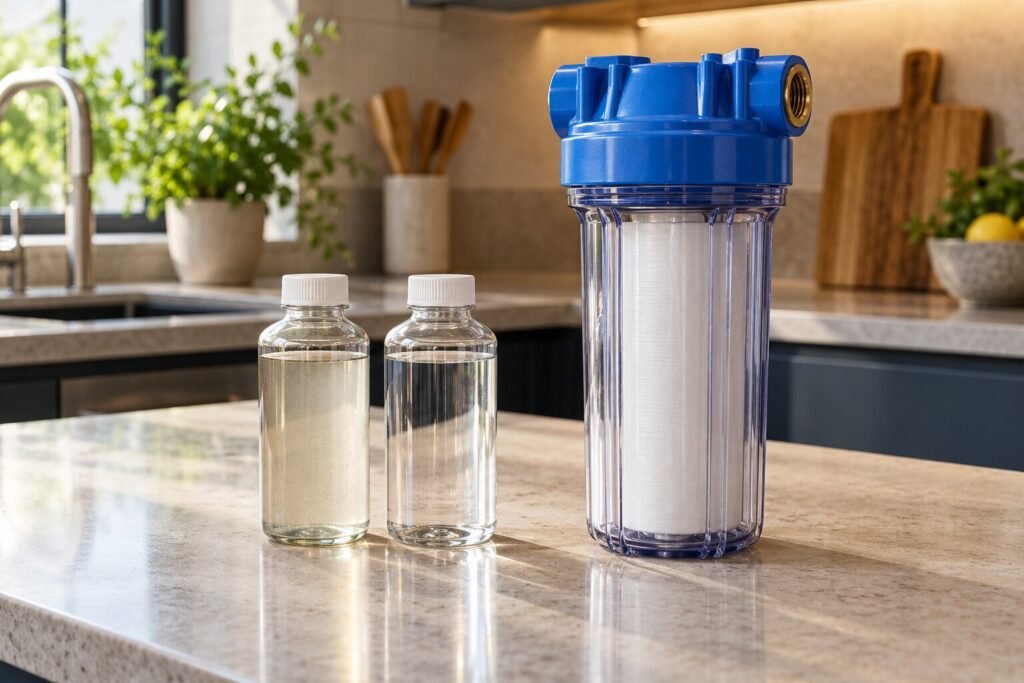

A micron rating needs a definition. Nominal and absolute ratings describe different performance characteristics, so two cartridges marked with the same number may not be equivalent. A smaller number also doesn’t automatically make a cartridge the right fit for your plumbing.
A sediment cartridge addresses particles within its design limits. Its micron number doesn’t establish a claim for a dissolved contaminant. For a health-related target, check the complete device’s relevant reduction claim instead of choosing by pore size alone.
Read the words beside the number
CDC distinguishes nominal or mean pore ratings from absolute ratings. Nominal ratings describe an average. Absolute ratings describe a maximum pore size in that explanation. The number alone leaves out that important distinction.
Ask the manufacturer how its stated rating was determined and what the complete device claims. Two packages with similar numbers may not offer the same performance description. Don’t create a contaminant-removal promise by interpreting an isolated micron figure yourself.
Define the particle problem first
Keep the investigation separate from the cartridge comparison. Record whether visible material occurs at one tap or several, whether it follows a disruption, and what the utility or well professional has advised. Our sediment investigation guide helps collect that context.
Then ask whether the proposed device is meant to capture the identified particles, protect another appliance, or address a particular verified reduction claim. Those jobs may require different supporting information. A “sediment” label isn’t a complete description of treatment scope.
Compare a matched set of specifications
| Specification | Useful question |
|---|---|
| Rating and rating type | Is it nominal, absolute, or another defined performance description? |
| Compatible housing | Does the exact cartridge fit and operate in the proposed housing? |
| Flow information | What conditions support the stated performance? |
| Service instructions | When is cleaning or replacement needed, and who can perform it? |
| Reduction claims | Which claims are independently verifiable for this model? |
Ask about expected pressure effects and how the installer will assess them for your supply. If a proposal adds more than one stage, request the reason for each. Don’t choose a sequence merely because an online diagram shows a coarse cartridge followed by a finer one.
Leave room for maintenance
Imagine changing the cartridge after installation. Is there usable access? Are the correct replacements readily available? Who will show you the safe isolation and service procedure? Have the installer explain the arrangement using the model’s instructions and local requirements.
Don’t open a housing while it is pressurized or improvise a method from a photo. If a task is outside the owner instructions, use a qualified service contact. Write down what changed after service so a later complaint has a clear record.
Keep visible improvement separate from safety
Clearer water can be a worthwhile household outcome. It doesn’t establish that dissolved concerns or microorganisms were addressed. If treatment is being proposed for a health-related concern, ask for the appropriate testing, relevant exact-model claim, and a plan to verify the intended outcome.
The certification checklist helps check such claims. Keep any water advisory or local health advice in force. A cartridge purchase doesn’t replace it.
Use the smallest useful comparison sheet
For two candidate cartridges, record the exact model, rating definition, compatible housing, stated conditions, and service cost based on current supplier information. Leave missing fields visibly blank until the supplier answers. A complete, matched comparison is more useful than a ranking based on a single micron number.
Sources
This guide is AI-assisted and includes reference links. We haven’t tested your water or independently tested products. Follow local health advice and the instructions for your own equipment.
Read our editorial policy →