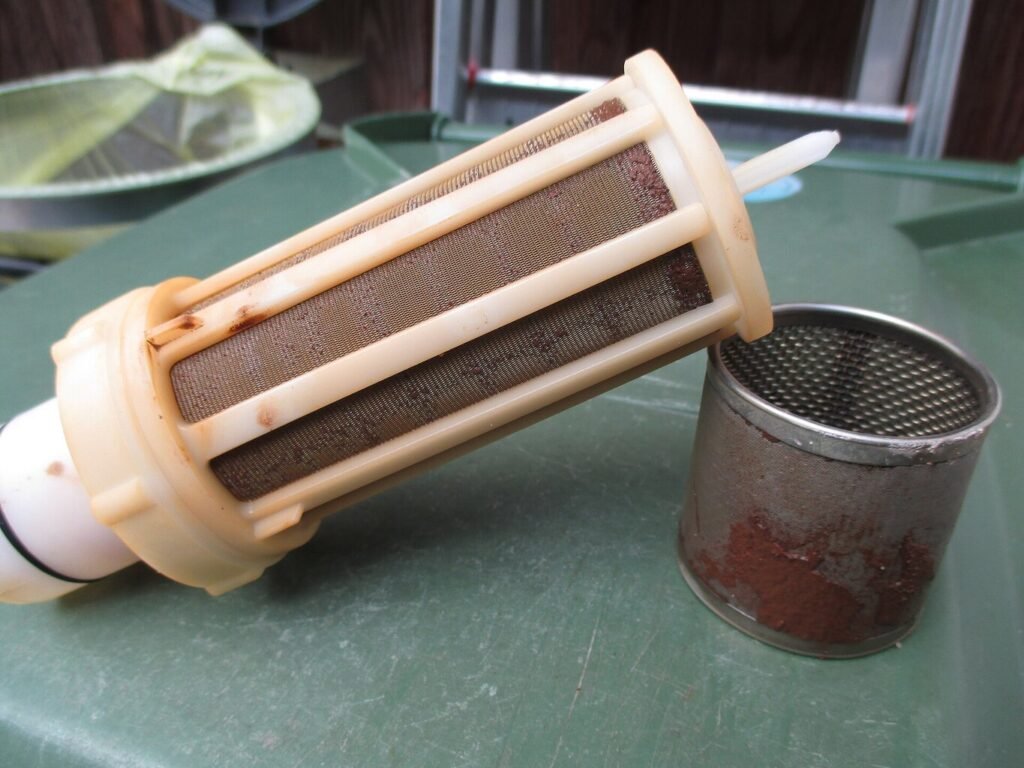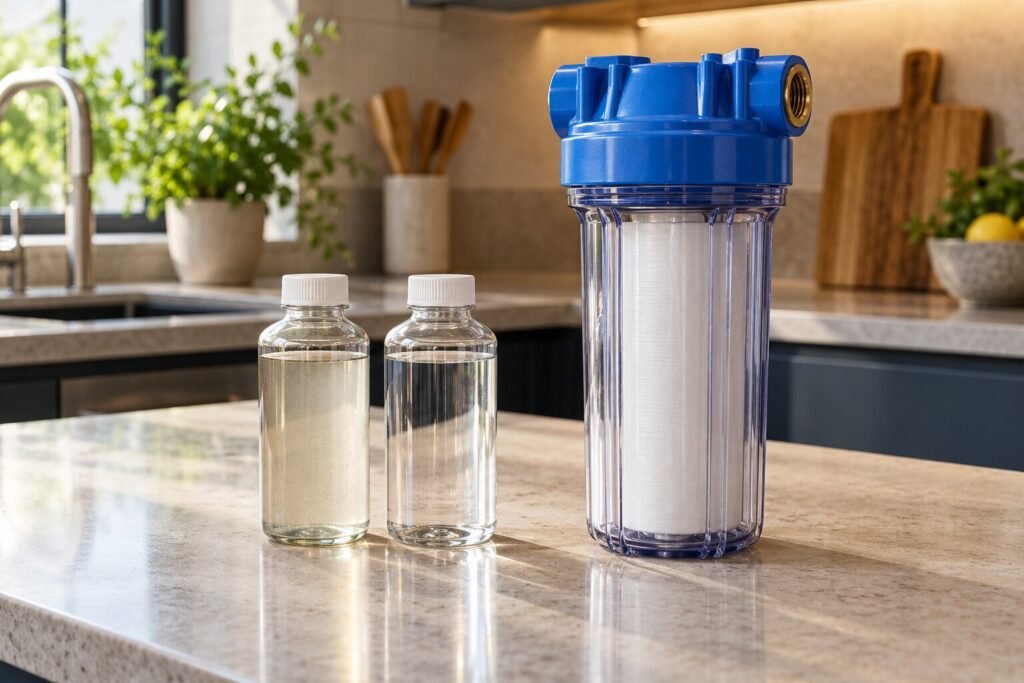
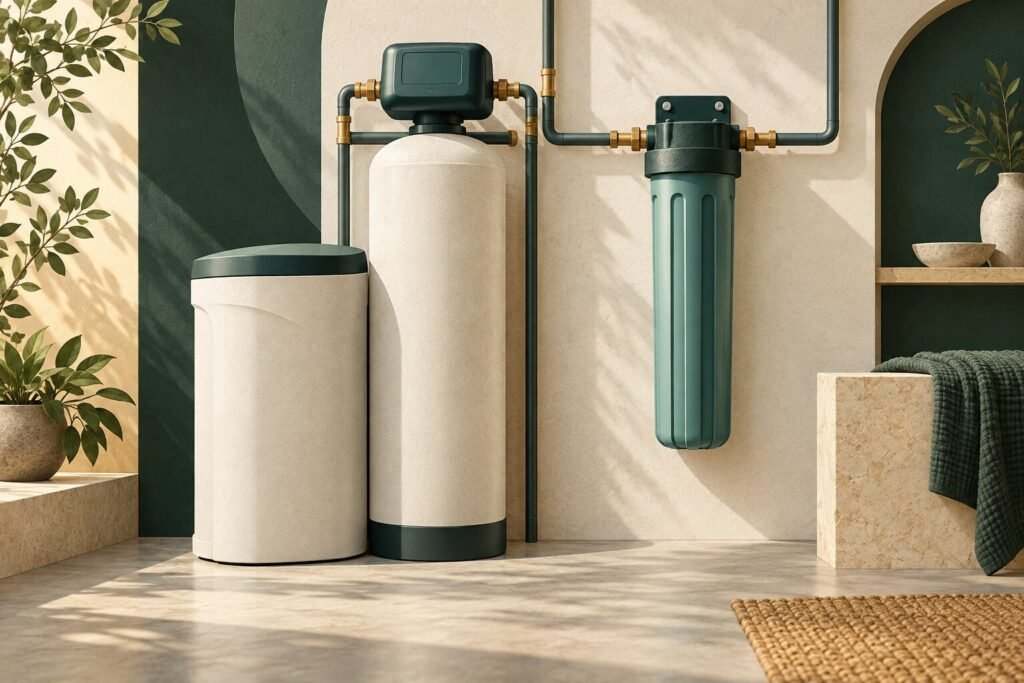
A conventional softener reduces hardness minerals. A filter does the job supported by its particular media, design, and claims. Neither category replaces the other in every home. If one quote addresses scale and another addresses chlorine taste, they are proposing different improvements.
A package can combine softening with filtration. Ask for the purpose of each stage rather than assuming the softener itself carries every claim. Keep hardness measurements and other water-quality results separate in the comparison.
Use the terms carefully
A conventional ion-exchange softener is intended to address hardness minerals through its resin process. “Water filter” is a broad label covering equipment with different media, designs, and claims. It doesn’t identify one universal process or one set of substances removed.
If a proposal combines treatment stages, ask for a breakdown of their roles. A softener with an additional filter stage isn’t evidence that softening alone provides that filter’s claim. Keep each component and its purpose distinct.
Start a concern-to-evidence worksheet
| Your question | Information to bring | What to ask the seller |
|---|---|---|
| Is hardness behind recurring scale? | A labeled hardness measurement and household observations | How does the proposal address the measured hardness? |
| What is causing visible particles? | A source investigation and relevant findings | Which particle-treatment claim supports this device? |
| Is a specific substance a concern? | The relevant report and professional interpretation | Does the exact model have the required verified claim? |
| What water uses need treatment? | A list of taps and intended uses | Which uses would this installation actually cover? |
The worksheet is a way to organize questions, not a diagnosis table. Use a laboratory, utility, local health department, or qualified professional to establish the concern where needed. Taste and appearance aren’t a complete water-quality assessment.
Compare the scope and supporting documents
For each proposal, ask for the exact models, treatment target, inlet requirements, installation scope, and maintenance instructions. If a certified reduction claim matters, check the actual listing rather than a logo or a general statement that the brand is certified.
NSF’s standards guide explains why different standards and reduction claims must be read specifically. Our verification checklist turns that into a repeatable record. Keep a copy of the listing checked and the model details being quoted.
Make ownership part of the comparison
- Which supplies need regular replenishment or replacement?
- What service tasks belong to the owner and which to a technician?
- What access, plumbing, and other installation work are required?
- What current local quotes support the ongoing cost estimate?
- How will you check the treatment goal after commissioning?
Put these answers next to the purchase price. Don’t assign a generic annual cost copied from another household. Ask each supplier for its current parts and service information, and record the assumptions behind any estimate.
Consider that the proposals may solve different problems
If the softener addresses measured hardness and the filter addresses a different verified concern, neither proposal is automatically a replacement for the other. Ask whether the home needs either, both, or further investigation before equipment is selected.
If both proposals claim to solve the same concern, request the evidence in comparable terms. A treatment recommendation should be understandable without relying on a sales demonstration or the number of tanks included.
Choose a documented plan
For hardness decisions, use the softener worksheet. For broader equipment proposals, start with the whole-house filter guide. The aim is a defined treatment purpose, a checked claim, and a service arrangement that fits your home.
Sources
- Minnesota Department of Health: Home Water Softening Frequently Asked Questions
- NSF: Standards for Water Treatment Systems
- Water Quality Association: Residential Water Treatment Design
This guide is AI-assisted and includes reference links. We haven’t tested your water or independently tested products. Follow local health advice and the instructions for your own equipment.
Read our editorial policy →