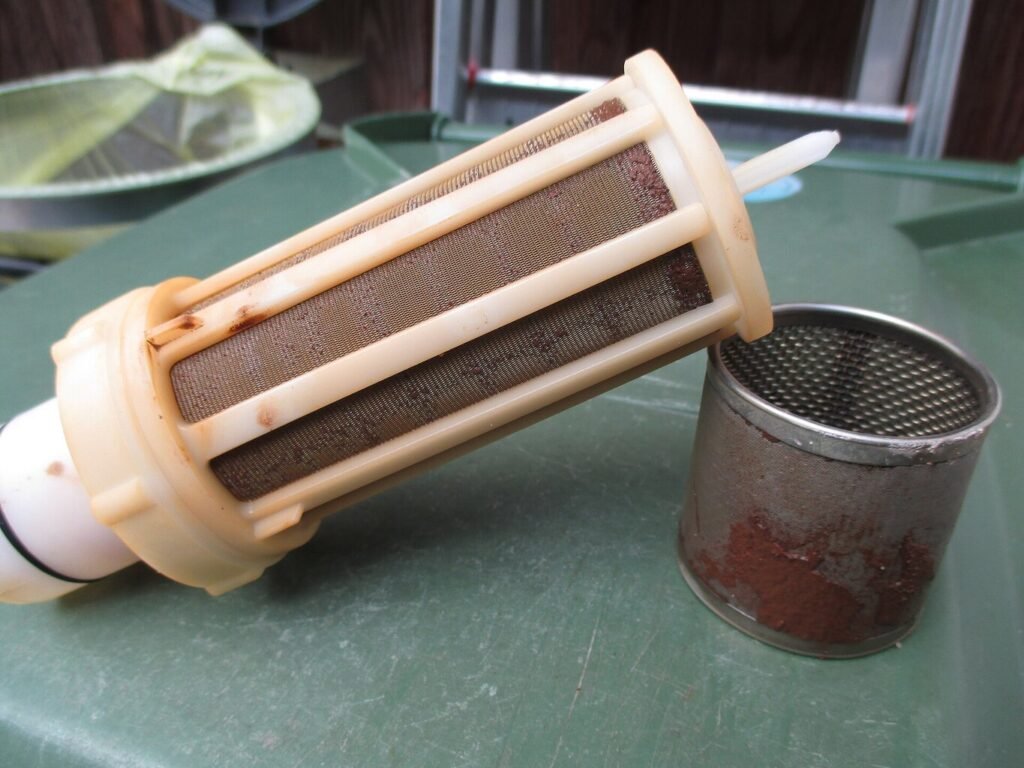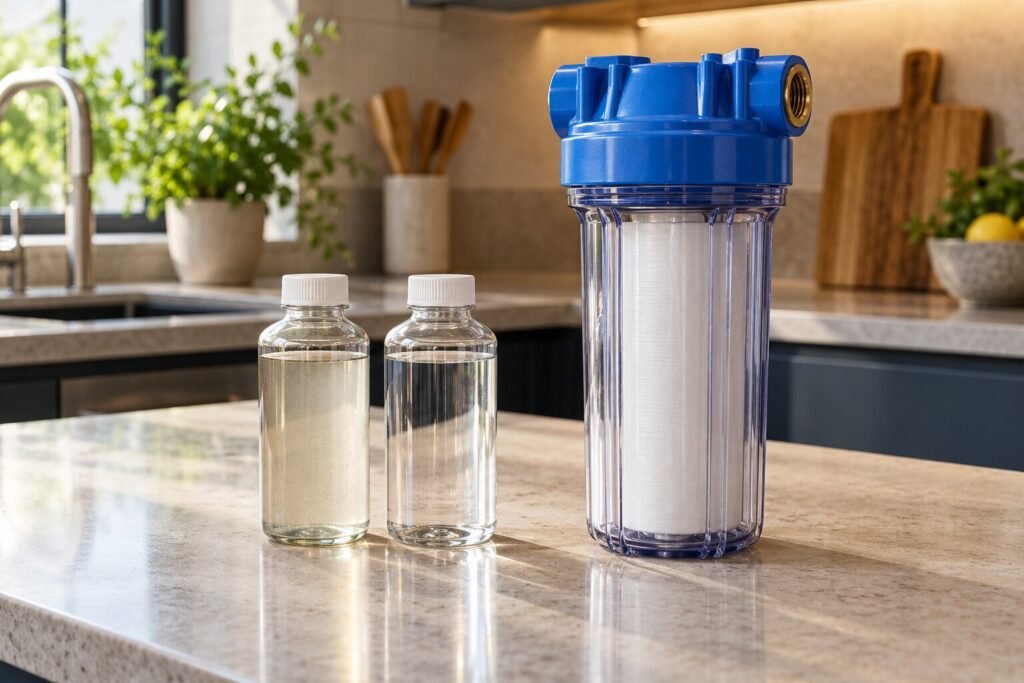
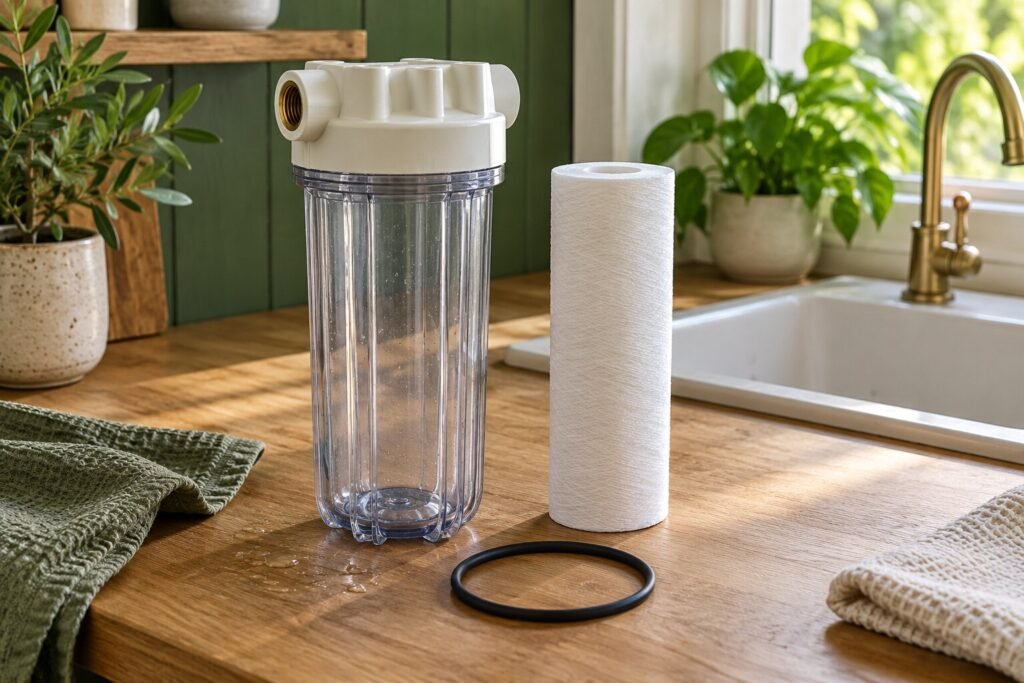
Before servicing a filter housing, identify the housing, cartridge, seals, and the matching manual. A cartridge that physically fits isn’t automatically approved for the arrangement or its treatment claim. Opening a pressurized housing is unsafe.
Use only the seal, lubricant, and cleaning method permitted by the manufacturer. Don’t substitute supplies from unrelated equipment. Gather the full isolation, pressure-release, and post-service instructions before starting, or use a qualified provider.
Identify the housing and the treatment component
Record the complete housing model and the actual cartridge used. A housing isn’t itself evidence of a particular contaminant-reduction claim. The relevant claim may depend on the complete configured system and its evaluated components.
Keep the original manual or an official current copy. If the installation was inherited, record unknown details as unknown and contact an appropriate supplier or professional. A photograph and an estimated dimension aren’t enough to establish every permitted replacement part.
NSF’s standards guidance is useful when a treatment claim is involved. Look for the exact model and scope. A container that accepts a component physically doesn’t automatically establish the component’s intended performance or compatibility.
An example of a model-specific document trail
Product suggestions are unpaid and contain no affiliate links. We haven’t independently tested these products.
Pentair OMNIFILTER WH5 is an identifiable housing example for researching how a manufacturer documents a particular unit. Its official page is a starting point for the exact model and applicable information. It isn’t a recommendation to substitute that model for your installation.
Use the documentation for the unit you actually own. Ask which cartridges, seals and other parts are permitted, which operating conditions apply, and which service tasks belong with an owner or professional. Don’t transfer WH5 instructions to another housing merely because it looks similar.
Make a parts record before shopping
| Part of the file | What to save |
|---|---|
| Housing identity | Complete model and current official instructions |
| Cartridge identity | Permitted model and relevant treatment claim |
| Seal or other service parts | Exact permitted identification, not a visual guess |
| Procedure | Applicable manual section and professional-service requirements |
| Consumables or tools | Only those specified for the actual task |
| Support route | Manufacturer, installer or service provider contact |
Keep the supplier and purchase date beside each part. A familiar retailer description can change, so the order record should identify what was actually supplied. If the package and invoice disagree, clarify the identity before treating the item as suitable.
Confirm which seal, lubricant, and cleaning agent the manufacturer permits. Supplies approved for another appliance may not be suitable for this housing.
Establish whether the owner should do the task
Read the applicable procedure before deciding who performs the work. Ask whether the owner’s skills and the installed access are appropriate, and whether local rules or the manufacturer require professional service. A task described as routine can still be unsuitable in an unfamiliar arrangement.
The owner shouldn’t have to discover missing instructions halfway through work. Gather the correct documents, parts and contact route first. If anything is unclear, request suitable help instead of improvising an isolation or pressure-release sequence.
Ask the service provider to describe the planned work and the checks afterward. A well-defined task is easier to review and budget than a request to “change whatever is needed.”
Keep the installation conditions visible
An equipment file should record what the installer provides about the location, permitted operating conditions and service access. Don’t select a new cartridge from an assumed flow or pressure value. If a professional needs a measurement, agree on the appropriate method and interpretation.
Tell support about a new leak, visible damage, or a change after service. Take accessible photos if helpful, but don’t dismantle unfamiliar or pressurized equipment to investigate.
Use the low-flow record when a delivery change follows a service task. The model identity and work history make that troubleshooting conversation more useful.
Budget recurring service accurately
Use current prices for the exact permitted parts and any required professional labor. Record the actual trigger from the manual rather than assigning a universal schedule. A cartridge task and another component’s service may have different timing.
Include access or other work identified by the technician where relevant. Leave an uncertain item visibly unanswered until a supplier supplies a figure. A missing quote isn’t evidence that the task has no cost.
For a complete well-water project, the project-budget guide keeps equipment, installation, testing and recurring obligations separate. A housing task should fit within that larger maintenance record rather than being handled as an isolated purchase every time.
Sources and product documentation
- Pentair , OMNIFILTER WH5 housing.
- Pentair , Residential filtration FAQs.
- NSF , Standards for Water Treatment Systems.
This guide is AI-assisted and includes reference links. We haven’t tested your water or independently tested products. Follow local health advice and the instructions for your own equipment.
Read our editorial policy →