
Tiny air bubbles can make tap water look cloudy. A glass that clears from the bottom upward can suggest air, but the observation alone doesn’t establish drinking-water safety. If cloudiness persists, changes suddenly, or comes with other symptoms, contact the supplier or a well professional.
Use a clean, clear glass and note what happens while it stands. Settling particles are a different observation from bubbles disappearing. Record the pattern, hot or cold supply, and affected outlets before deciding that a filter is needed.
Start with the pattern you can describe
Note which faucet is affected, whether the observation involves hot or cold water, and whether it occurs after water stands or during normal use. Record whether it affects one room or several. Add any recent plumbing work, supplier notice or change in existing treatment.
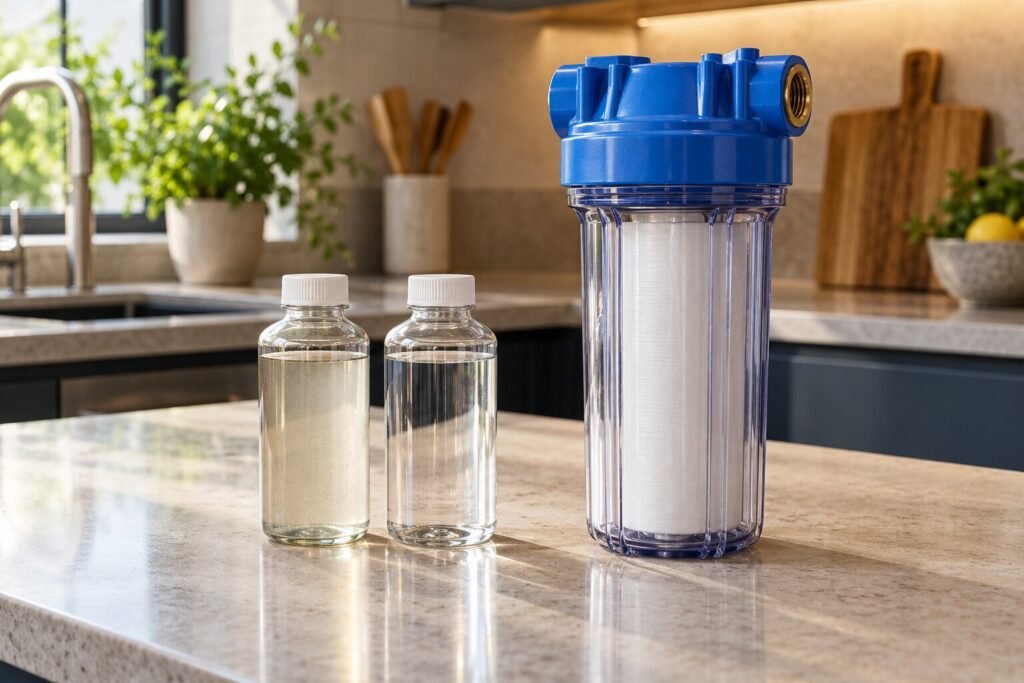
Use a clean transparent glass for an ordinary visual observation without tasting unknown water as a test. Describe what happens as it stands. Does the appearance change, do particles settle, or does the cloudiness remain? A time-stamped photograph can help communicate the pattern without assigning a cause.
USGS discusses air bubbles as one reason water can look temporarily cloudy and also explains how sediment and other materials affect appearance. That background makes a clearing pattern useful context. It doesn’t turn every cloudy glass into a confirmed air-bubble diagnosis.
Keep the observation and conclusion apart
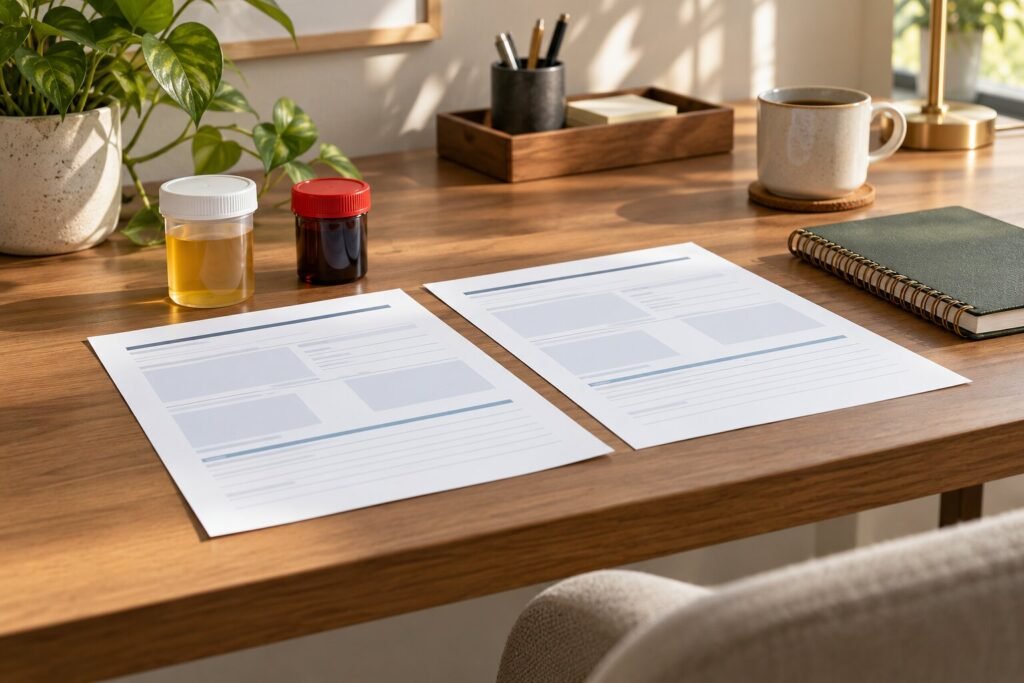
Use two columns in a notebook. The first records what you actually saw: “cloudy on filling, changed after standing,” or “visible material remained.” The second records what a supplier, laboratory or professional has established. Leave the second column empty until there is relevant evidence.
CDC’s filter-selection guidance cautions that appearance, taste and smell don’t establish safety. That applies both ways. Cloudy appearance isn’t a complete diagnosis, and a clear-looking result isn’t proof that every concern is absent.
| Observation | Useful follow-up question |
|---|---|
| Temporary cloudiness | Could the supplier or professional explain the pattern in context? |
| Persistent appearance change | Which examination or laboratory work fits the concern? |
| One affected outlet | Should that fixture or plumbing branch be investigated? |
| Several affected outlets | Should supply or existing treatment information be reviewed? |
| Change after recent work | What changed, and should the service record be checked? |
The table supplies questions rather than diagnoses. Its purpose is to make the next conversation more precise.
Check public-system information where relevant
If you receive public water, look for a current supplier notice and use the utility’s contact route. Give the location, timing and affected outlets. Ask whether there is known work or another issue relevant to your observation, and follow any instructions provided.
Keep the response with your record, including its date. An explanation for one event shouldn’t automatically be used for a different appearance change months later. If the pattern persists or changes, update the supplier rather than assuming the earlier answer covers it.
For a private well, discuss the concern with the laboratory, local health department or appropriate professional. A public-system explanation doesn’t automatically apply to the well. Source type is part of the investigation, not merely a label on the house.
Ask the laboratory for a question-led plan
Explain the observation and water source before selecting tests. Ask whether the laboratory can address the relevant question and which collection instructions apply. Use the EPA state certification directory when a certified laboratory is appropriate for the analyses.
Don’t send an unlabeled jar and ask the laboratory to infer the complete problem. A usable record identifies the sample point, collection procedure, time and position relative to treatment. If existing equipment is relevant, explain its normal operating status.
Keep the full report and its qualifiers. A test for one substance isn’t an all-purpose assessment. If a local authority supplies a safety instruction, follow it rather than waiting for a visual experiment to become reassuring.
Decide whether a filter has a defined job
If investigation identifies material that a proposed filter is intended to address, ask the installer to name that material, the selected model and its evidence. “Makes water clear” isn’t a substitute for a supported claim and operating requirements.
For particle-filtration questions, compare actual ratings, conditions and maintenance obligations. Our micron-rating guide separates nominal and absolute terminology. The right rating still depends on the task. This article doesn’t select one from the appearance of a glass.
If the proposed explanation is air bubbles, ask what action, if any, is appropriate before buying a sediment cartridge. A device should be connected to the investigation rather than purchased because it is the first available “water filter.”
Revisit changes after service
Record what work occurred, when it happened and what changed afterward. Keep the original pattern so a professional can compare like observations. Don’t change several settings at once merely to see which one alters the appearance.
If the pattern returns, show the earlier record and ask whether the original explanation still fits. A service visit can create a useful baseline, but it doesn’t make future changes identical to the first event.
Related guides
Sources and product documentation
- USGS , Water Color.
- CDC , About Choosing Home Water Filters.
- EPA , Certified Laboratories for Drinking Water.
This guide is AI-assisted and includes reference links. We haven’t tested your water or independently tested products. Follow local health advice and the instructions for your own equipment.
Read our editorial policy →