A typical pocket TDS meter estimates dissolved solids from electrical conductivity. It doesn’t identify each substance or detect every hazard. A low reading doesn’t certify safe drinking water, and a high reading doesn’t tell you which filter to buy.
A specific carbon-filter claim doesn’t require a large change in aggregate dissolved solids. Use the right check for the claimed job. For lead, nitrate, bacteria, or another named concern, ask a lab about the appropriate analysis.
Understand what the display represents
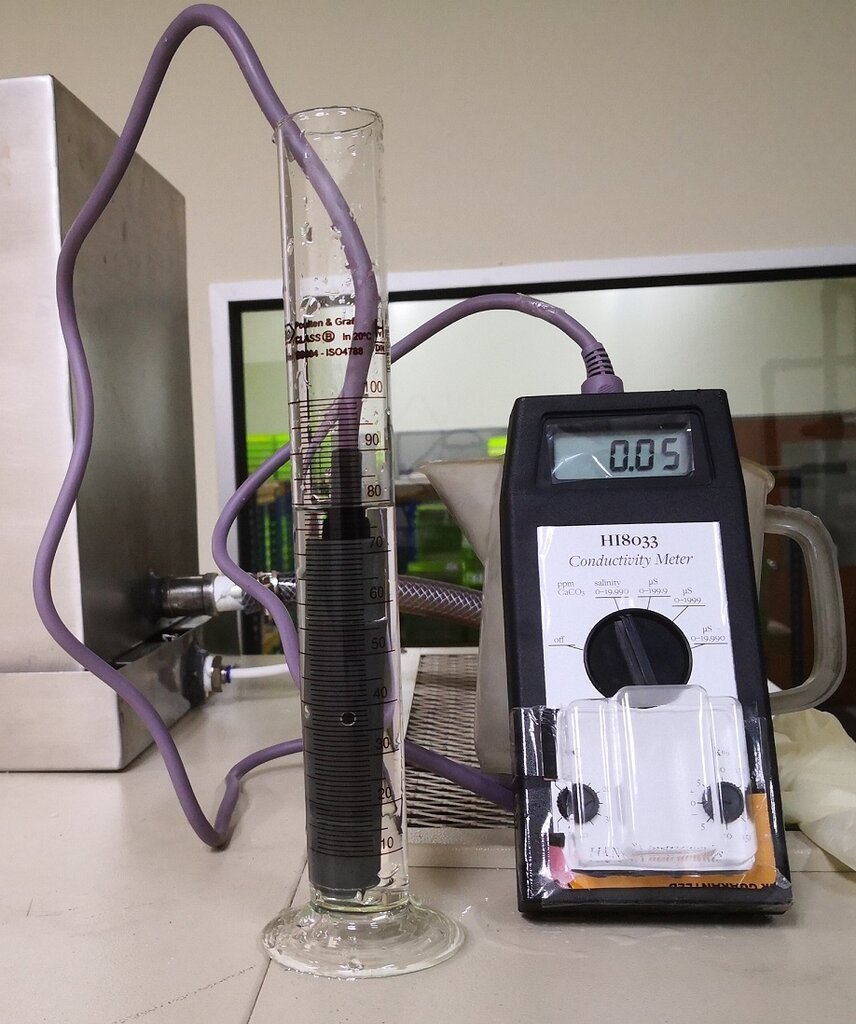
Many consumer TDS meters estimate dissolved-solids concentration from electrical conductivity using a conversion factor. The USGS water-quality primer explains conductivity as an indirect indication of dissolved minerals. Check your meter’s manual for the displayed unit, conversion approach, temperature handling and calibration requirements.
The instrument doesn’t identify each dissolved substance. Two samples can produce similar readings while containing different mixtures. Writing only “TDS 180” in a notebook leaves the source, method and instrument out of the record. Add those details before drawing any conclusion.
Imagine a hypothetical kitchen test and a test at an outdoor tap. If one tap is downstream of treatment and the other isn’t, the numbers may describe different parts of the arrangement. A change doesn’t explain itself. Confirm the locations before comparing them.
Don’t turn a number into a safety badge
A low meter reading isn’t proof that water is free of harmful germs or particular chemicals. A high reading doesn’t identify which substance caused it. If your concern is a specific contaminant, ask about testing for that contaminant rather than asking the meter to answer a question it can’t resolve.
EPA includes TDS in its secondary drinking-water guidance. That context shouldn’t be mistaken for a universal pass/fail rule for all water hazards. Read the original guidance and discuss a household concern with the utility or health department.
Don’t accept a sales demonstration as a complete diagnosis. Ask the presenter to name the measured property, describe the instrument and explain what further evidence supports the proposed treatment. A dramatic display doesn’t change the scope of the measurement.
Keep comparisons consistent
If you’re taking readings for a legitimate equipment-monitoring purpose, follow the meter and equipment instructions. Use the same identified sampling locations, maintain the instrument as directed and record the conditions. Don’t invent a calibration procedure from an online comment or use an unknown liquid as a calibration standard.
Make a small record with date, tap, instrument, unit and reading. Note changes such as a new cartridge or a different supply. Keep photographs of the display for your own file if helpful, but remember that a photograph can’t recover details you never recorded.
Repeated readings can help you notice a pattern. They don’t automatically explain the pattern. Ask whether differences are meaningful within the meter’s stated accuracy and the intended monitoring procedure before treating every fluctuation as equipment failure.
Ask the right question about reverse osmosis
An RO manufacturer may specify a conductivity or TDS-based check as one part of monitoring its system. If so, use its method and acceptable conditions. Keep the feed-water and treated-water locations clearly identified. The kitchen faucet may not be the feed sampling point specified in the instructions.
A hypothetical change from 200 to 20 on the same scale describes a large difference in the estimated aggregate reading. It doesn’t independently prove reduction of every contaminant, prove that every stage is maintained, or establish that the entire installation is safe. Those are separate questions.
Use our RO replacement-record guide to organize the actual stage identities and service history. Combine the records the manufacturer requires. Don’t let one reassuring number erase a missing maintenance date or an unresolved laboratory question.
Choose laboratory testing when the concern is specific
Tell a laboratory what prompted the investigation. A question about lead, nitrate, bacteria or arsenic requires an appropriate analysis and sample plan. Ask the lab which bottle, tap and collection method apply. The pocket meter’s display is background information, not a replacement for the requested analysis.
Keep the laboratory report intact, including its units and any qualifications. Avoid comparing its result to the meter by numeral alone. A specific-analyte result and an aggregate conductivity-based estimate measure different things.
If water is subject to an advisory, follow the issuing authority’s instructions. Don’t use a meter reading to decide that the notice no longer applies. Our advisory response guide can help organize contacts and household responsibilities.
Sources
This guide is AI-assisted and includes reference links. We haven’t tested your water or independently tested products. Follow local health advice and the instructions for your own equipment.
Read our editorial policy →