A drinking-water treatment plant prepares water for the public supply. Distribution pipes, storage and the building’s plumbing carry it the rest of the way to the tap. A home filter has a separate, narrower purpose. Understanding the route helps you ask which part of the system a household concern actually involves.
Start with your utility’s source description and annual water-quality report. If the utility buys treated water, identify both the treatment supplier and the organization delivering it to your address.
A common plant sequence, with limits
The CDC’s treatment overview describes a common sequence in which particles are gathered, separated and filtered before disinfection. Utilities use different processes according to the source and treatment needs, so this is an explanation of functions rather than a diagram of every plant.
- Coagulation and flocculation. Treatment chemicals and mixing help small particles form larger groups.
- Sedimentation. The heavier groups separate by settling.
- Filtration. Selected filters handle material remaining in the water.
- Disinfection. The plant uses the designed process to control germs.
- Distribution. Treated water moves through the public system to buildings.
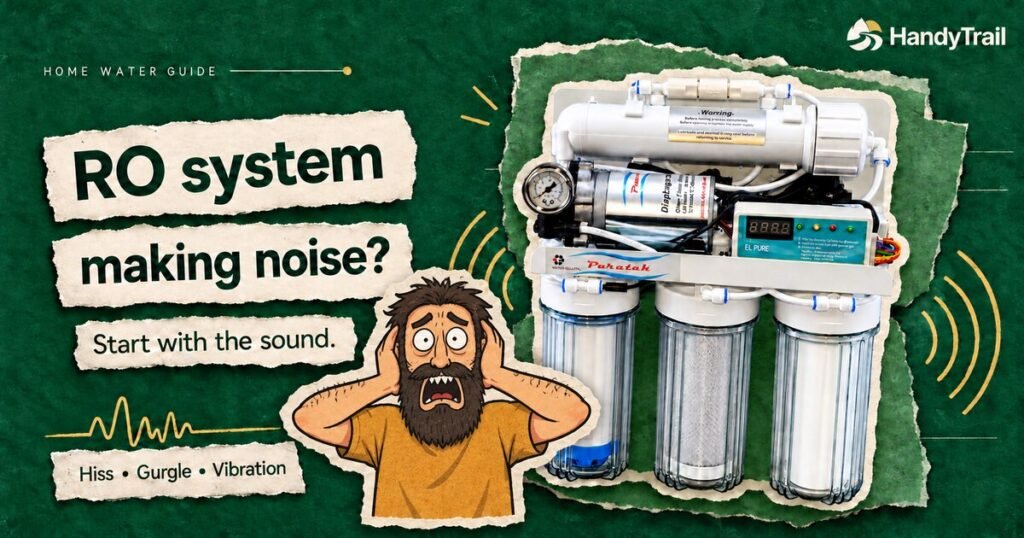
The exact technologies and sequence must come from the supplier. A photograph of a sand filter or an RO membrane does not establish which equipment treats your water.

Why the route after treatment matters
CDC distinguishes disinfection at the plant from continuing protection in distribution. UV and ozone do not provide the same continuing residual as a chemical disinfectant left in the water. Removing a taste at the kitchen is therefore a different task from reproducing the public treatment program.
A utility report describes monitored supply conditions over its reporting period. For the report’s dates, units and results, use the report-reading record. A current advisory needs its own instructions, even if an earlier annual report was reassuring.
Build your own four-box supply map
| Part of the route | Find or record | Question to take forward |
|---|---|---|
| Source | The named source or mixture in the utility report | Does the supplier describe a recent source change? |
| Treatment plant | The supplier’s treatment explanation | Which process addresses the issue you are asking about? |
| Public distribution | The current notice and affected area | Does the event apply to this address? |
| Building and outlet | Affected fixtures, timing and recent work | Is a plumbing inspection or a particular sample needed? |
Leave an entry unknown when the evidence does not locate the concern. The map is a conversation aid, not a diagnosis. Its value is keeping a source report from being mistaken for an inspection of the building.
Two households, two different next steps
In a hypothetical home, an unfamiliar taste begins at several cold taps on the date of an announced treatment change. The first useful record is the notice, timing and supplier response. Buying equipment before checking the announcement may answer the wrong question.
In another home, a concern is limited to one fixture after work on that fixture. The utility’s treatment description is still relevant background, but it does not identify the local cause. Tell the plumber or laboratory which outlet changed and ask what inspection or sample would resolve the question.
Neither scenario establishes safety from appearance or taste. They show how the same public supply information can lead to different household follow-ups.
Define the job before comparing filters
Write the intended outcome in one sentence. For example, a documented taste preference at one drinking tap is different from a confirmed contaminant-reduction need. Match that job to the exact system and cartridge claim, operating limits and maintenance.
The certification-checking guide helps connect evidence to the model. It also distinguishes material-contact certification from a contaminant-reduction claim. A household cartridge does not replace utility monitoring or an active water-use instruction.
Keep wastewater on its own route
The pipe carrying used water away from the home is not another stage of the household’s incoming drinking supply. Use the drinking-water and wastewater comparison when identifying the responsible service.
Keep the completed map, current report and the unanswered question together. A useful plant explanation should leave you with the right organization to contact and one defined next step, rather than a shopping list of treatment devices.