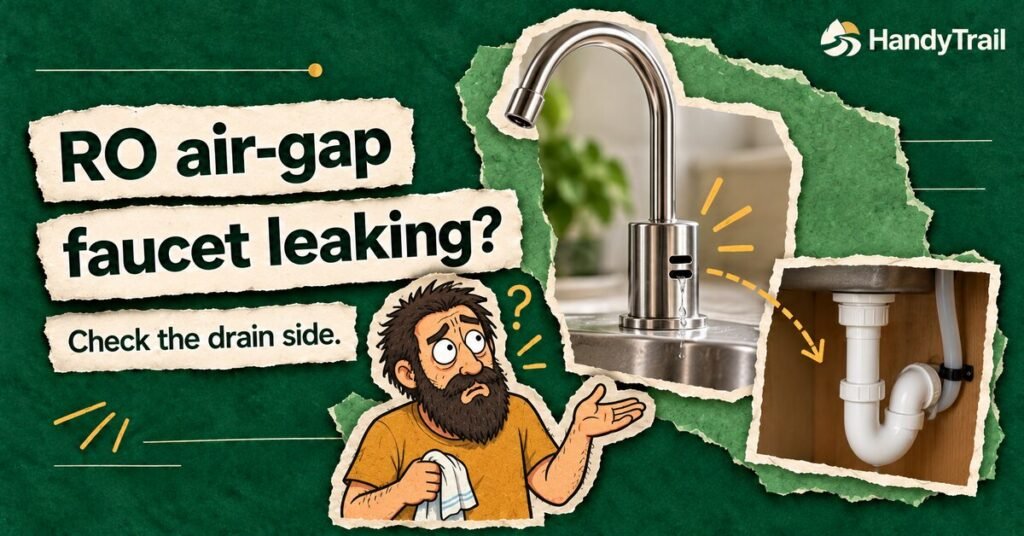
Water leaking from an RO faucet's air-gap opening often points toward a problem on the drain side of the arrangement, but the exact cause needs checking. Don't seal the opening to stop the symptom. The air gap is intended to protect the treatment connection from the drain.
If water is reaching electrical equipment or damaging the cabinet, isolate the system safely according to its instructions and arrange service.
Identify where the water appears
A faucet spout drip, a fitting leak under the sink and water from an air-gap vent are different observations. Photograph the location and note whether it happens during RO production, sink use or both.
Confirm that the faucet is an air-gap design. Not every RO faucet uses the same drain arrangement, and advice for another model can be wrong.
Follow the approved drain diagram
For a documentation example, GE Appliances’ air-gap leak guidance identifies drain-side restrictions and incorrect drain connections as common causes for its systems. Use your own system’s diagram to review the route and connection.
Air-gap systems can have separate lines to and from the faucet. Check the manual for route, size and slope. A kink, restricted line or unsuitable connection can affect drainage.
Don't rearrange tubes from memory. Label connections before approved service and ask for help if the route is unclear. Avoid contaminating the clean-water line while investigating the drain side.

Check the receiving drain too
A sink drain blockage or incorrect drain connection can be part of the problem. A plumber may need to assess the receiving drain and the installation, especially if ordinary sink use also backs water up.
Don't pour drain cleaner into RO tubing or the faucet vent. Household drain chemicals can create exposure and equipment-damage risks. Use only model-appropriate service procedures.
New installation or new symptom?
If leaking began right after installation, review connection alignment and routing with the installer. If it appeared after months of use, restrictions, movement or drain changes may deserve attention.
Tell the technician about recent disposal work, sink repairs or cabinet rearrangement. A cleaning basket pushed against a tube can matter, but it doesn't explain every leak.
Avoid defeating the protection
Capping the vent, bypassing an air gap without approval or moving a drain connection to an easier place can violate instructions and local requirements. A dry cabinet achieved by removing protection is not a completed repair.
Ask what requirement the proposed new arrangement meets and whether it is approved for the system. Keep a diagram of the final connections.
A short troubleshooting record
| Record | What to note |
|---|---|
| Location | Vent opening, spout or under-sink fitting |
| Timing | RO production, sink use or both |
| Recent work | New installation, disposal work or tube movement |
| Repair record | Approved route and leak check after service |
Check the repair under normal use
After approved service, follow startup instructions and observe the system while it produces water. Check the sink's drainage too. Inspect accessible connections for leaks without disturbing them.
If the leak returns, record the same timing and location rather than repeatedly replacing filters. The cartridge may have nothing to do with the drain restriction that started the problem.
Understand RO concentrate flow when describing when the drain-side leak appears.
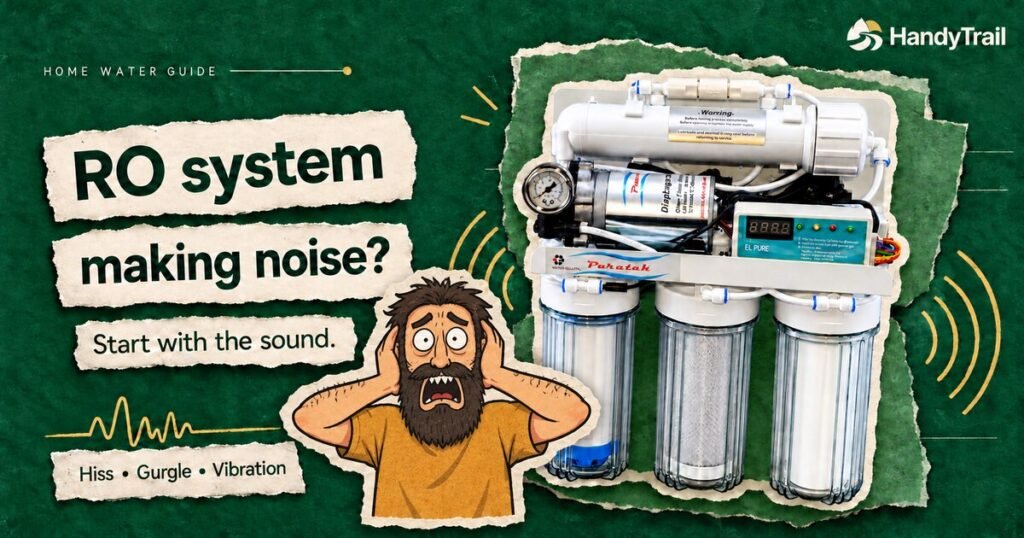
For the related investigation, see An RO system makes noise. Describe the sound and when it happens.