





A more confident home / USA

Home plumbing.
See how it connects.

Practical home plumbing guidance for US homeowners. Understand leaks, supply and drains, explore a working diagram and plan repairs with clear records.

Home plumbing / A clearer startSupply · fixture · drain
A simple tap and sink with separate supply and drainageWater enters a tap through the supply pipe and leaves the sink through a separate simplified drain. Illustrative only; actual connections vary. Water inDrain out

Start with the fixture. Explore the full system below.

Start with the situation

Observe first. Choose a useful next step.

01

Water where it should not be

Stop the affected use. Identify a known, safely accessible shutoff; do not force a damaged valve.

02

A change in flow or drainage

Keep a slow faucet separate from a slow drain. Record the fixture, timing and other affected areas.

03

Work that needs a clear scope

Confirm responsibility, local requirements, access, restoration and the checks included in the repair.

An interactive working example

See where the water goes.

Follow the cold supply, the heater branch and the separate drain. Select a component to explore its role.

A home system, explained

Illustrative flow · not to scale
Cold supply, a water-heater branch, a mixed-water fixture and a separate drainCold water enters from a utility or private well and passes a household shutoff. A branch supplies a water heater. Hot and cold water reach separate faucet connections. Wastewater leaves the sink through a simplified trap and drain toward sewer or septic. Flow markers show direction only, not measured speed. Equipment, vents, safety devices and installation details vary; this is not a construction plan. Vent continues 01 Water sourceUtility or private well 02 Indoor shutoffKnow the appropriate valve 03 Water heaterIllustrative cutaway 04 Tap + sinkHot and cold meet here Simplified P-trap05 Drainage outTo sewer or septic COLD SUPPLYHOT WATERCold to heater

Swipe across to follow the complete system

1. Your water source

A utility connection and a private well have different responsibilities. Confirm your source and any current water-use notice. This drawing does not show well pumping or storage equipment.

Understand source testing
2. A known indoor shutoff

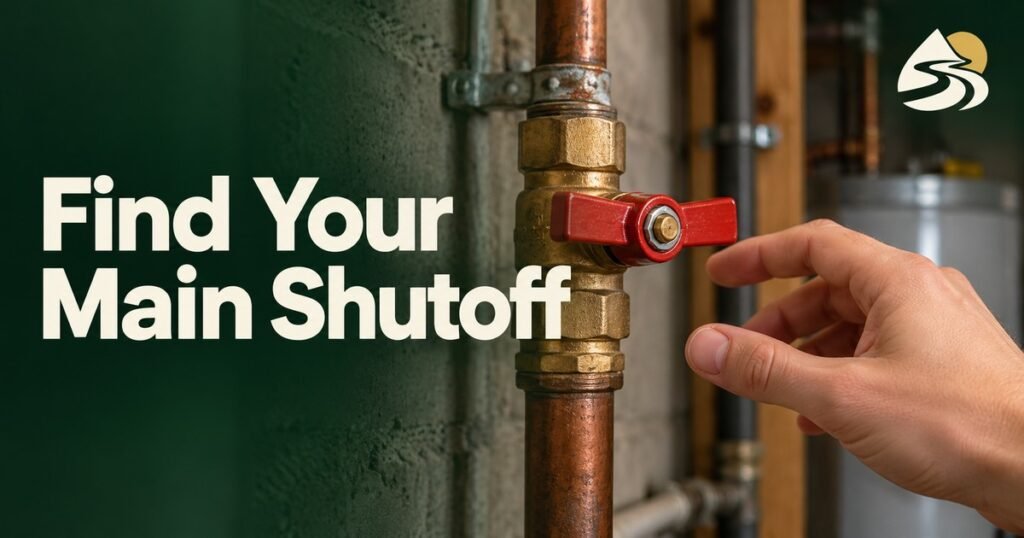
Find and label the appropriate household valve before a problem. It may not isolate every branch. Do not force a seized valve or operate the utility’s curb stop or a shared-building valve without authorization.

Find and label your shutoff
3. The water-heater branch

Cold supply branches to a water heater; a separate hot-water pipe returns to the fixture. The color inside the tank explains heating, not a measured temperature or water level. Actual equipment needs model-specific safety devices and installation checks, which this drawing does not specify.

Explore equipment maintenance
4. The fixture and its connections

A faucet supply and a sink drain are separate components. Record where a symptom starts and what use preceded it. Hot and cold connections are shown conceptually at one mixing faucet. Actual fixture connections, isolation and backflow requirements depend on the installation.

Explore practical guides
5. The wastewater route

Used water leaves through drainage to a sewer or septic system. The trap and continuing vent are simplified symbols. Pipe sizes, slopes, air gaps, water-heater safety devices and other installation requirements are not specified. Multiple backups or suspected sewage require stopping affected use and contacting the responsible professional.

Read EPA septic care guidance

Cold supply Hot water Wastewater Flow markers show direction, not measured speed. Installation and safety details vary.

The practical library

Home plumbing and maintenance guides.

Build your starting point.

Related published guides from the HandyTrail library.

Made useful for US households

Local rules. Exact models. Clear records.

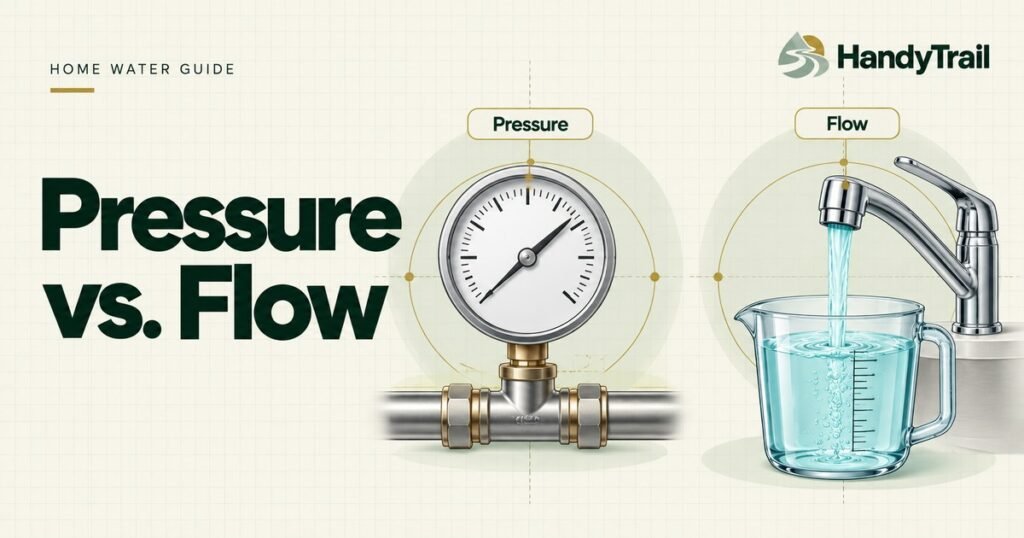
Start with the symptom you can describe: a wet surface, a slow drain or a change after maintenance. Keep drinking-water quality, supply pressure and wastewater drainage as separate questions.

For repairs in the United States, confirm the requirements with the local building department and responsible licensing authority. Rentals and condos can have shared plumbing and separate authorization requirements.

Use exact model instructions for accessible fixture care. Stop affected use for suspected sewage, active leaks or water near electrical equipment, and arrange appropriate professional help. Our diagrams explain concepts; they are not installation plans.