A rental water checklist helps you notice everyday plumbing problems before signing a lease and document the condition of a house or apartment when you collect the keys. Start with the water source, the bill, the taps, the drains and the person responsible for repairs. Save water-quality testing questions for the concerns those checks actually raise.
A tour cannot prove that drinking water is safe. Clear water, a strong shower and a tidy kitchen are useful observations, but they do not rule out contaminants. Keep this checklist alongside your lease review and move-in condition report. If you already live in the property and have a water-quality concern, use our renter water-quality guide for the next steps.
Before the tour: ask where the water comes from
Ask whether the property receives water from a public supplier or a private well. Get the supplier's name, even if water is included in the rent. For a well, ask who manages testing, where the latest relevant results are kept and whom to contact if supply or quality changes.
For a community water system, request its current annual water-quality report. The EPA explains Consumer Confidence Reports and the information they provide about the local supply. The report helps you understand the system; it does not replace a sample from the particular rental when a household-specific concern needs investigation.
Ask about current drinking-water notices before arranging the viewing. If a notice applies, follow the utility or health department's instructions. Do not taste questionable water as a test. A landlord's answer that the building has a filter should lead to another question: what equipment, what purpose and whose maintenance responsibility?
During the viewing: check ordinary use with permission
Ask permission to operate fixtures. Run the kitchen tap and bathroom taps briefly, checking cold and hot separately. Note a weak stream, a delay, an unfamiliar sound or visible discoloration. Describe what happened instead of deciding that a pump, cartridge or pipe needs replacing. One weak faucet could be a local fixture issue; several weak fixtures give the manager a different starting point.
Check the shower if the viewing allows it. Avoid unnecessary water use. A strong-looking stream is not a measured pressure reading. Ask the manager to investigate inconsistent flow rather than adjusting regulators or opening unfamiliar valves.
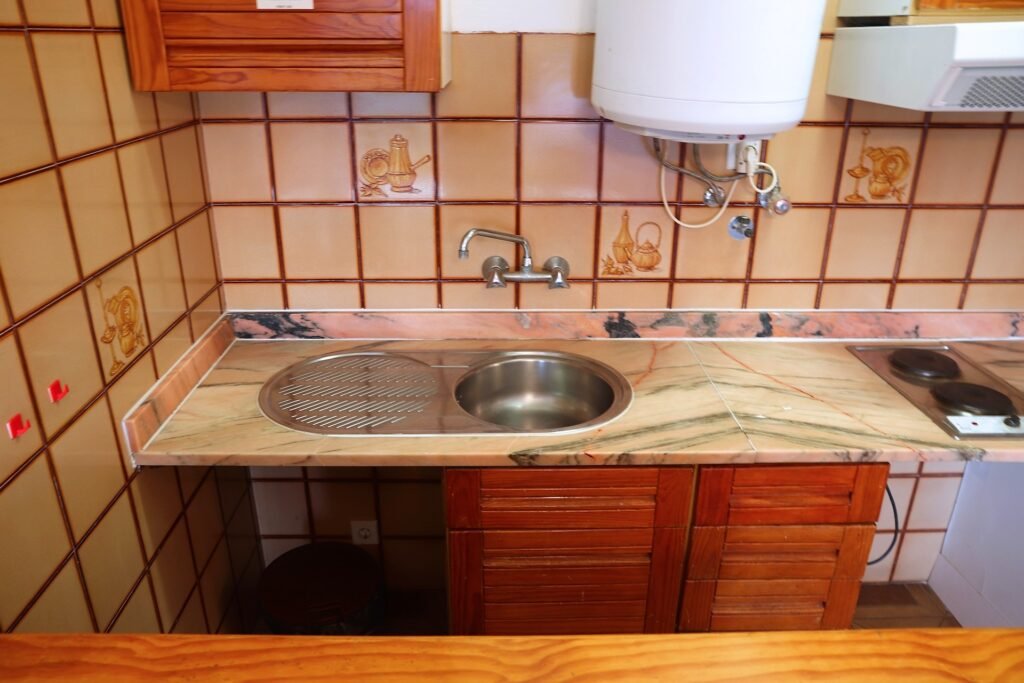
Look under accessible sinks without removing panels. Note moisture, swollen cabinet material, stains, a drip or a musty smell. Photograph an observation with permission and include its location. A dry cabinet on viewing day does not establish that an older stain is resolved. Ask whether there was a repair and whether its completion can be documented.
| Check | What to record | Question for the manager |
|---|---|---|
| Kitchen and bathroom taps | Which fixture; hot, cold or both; visible flow changes | Has this been reported or repaired? |
| Sink and shower drains | Water pooling during permitted normal use | Will the drain be checked before handover? |
| Toilet | Visible leakage or water continuing to run after a normal flush | Who handles a running toilet or failed seal? |
| Sink cabinets | Moisture, damage, stains or smell, with the exact location | Is this an active problem or a documented previous repair? |
| Hot water | Whether normal use produces hot water; avoid touching hot outlets | Is the heater individual or shared, and who services it? |
The EPA's leak guidance identifies dripping faucets and running toilets as common household leaks. In a rental, your practical first step is a dated report to the responsible person. A checklist is not permission to dismantle a fixture, adjust a heater or repair a leak yourself.

Houses and apartments need a few different questions
A rental house may have its own well, heater, treatment equipment, outdoor faucets and meter. Ask which items you can access and which belong in the landlord's service arrangements. If there is irrigation or a swimming pool, establish whether its water use appears on your bill. Do not assume those costs are covered by the advertised rent.
In an apartment, ask whether hot water and treatment serve your unit or the whole building. Find out how planned shutoffs are communicated. If flow changes at busy times, record that pattern after moving in; one quiet viewing cannot reproduce every building condition. Ask about the maintenance contact for evenings and weekends, particularly if you cannot access a building-wide shutoff.
Ask who handles seasonal freeze preparation and how the property handles a prolonged water interruption.
Read the water charges before signing
Get the billing arrangement in writing. Water might be included, billed directly by a utility, measured through a submeter or allocated by a method described in the lease. Ask how usage is calculated, which sewer or service charges are included, when payment is due and how a disputed reading is handled. These arrangements and applicable rules vary by location.
If there is a meter assigned to your rental, ask whether a move-in reading can be recorded with the manager. A photo should show the reading and date without publishing anyone's account details. For shared bills, ask for an explanation of the allocation method instead of treating another tenant's past bill as a prediction of your own.
Also ask who pays for filter cartridges, softener salt and scheduled service. An included treatment unit can still involve ongoing costs. Record an equipment model and the written agreement rather than accepting an estimate based only on its appearance. Our equipment record can help organize the manuals and service details once you have permission to use the equipment.
Know what the viewing cannot tell you
A stain, odor or cloudy glass can justify questions, but it does not identify a contaminant or select a filter. The EPA's home water-testing fact sheet explains why the supply, plumbing and specific concern matter when deciding about testing. It also distinguishes system-wide information from conditions at an individual faucet.
For a suspected lead concern, ask about available service-line information and appropriate testing rather than judging pipe safety from the building's age alone. Let the utility, health department or a suitable laboratory explain the sampling instructions for the question being asked. Do not invent your own flushing procedure and then expect the result to answer a different sampling question.
An attached filter is not proof that water has been evaluated. Ask for its model, purpose and service record. Before buying your own device, check lease restrictions and get any necessary permission. A portable option and an installed plumbing system create different responsibilities.
At key handover: make a usable condition record
Repeat the permitted fixture checks when you receive the keys, especially if the viewing happened weeks earlier. Take dated photos of visible defects and list the room and fixture. Attach those notes to the move-in report using the management company's required process. Keep a copy of what you submitted and any reply.
Describe unresolved problems plainly: “Bathroom sink cabinet damp at the rear on move-in day” is more useful than “bad plumbing.” Ask who will investigate and what follow-up is agreed. Separate a promised repair from a completed repair. After work, record the visit and the outcome you can observe without claiming the entire system has been inspected.
Lease terms and landlord-tenant rules vary. USA.gov's tenant-help guidance points to state agencies and other assistance when a dispute cannot be resolved. Check the route that applies to your property. This checklist does not establish a universal repair deadline or a right to withhold rent.
Your short rental water checklist
Before signing: identify the supply, understand the bill, ask about relevant records, check permitted ordinary fixture use and agree on unresolved defects. At handover: repeat the checks, record visible conditions, save the repair contact and confirm equipment responsibilities.
Download the printable checklist below for a place to record answers during the tour. Leave an unanswered question visible rather than turning it into an assumed “yes.” A useful move-in record tells you what you observed, what the manager said and what still needs follow-up.
Download the printable rental water checklist (PDF, 2 pages).