A push-to-connect fitting can be a legitimate plumbing connection when the product is approved for the pipe and application. Its ease of assembly does not remove the need for correct pipe preparation, full insertion, support and local-code compliance.
Check the exact fitting instructions. Different products have different pipe approvals, pressure and temperature limits, accessibility rules and installation details.
Match the pipe before opening the package
Identify the pipe material and actual size. Copper, CPVC and PEX are not interchangeable names, even when a connector supports several of them. Some installations require a stiffener or particular pipe condition.
Read the approval for the intended use. A connector meant for one plumbing system or outdoor irrigation is not automatically suitable for drinking water inside a wall.

Preparation is part of the joint
SharkBite’s installation explanation shows different insertion-depth entries for product generations and pipe sizes. Identify the exact product before using a number from any chart. This example does not approve the fitting for an unspecified pipe or concealed location.
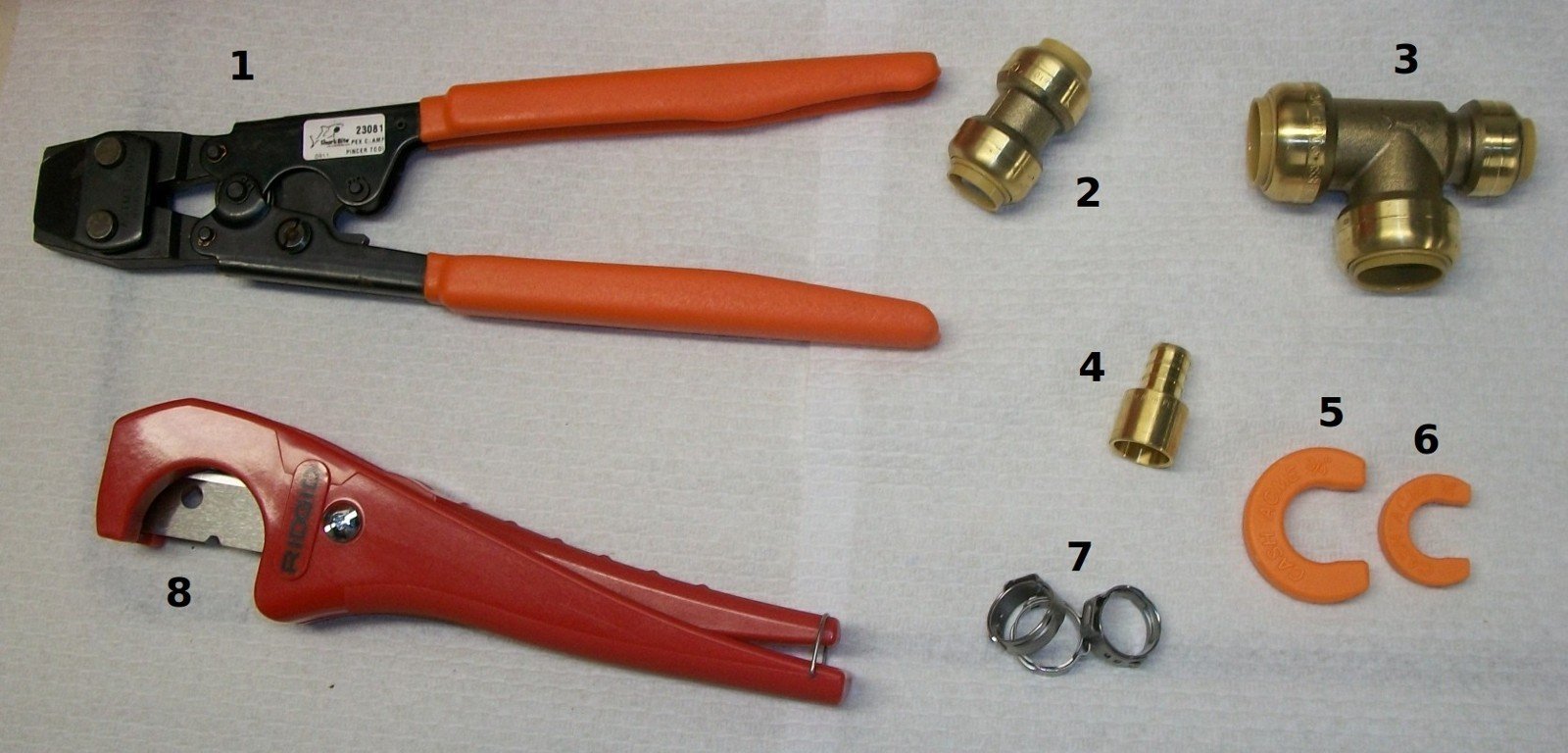
Cut the pipe square with the proper tool. Remove burrs or sharp edges as the fitting instructions require. Check for scratches, damage or contamination at the sealing area.
Measure and mark the required insertion depth. That mark helps verify a full connection. Don’t use a tug alone as proof of correct insertion, and don’t reuse an unknown damaged pipe end because it happens to slide in.
Support the route, not just the joint
A fitting should not carry pipe loads or be forced into alignment. Follow support requirements and protect the assembly from movement, impacts and unsuitable heat.
If the fitting is used near a filter housing or appliance, allow the service movement the instructions require without pulling on the connection. Cartridge maintenance can stress tubing that was installed too tightly.
Concealed placement needs a specific check
Some products are approved for certain concealed uses, while others have restrictions or local acceptance requirements. Don’t assume a universal rule that every push fitting is either forbidden or allowed behind a wall.
Ask the local authority or a qualified plumber where the answer matters. Keep a record of the installed product and test procedure before closing the space. Access planning can make future service far easier.
Use the permitted release method only after isolating and depressurizing the line. Never attempt to disconnect a pressurized fitting. Check whether the fitting and pipe end may be reused and what inspection is required.
A connector removed with an improvised tool may be damaged even if it looks normal. Don’t return a suspect part to a concealed drinking-water line to save the price of a replacement.
Keep the drinking-water material question visible
Connection approval and drinking-water contact claims are related but separate checks. Our certification guide explains why a standard number or logo needs an exact product scope behind it.
Save the product and installation information together. That is useful when a later technician extends the route or needs to replace the same joint. The practical advantage of a push connection is achieved through the approved preparation and assembly, not through skipping the steps that keep it reliable.
A sensible repair boundary
For a small accessible change, the product instructions and local rules can clarify whether homeowner work is appropriate. For a buried service line, main shutoff, concealed leak or uncertain pipe condition, professional help is a more reasonable path.
After work, perform the specified leak test and flush where required. Watch the accessible joint during normal operation too. A fitting’s convenience comes from an approved installation done carefully, not from skipping the parts that make the connection reliable.
Use the same evidence habits described in checking water-treatment certification when a seller makes drinking-water material claims.