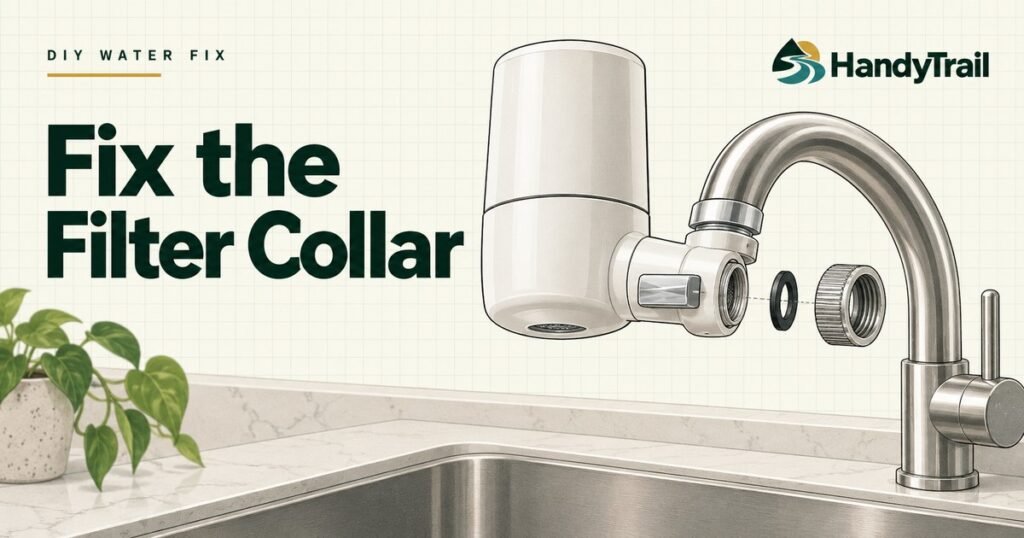
If a faucet-mounted water filter leaks around the mounting collar, turn the tap off and check the adapter and washer arrangement before tightening harder. A missing, misplaced or incompatible washer can prevent a seal. So can damaged threads or a cracked part, which extra force will not repair.
This is a removable faucet attachment check, not a guide to rebuilding the faucet. Use the exact filter’s installation instructions. If the faucet itself is damaged, the attachment is cracked or the supplied adapters don’t fit, stop and use the appropriate replacement or support route.
Locate the leak with the sink cleared
Move dishes out of the way and dry the visible connection. If there is no obvious damage, observe a brief cold-water use over the sink and identify where moisture first appears. Then turn the tap off. A towel can make the starting point easier to see, but it shouldn’t be wrapped around a joint during the test.
Water at the collar has a different path from water leaking from a cracked filter body. Water appearing behind the faucet or under the counter is another concern. Don’t keep running the attachment to diagnose a leak that is reaching the cabinet or floor.
If you find a crack, damaged faucet threads or a connection that shifts unexpectedly, stop. You are looking for a correct removable seal, not trying to persuade broken plastic to seal with more force. Avoid glue, improvised gaskets or sealant as a substitute for compatible parts.
Match the filter to the faucet type
PUR’s faucet-system support shows adapter and washer choices and a finger-tightening step for its supported arrangements. Use the diagram for your own product. Additional force cannot make incompatible threads or a cracked collar suitable.
Use the system’s compatibility information before removing anything. Not every faucet accepts a faucet-mounted filter. A pull-out, spray-style or unusually shaped outlet can need a different approach, and a familiar brand name doesn’t establish the fit.
If the existing adapter came from an old filter, don’t assume it suits the new system. Identify the supplied adapter and washer combination for the actual faucet. Internal and external threading can require different arrangements, so follow the relevant illustration in the manual.
If no approved adapter fits, contact the manufacturer rather than stacking adapters until something catches. A connection that begins threading isn’t proof that its pitch, sealing surface or support is correct. Forcing the wrong thread can damage the faucet as well as the attachment.
Turn the water off before reseating the attachment
For an ordinary removable faucet attachment, the tap needs to be off before you remove or reseat it. Follow any additional isolation instruction for the model. You should not dismantle the faucet body, valves or supply connections to perform this collar check.
Support the filter as you loosen the mounting collar according to the instructions. Catch the washer and other specified removable parts in a small tray. A photo of their arrangement can help you compare it with the manual, but the photo doesn’t make an incorrect arrangement correct.
If the collar is stuck or the faucet outlet twists with it, stop. Don’t add a wrench unless the manufacturer specifically directs that tool and method. Turning the wrong component can disturb plumbing that wasn’t leaking when you began.
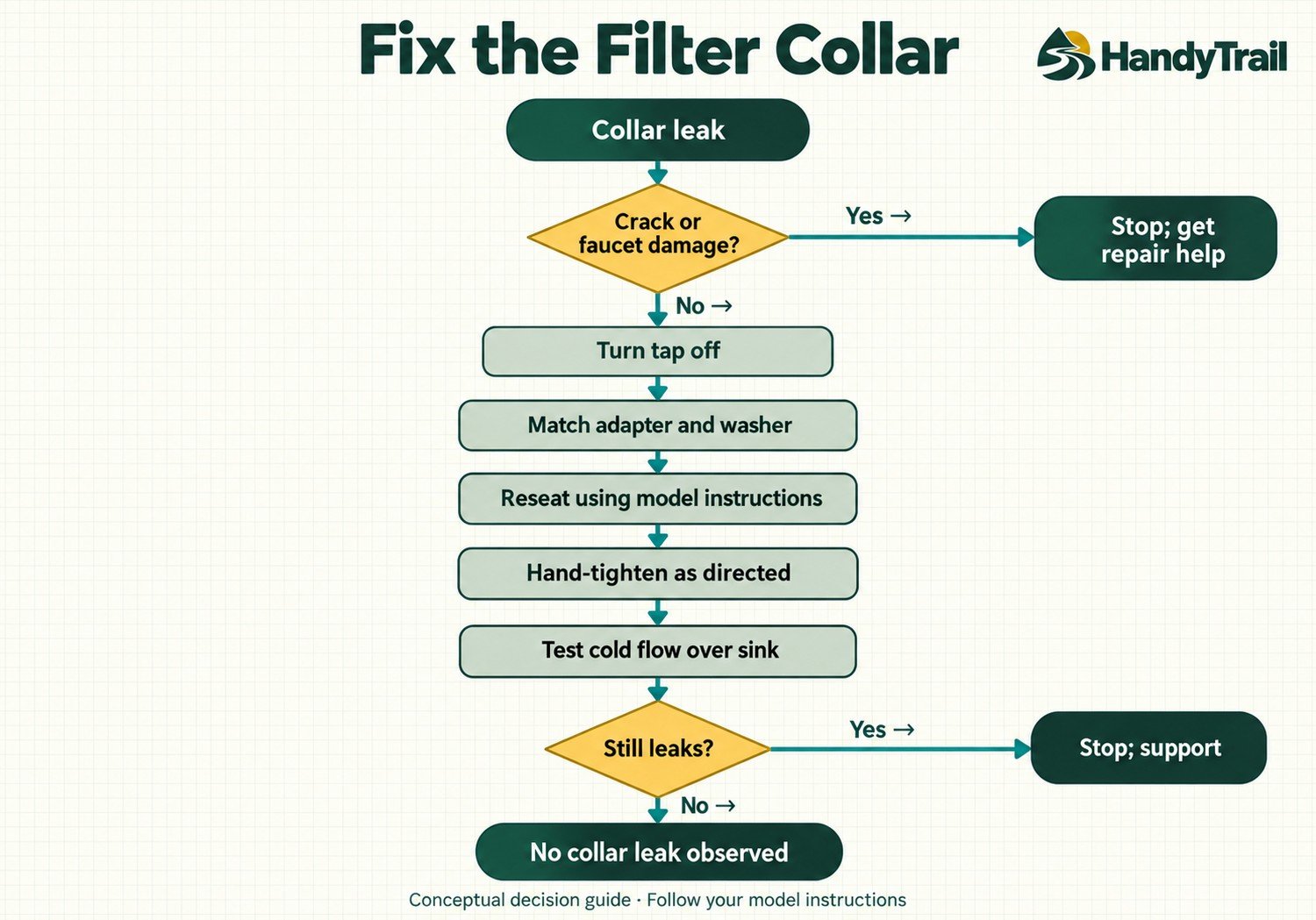
Read the decision path
- If the faucet or filter attachment is cracked or damaged, stop and get repair or replacement help.
- If there is no visible damage, turn the tap off before handling the removable attachment.
- Match the approved adapter and washer. Reseat them using the exact model instructions.
- Use the prescribed tightening method, then test cold flow over the clear sink.
- If it still leaks, stop and contact support. If no collar leak is observed, inspect the next ordinary use.
Inspect the washer without inventing a new seal
Compare the washer and adapter with the manual’s parts illustration. Look for a missing washer, one folded out of position, visible damage or the wrong part. Remove loose debris only using the approved cleaning method and avoid scratching the sealing surface.
Use the specified replacement if a washer is worn or unsuitable. A rubber ring found in a drawer may have a similar diameter without the right shape or material. A second washer isn’t an automatic improvement either. The connection should use the intended arrangement.
Don’t add thread tape to a washer-sealed connection unless the model’s instructions explicitly call for it. The tape can interfere with the intended fit rather than fixing the missing seal. The repair is to restore the correct components, not to add enough material that the collar becomes difficult to turn.
Reassemble using the model’s tightening method
Position the approved adapter and washer as directed. Start the connection squarely so it turns normally. If the threads resist at the beginning, back off and reassess the alignment rather than continuing by force.
Many faucet-filter mounting instructions call for hand or finger tightening, but follow the exact system’s method. A general torque value from another device doesn’t belong here. Tightening farther after the connection is already correctly assembled can damage a plastic collar or the faucet outlet.
Install or reseat the compatible filter cartridge only if that is part of the approved procedure. Preparation requirements differ across systems. Don’t copy a soaking or flushing routine from a pitcher cartridge simply because both products contain carbon.
Test cold flow and keep the outlets straight
With the sink clear, restore a controlled cold-water flow as the instructions direct. Watch the collar, adapter and filter body. Stop if a leak returns or a component moves out of its expected position.
Follow the system’s preparation instructions before using newly installed filtration. Know which position sends water through the filter and which uses the unfiltered route. Water leaving a faucet-mounted system is not necessarily filtered in every selector position.
If the collar now stays dry, record what changed and inspect it during the next ordinary use. A short successful check is useful evidence, but it doesn’t establish contaminant reduction. Our certification guide explains how the exact system and cartridge’s supported claims are verified separately from the connection.
If the leak continues, stop tightening
Persistent leakage after the correct compatible arrangement is restored needs manufacturer support or an appropriate repair. Keep the model, adapter identifier and a clear photograph of the connection. Explain where the first moisture appears and whether it occurs in both selector positions.
Don’t run the system indefinitely with a cloth catching the leak. Don’t repair a crack with household glue or assume that a drip above the sink cannot reach another area. If the faucet or surrounding plumbing is the source, the filter manufacturer may not be the right service contact.
Our replacement-cartridge guide covers another compatibility question. A cartridge that fits and a collar that seals are separate checks, and neither should be inferred from the other.