A pool cover can reduce evaporation, but the most useful cover is one you can use consistently and safely. Start with the job you need it to do. Saving water, keeping debris out and restricting access are different requirements, even when one product addresses more than one of them.
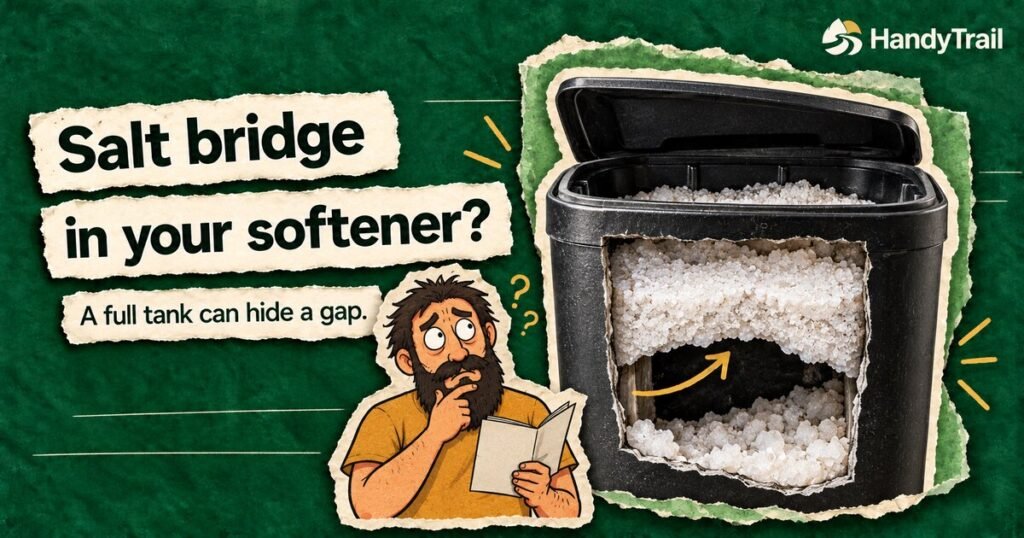
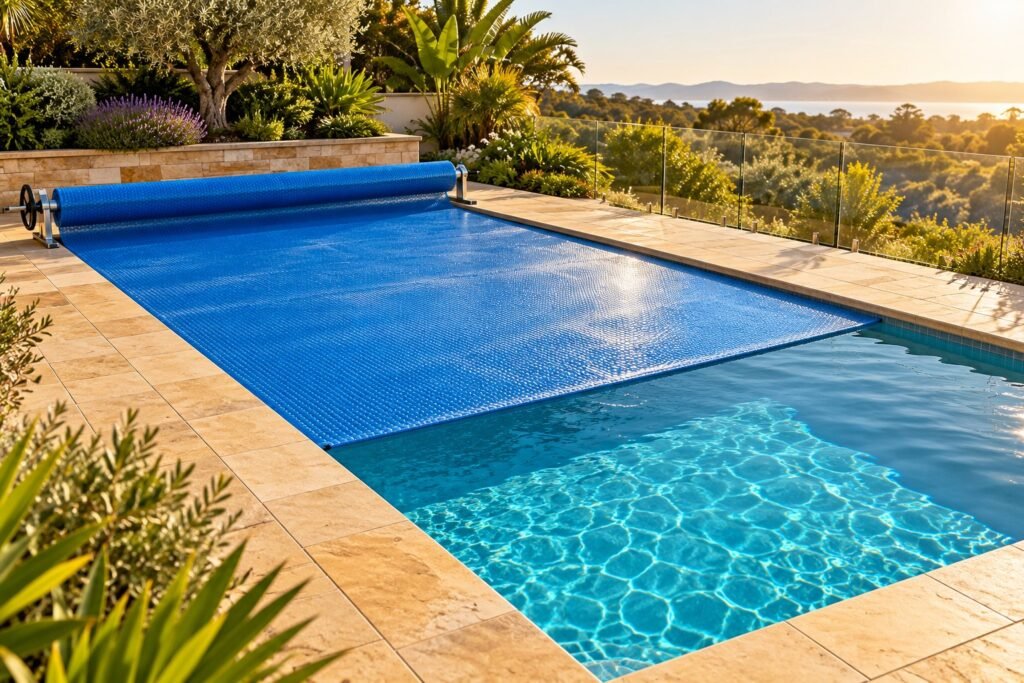
A bubble cover floating on the surface should not be treated as a safety barrier. A label that says "winter cover" also doesn't establish every safety feature or make the cover convenient for daily use. Check the exact product, installation and local requirements before ordering.
How a cover helps with evaporation
Water loss through evaporation depends on conditions such as temperature, humidity and wind. A cover limits the exposed water surface while it is in place. The EPA WaterSense pool-efficiency guide identifies pool covers as an effective way to reduce evaporation and emphasizes that they work only when applied.
That last point changes a purchase decision. A cover with impressive stated performance won't help during the hours it remains beside the pool. Ask how it will be moved, stored and replaced after ordinary swimming, not only how it performs in a test or brochure.
Your actual water savings depend on coverage, weather, pool use and how often the cover is applied. Don't turn a published percentage into a guaranteed annual gallon saving for your backyard. A swimming pool that is leaking needs a separate investigation even if you add a cover.
Match the cover to its intended role
Solid, mesh and solar covers don't behave identically. A solid cover can keep precipitation and debris from passing through, but water collecting on top may require a manufacturer-approved removal arrangement. Mesh allows precipitation through and has different evaporation performance.
Solar bubble covers are intended for the water surface and may help retain heat. EPA's comparison does not classify them as safety covers. Liquid evaporation suppressants also do not provide an access barrier. Treat those distinctions as requirements to verify, not as small differences in marketing language.
| Cover approach | Question to settle | What not to assume |
|---|---|---|
| Solid cover | How are fit, anchoring and collected water handled? | Every solid sheet is a tested safety cover |
| Mesh cover | How does the documented coverage fit your priorities? | Mesh and solid covers have identical evaporation control |
| Solar bubble cover | Can it be safely removed, stored and reapplied? | Floating material restricts access safely |
| Automatic cover | What installation, power and maintenance are required? | Convenience removes the need for inspections |
| Winter cover | What is its intended seasonal use and safety status? | A seasonal arrangement suits everyday swimming |
The categories aren't a product ranking. For example, an automatic mechanism describes how a cover moves, while its material and safety documentation describe other aspects. Compare the complete arrangement rather than picking a winner from the name alone.
Verify safety separately from water savings
Ask for the product's stated safety classification, applicable test documentation and installation instructions. EPA discusses safety-cover testing under ASTM F1346 in its guide. Ask the supplier and local authority which current requirements apply to your property and how the exact installation meets them.
Don't describe a cover as childproof or use water-saving claims as evidence of load-bearing ability. Never walk onto a cover to test a seller's assertion. Children and animals should be kept away from an unattended setup, including any water collected above the cover.
The cover doesn't replace active supervision or every required barrier around a residential pool. Ask the local authority about fencing, gates and any other applicable requirements. Keep that advice distinct from a salesperson's general description of the cover.
Check the fit before comparing prices
Provide the supplier with accurate pool dimensions and details about steps, curves, raised edges and nearby equipment. Ask who measures, who takes responsibility for the fit and what is included in the installation scope. An approximate rectangle drawn from memory can miss features that matter.
A replacement cover should match the approved arrangement. Don't assume an old anchor layout suits a different product, or cut material yourself unless the exact instructions permit it. Ask about changes to the pool since the previous cover was fitted.
Keep drawings, measurements and the final model identifier with your purchase record. If the supplier requests photographs, include the relevant edges and obstructions. A wide overview is useful, but it may not show the details needed for a responsible fit assessment.
Think through an ordinary swimming day
Who will remove the cover before the pool is used? Where will it go? How will it be put back without dragging, tangling or creating an obstacle? Ask these questions for the people who will actually use it, not only for the installer who demonstrates it once.
A reel or automatic system may make handling easier, but it brings its own space, access and maintenance requirements. Check the exact instructions. Don't operate a mechanism with damaged parts or try to pull against a jam because the cover needs to be on before bedtime.
Weather and collected water can change handling. The instructions should explain the permitted response rather than leave you inventing one. If the setup requires a removal pump or other component, include that approved arrangement in the quote and maintenance plan.
Compare the complete cost
Ask for the cover, fitting, anchors or track, handling equipment, any approved collected-water arrangement, maintenance instructions and warranty terms to be listed separately. Find out which items are optional and which are required for the proposed installation.
If a utility offers a rebate, verify current eligibility before purchase. A rebate mentioned in an older national guide is not evidence that your local utility offers it now. Ask about product requirements, application deadlines and whether approval must happen before installation.
Keep projected water or heating savings labeled as estimates with their assumptions. The seller should explain the climate, uncovered hours and usage pattern behind a calculation. Don't compare two annual savings numbers if one assumes daily cover use and the other assumes occasional use.
Track water loss without creating a false test
Record when the cover is used, water is added and cleaning or backwashing occurs. If the level still drops unexpectedly, check the pool water-loss guide rather than assuming the cover has failed. Evaporation and a leak can both contribute to a falling level.
A bucket observation depends on comparable conditions. Covering the pool but leaving the comparison bucket exposed can change the evaporation conditions you are trying to compare. Follow the guide and equipment instructions for the observation instead of mixing a cover trial with a leak-screening test.
Use the pool water-loss calculator only after a suitable observation. It compares drops and can estimate total rectangular-pool volume change. It cannot identify a failed cover or separate confirmed leak gallons from evaporation.
Keep a cover service file
Save the model, installation date, supplier, warranty and operating instructions. Record any repairs and replacement components. For an automatic arrangement, retain the service provider's inspection and maintenance requirements with the cover paperwork.
If the equipment changes owners, pass that file along. A new owner should not need to guess which product is installed or how water on top is supposed to be handled. Unknown details are a reason to ask the supplier, not to copy an instruction from a similar-looking cover online.
The final choice should fit the pool, required safety arrangement and daily routine. An appropriate cover used as instructed can make water-saving habits easier. Its paperwork and handling plan are part of the purchase, not something to sort out after the delivery truck leaves.