A pool-test result is more useful when you know how it was obtained. The test method, sample conditions, reagent condition and timing can all affect what a reading means. Keeping those details is especially helpful when two tests disagree or a result changes unexpectedly.
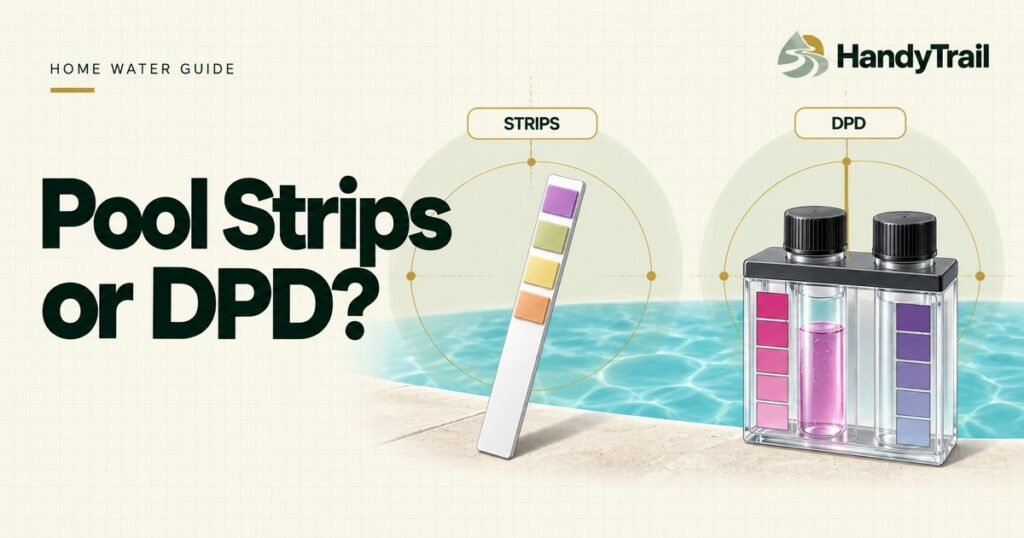
For a home pool, the first choice is a method that measures the values you need and that you can use according to its instructions. The CDC prefers a DPD test kit over test strips for accuracy. That does not mean any kit result is automatically correct, or that a single satisfactory reading proves the pool is safe in every respect.
Know what the kit actually measures
Read the test names on the kit before comparing numbers. Free chlorine and total chlorine are different measurements. A result from one should not be entered in the other's column simply because the bottle or strip says chlorine.
Some kits use a visual color comparison. Others use a different procedure, including titration or a digital reading. Follow the instructions for the exact kit and the specific test. DPD is a test chemistry, not a guarantee that every kit has the same range, steps or interpretation.
An older yellow-color chlorine comparator using OTO is not the same method as a DPD free-chlorine test. Color alone is not enough to identify what the kit measures. If the instructions are missing or the test name is unclear, recover the manufacturer's information before relying on the result.
Why CDC prefers DPD to strips
The CDC's home pool testing guidance says that a DPD test kit is more accurate than test strips and recommends testing chlorine and pH at least twice a day, with more frequent checks during heavy use.
Strips can be convenient, but they still need careful use. Follow the specified dipping and reading times. Store them as directed and check their expiration and condition. Reading a strip long after the stated interval does not make the color more trustworthy.
For a DPD kit, use the correct sample volume, reagents and sequence. Do not borrow the number of drops or waiting time from another kit. If a result is surprising, review the method and the kit's limits before making a chemical decision.
Build a consistent sampling habit
Use the sample location and collection method specified for your kit and pool-management instructions. Note where you sampled so later results are easier to compare. A vaguely remembered test from somewhere in the pool is difficult to interpret alongside a carefully collected one.
Record the time and relevant recent events. Heavy use, rain, refill water, circulation changes and chemical additions can provide context. They do not automatically explain a result, but they help the person advising you understand what happened before the measurement.
Keep test supplies away from splash contamination and store them as instructed. Use clean equipment intended for the kit. Avoid improvising a procedure because the original vial or reagent is missing. A small method change can make a familiar-looking result less useful.
Keep the pH and disinfectant context together
CDC recommends a pH of 7.0 to 7.8 for home pools. Its free-chlorine recommendation is at least 1 part per million for pools, or at least 2 parts per million when cyanuric acid or stabilized chlorine products such as dichlor or trichlor are used.
These recommendations need their context. They are not a dosing formula, and a pool's operating instructions or applicable requirements may call for additional considerations. Record whether stabilizer is used rather than applying the unstabilized-pool minimum without checking.
This guide concerns home pools. Do not transfer its figures to a hot tub, which has different recommendations. Also, a chlorine and pH record does not answer every question about water clarity, circulation, physical hazards or pool operation.
A zero reading can need a closer look
CDC warns that chlorine above 10 parts per million can partially or completely bleach a test, producing a falsely low or zero result. That is a reason to check the method and range, not a reason to immediately add more chlorine whenever a test reads zero.
If the result conflicts with the pool's recent history, stop and review the instructions. Look for the kit's stated range, any warnings about interference and the condition of the reagents. Ask the kit manufacturer or a qualified pool professional how to confirm the result.
Do not invent a dilution procedure. Some methods provide specific instructions for results outside their range, but a homemade dilution can introduce another error. Record the first result and what was done to investigate it instead of erasing the inconvenient number.
Use a log that leaves room for uncertainty
Keep a separate column for the method and another for any repeat or confirmation test. An unreadable color is a valid observation to record. It should not become a precise number because the log has a blank box to fill.
| Record field | Useful entry | Avoid |
|---|---|---|
| Test identity | Kit model, method and reagent expiry | Calling every chlorine result free chlorine |
| Sample | Time and location | Comparing samples without their context |
| Measurements | Named value and unit, plus pH | Guessing between unclear colors |
| Pool context | Recent use, rain, refill or chemical addition | Treating an event as a proven cause |
| Follow-up | Repeat test, advice and action taken | Removing the original unexpected result |
A notebook works if the entries are consistent. Include circulation observations and recent service when relevant, but keep water-test results separate from equipment maintenance. The pool backwash record guide covers the service history that may belong alongside a chemistry log.
Replace an incomplete kit before depending on it
Check the kit as a set rather than looking only for a bottle with liquid left in it. Confirm that the required vial, comparison scale or other reading equipment is present and belongs to the kit. Keep its instructions with the supplies so another household member does not have to reconstruct the procedure from memory.
If a reagent is expired, unidentified or has been stored outside its instructions, ask the manufacturer about replacement. Do not mix unmatched supplies because their colors appear similar. A refill should be the specified product for the intended test, not simply a bottle described as a pool reagent.
Write the replacement date in the log and retain the relevant product information. That creates a useful boundary when comparing results from before and after a kit change. It also helps a service provider distinguish a possible method problem from a change in the pool itself without pretending the log can diagnose either one.
Turn the result into a considered next step
If the result is outside the applicable operating guidance, follow the pool's instructions and obtain appropriate advice before further use. Keep people out when a professional or the relevant guidance says the pool should not be used. Do not use a worksheet's filled boxes as a clearance to swim.
Chemical selection and dosing depend on the pool, the product and the confirmed measurement. Read the exact product label and follow qualified advice. Never combine chemicals or improvise a treatment because another pool owner reported a similar number.
A useful test routine is one you can repeat correctly and explain afterward. Choose an appropriate method, keep supplies in good condition, record the conditions and investigate doubtful results. That gives you a better basis for pool care than a color remembered from yesterday.