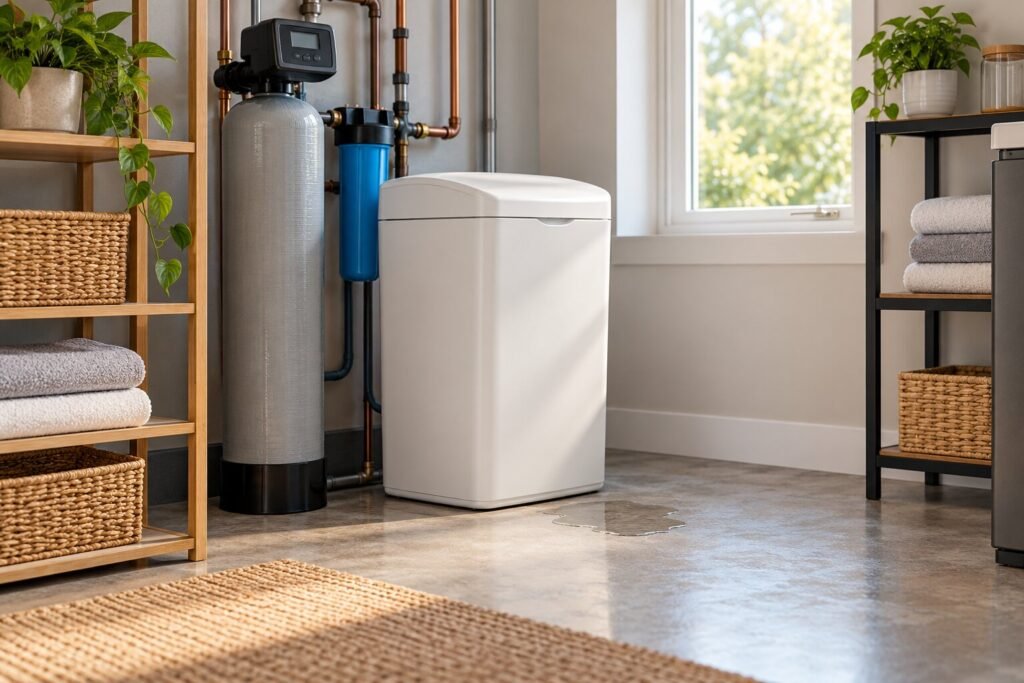
If water is coming over the rim of your softener's brine tank, protect people and the surrounding room before investigating the equipment. Stay away from wet outlets, cords and controls. An overflowing tank needs attention, but the presence of some water inside the salt tank isn't by itself proof of a failure.
Don't keep starting regeneration cycles to see whether the problem disappears. If water is actively spreading, use a safely accessible shutoff you already know how to operate, or call a plumber. Don't reach across wet electrical equipment to unplug anything.
Check what is actually leaking
From a dry position, note whether water is escaping over the tank rim, from a connection, or from a different nearby appliance. A puddle beside the salt tank can have more than one source. Photograph the location and record whether the leak began during regeneration, after a salt refill, or while the unit appeared idle.
Avoid removing control covers or dismantling tubing. A clear observation is useful to a technician. An altered system can make the original fault harder to identify.
There isn't one correct water depth for every brine tank. Designs differ, and the point in the operating cycle matters. Ask the manufacturer what level is expected for your exact model instead of adopting a depth from a different appliance's video.
The drain and overflow have different jobs
The Whirlpool WHES18 manual shows a valve drain and a separate salt-storage overflow hose. It specifically says not to connect those hoses together. That is an example from one model, not a substitute for your own installation instructions.
A technician can check the refill and brine-draw operation, the drain arrangement and the relevant valve components. Pentair's support material also treats settings and brine operation as equipment-specific troubleshooting questions. Those possibilities don't establish which component has failed in your house.
If the overflow line is disconnected or obstructed, have the arrangement reviewed rather than improvising a sealed connection to a sewer pipe. Our softener drain questions explain what to ask about the installation.
Prepare a useful service note
Write down the model and serial number, the visible error code, the last known regeneration time and any recent work. Include when you added salt and whether anyone changed settings or moved hoses. The equipment record gives you a place to keep those details.
If you know the bypass has been used, tell the technician. Bypassing a softener can change what water reaches the house. It doesn't certify the water as safe, especially where other treatment is part of a private-well plan.
Ask the service provider to explain both the failure and the check that will confirm the repair. A dry floor immediately after a visit isn't the whole verification. You also need to understand what should happen during normal operation and when to call again.
Before putting the room back in order
Follow the equipment instructions and professional advice for restarting. If water reached building materials or electrical equipment, have the affected area assessed as appropriate. Don't resume operation simply because the puddle has been wiped away.
Keep the repair record with your softener maintenance notes. The next person servicing the unit should be able to see what happened, what was changed and which checks were completed.
These manufacturer documents are unpaid examples. They are not a recommendation to replace your softener with either brand.