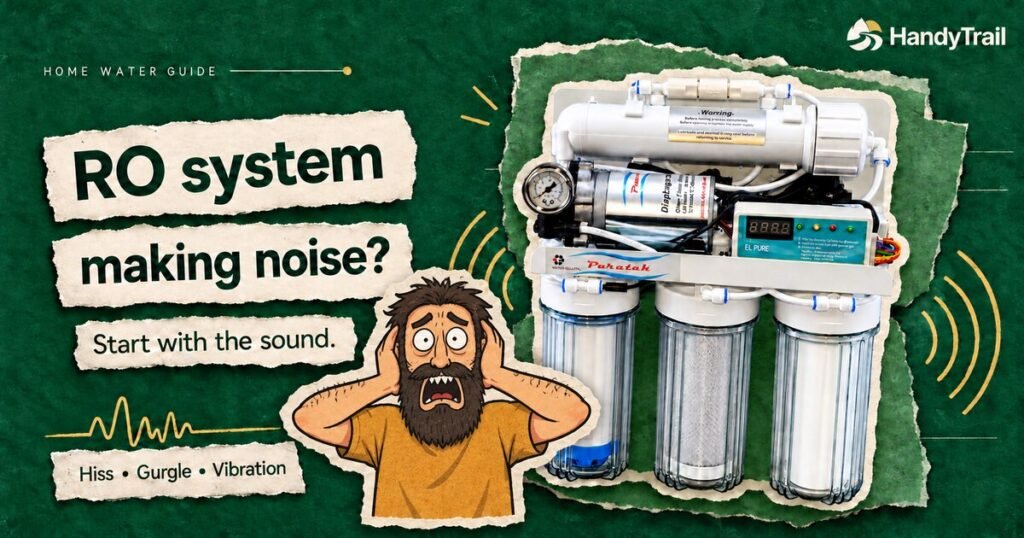
Some RO sounds are part of normal water production, while a new, loud or persistent noise can indicate an installation or equipment problem. Describe the sound and its timing before replacing cartridges or changing the drain arrangement.
A hiss, gurgle, vibration and repeated clicking aren't the same observation. The useful question is what the system is doing when the noise occurs.
Note the operating stage
Listen from a safe position while water is being produced, while the drinking faucet is open and after the tank has refilled. Record whether the sound stops and whether it has changed since installation.
Include the system model, cartridge age and recent work. A short recording can help support distinguish a normal air-gap sound from a vibrating tube or an electrical component cycling.
Identify the parts your model actually has
An air-gap faucet, booster pump and tankless electrical system can each produce different sounds. A conventional nonpowered RO unit won't have the same components as a pumped appliance.
Read the manual's troubleshooting section. Don't apply a fix involving pump settings to a system that doesn't use that control arrangement.

Check accessible routing without dismantling
A tube touching a cabinet or another pipe may transmit vibration. A kink or incorrectly supported line may affect operation. Observe accessible tubing without pulling on fittings or opening pressurized housings.
If noise began after cleaning the sink cabinet, mention that movement. If it started after installation, have the installer review routing, drain arrangement and startup conditions.
Drain noises deserve the correct fix
For a documentation example, the Watts PWRO5MAN troubleshooting table distinguishes inherent air-gap sound from drain-location and pressure concerns. The table is a model-specific example. It does not make every new gurgle normal or supply a pressure limit for another RO unit.
A gurgle can involve the system's drain arrangement or air gap. Check approved route, slope and receiving drain conditions through the appropriate service procedure.
Don't cap an air-gap opening or bypass protection to make the system quieter. Local requirements and the manufacturer's design still apply. A quieter arrangement isn't automatically an acceptable one.
RO may produce water after the tank has been drawn down, but unusual prolonged production can have several causes. Feed pressure, tank condition, shutoff components and other parts may need assessment.
Don't use one advertised refill time as the limit for every home. Note source-water temperature and demand, then ask support about the actual model and conditions.
A short troubleshooting record
| Record | What to note |
|---|---|
| Sound | Gurgle, hiss, vibration or repeated clicking |
| Operating stage | Producing water, dispensing or apparently idle |
| Change | New sound or the same sound since installation |
| Support result | Expected behavior or the fault found for this model |
Stop for unsafe symptoms
Leaks near electricity, burning smells, damaged wiring or abnormal electrical behavior require safe isolation and qualified help. Don't keep operating equipment to collect another recording.
After service, compare the same operating stage and check accessible connections as instructed. The aim is to establish whether the particular sound is expected or a fault, not to make every working water system perfectly silent.
The explanation of RO drain water helps identify which sounds happen during normal production.
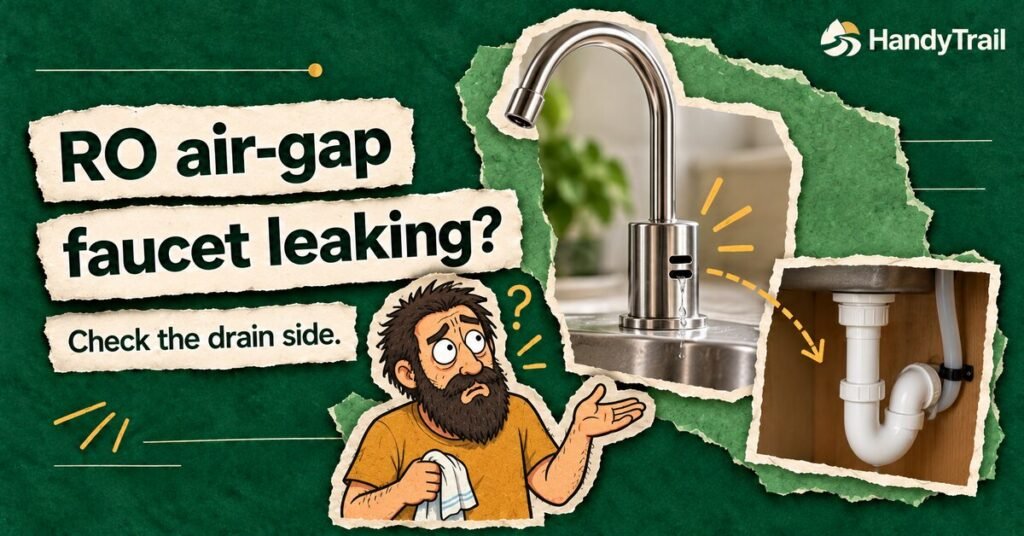
For the related investigation, see RO air-gap faucet leaking. Check the drain side before the filter. How long should an RO tank take to refill? Build a useful record.