Water on a kitchen cabinet floor does not identify the leaking part. A faucet hose, shutoff, sink drain, dishwasher connection or water running down from the counter can leave a similar puddle. The useful first task is to stop further damage and record where new moisture first appears, rather than tighten every connection.
If water is reaching an outlet, disposal wiring or an appliance connection, keep clear of the wet area and get qualified help. Do not reach through water to unplug equipment. For an active supply leak, use a known, accessible shutoff only if it operates normally; do not force a seized or corroded valve. In a rental, notify the landlord or emergency maintenance contact promptly.
Make a dry starting point without disturbing the pipes
Stop using the sink and connected appliances. Move stored items only if safe, photograph the area, then dry accessible cabinet surfaces. Use separate dry paper towels beneath suspected areas so water from one route is less likely to hide another. Do not wrap towels around electrical equipment.
Look above the wet spot as well as directly beside it. Water can travel down a hose or along the underside of the sink before dropping. A flashlight and a photograph from outside the cabinet are more useful than blindly feeling behind a disposal or pulling on a supply line.
The EPA’s Fix a Leak Week guidance encourages checking household leaks and addressing them. It does not mean that every wet cabinet has a simple washer repair. Identify the affected route before buying parts.
Separate three observation patterns
Moisture that appears while the sink is not being used may involve a pressurized supply component, but also consider a recent appliance cycle or water left above the counter. Record the timing; do not call it a confirmed supply leak from that observation alone.
Moisture noticed after normal sink drainage puts the drain assembly on the inspection list. Include the basket area beneath the bowl, joints and any connected appliance branch. A drip at the lowest joint can still originate higher up.
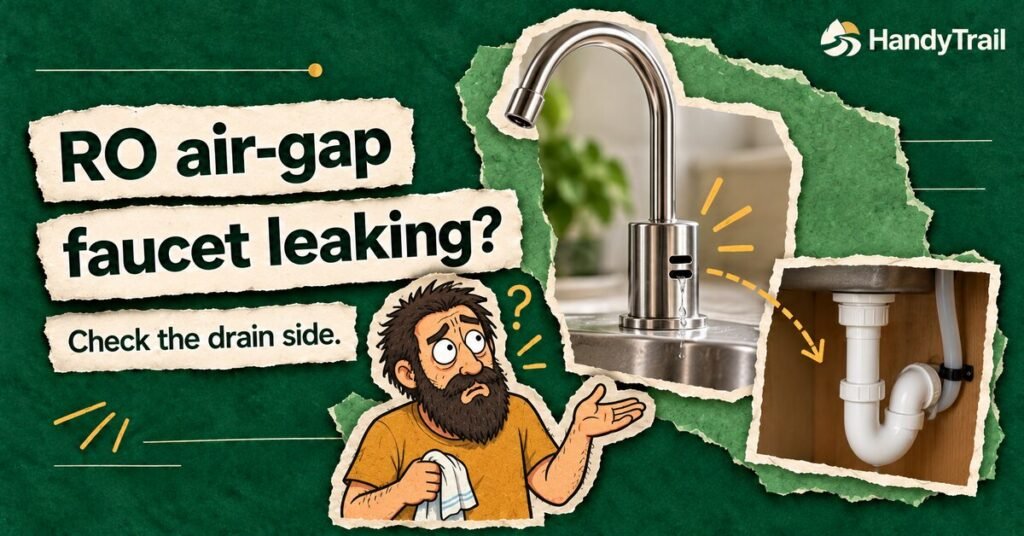
Water that follows counter cleaning or splashing may be traveling around a faucet base, sink edge or accessory opening. That is a different route from a drain joint, although both can occur together. Condensation is another possibility; a photograph cannot confirm it.
Do not deliberately repeat a leaking event, fill a sink to stress-test a suspect drain, or run a dishwasher to make the problem easier to film. Stop the affected use and let the repair professional decide what controlled checks are appropriate.
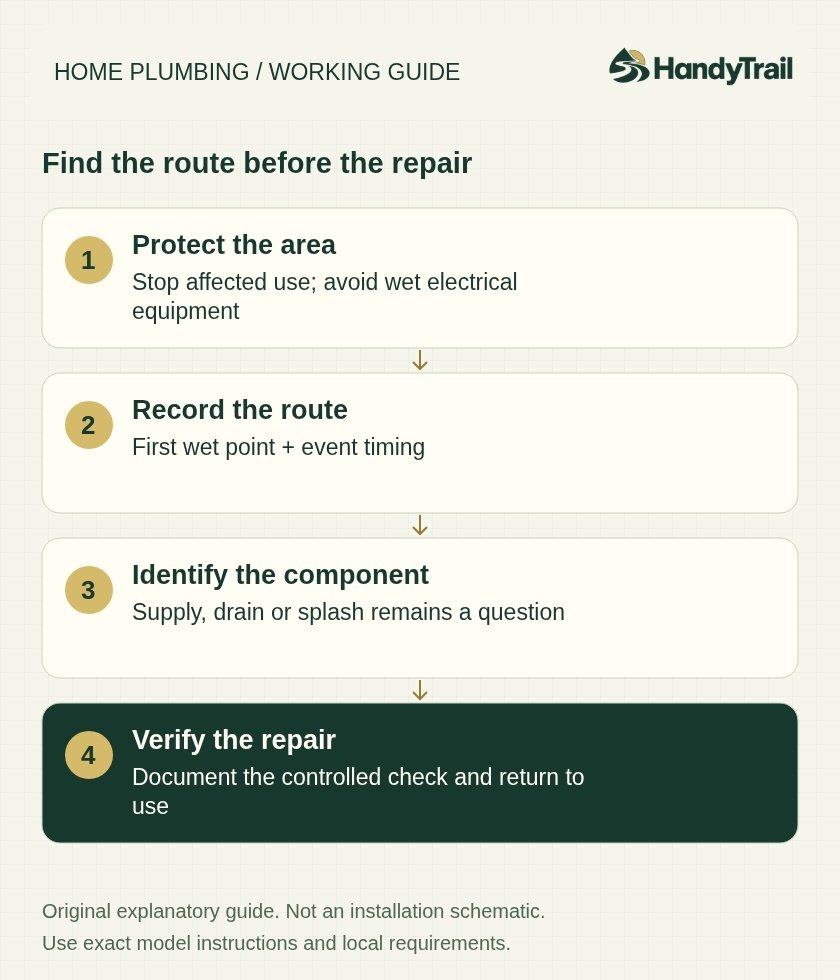
- Protect the area: Stop affected use; avoid wet electrical equipment.
- Record the route: First wet point + event timing.
- Identify the component: Supply, drain or splash remains a question.
- Verify the repair: Document the controlled check and return to use.
| Observed pattern | Useful note for the repair request |
|---|---|
| Moisture while sink is unused | Time since last sink or appliance use |
| Moisture after drainage | First wet point, not only the floor puddle |
| Moisture after counter splashes | Faucet base, sink edge or accessory opening |
| Shutoff problem | What valve was identified and whether it operated normally |
Avoid turning a small leak into a damaged fitting
A connection that uses a gasket, a compression seal or a model-specific connector does not become better simply because more tape or sealant is added. Do not coat an unidentified joint, putty over a pressurized leak, or tighten a plastic drain nut with a large wrench as a general remedy.
Look for the faucet, sink and appliance model information you can read without disassembly. Save the original part description when available. Portland’s faucet-leak guide demonstrates the importance of locating the leak and controlling the water before repair; its illustrated faucet mechanism is not a universal procedure for every modern faucet or under-sink fitting.
If an accessible shutoff itself leaks or will not close, tell the plumber before the appointment. Isolation may be part of the job, rather than a step the homeowner can already complete. Do not operate the utility’s curb stop or a shared-building valve without the responsible authority.
Make the repair request specific
Send an overview photo and a closer photo of the first observed wet area. Describe whether the sink was unused, had just drained, or had received splash water. Include any recent faucet, dishwasher or filter work and whether a known shutoff was used successfully.
Ask whether the visit includes diagnosis, the identified repair, a controlled leak check and disposal of damaged parts. Cabinet drying and building-material restoration may be separate work. A dry cabinet immediately after wiping is not evidence that the cause has been fixed.
Keep the invoice and the repair observation together. Record what component was changed, how the professional checked it, and which uses were resumed. If moisture returns, stop the affected use and report the new timing instead of assuming the original part failed again.
Frequently asked questions
Should I tighten every connection under the sink?
No. Identify the affected component first. Different joints use different seals, and unnecessary force can damage fittings or disturb a sound connection.
Does a leak only after draining prove the P-trap is bad?
No. Water can track from the sink basket, another joint or an appliance connection. Record the first wet point and stop the affected use until the cause is addressed.
Can I keep using the sink with a bucket underneath?
A bucket does not repair the source or protect electrical equipment and building materials. Stop the affected use and arrange a suitable repair.