Start a freeze-risk walkthrough with the pipe route, not the pipe material. Water lines in an unheated garage, near an exterior wall or outside the building can face conditions very different from those in a heated kitchen. Make a short location record while the weather is mild, then decide which questions need the property's plumber or manager.
This is a preparation guide for an ordinary home, not instructions for thawing a frozen line. If a pipe is already frozen, leaking or damaged, deal with that situation separately. Don't use an open flame or improvise a heating setup while working through a planning checklist.
Walk the route you can actually see
Look at accessible plumbing in the garage, basement, utility area and under sinks. Note the room, whether it is normally heated and whether the line appears to run toward an exterior wall. Photograph the wider setting so someone reviewing the record can understand where the pipe sits.
Don't open walls, lift inaccessible covers or enter a crawlspace that isn't safe to access. Record concealed sections as unknown. The purpose is to find questions that deserve attention before cold weather, not to prove the whole building's plumbing has been inspected.
The American Red Cross frozen-pipe guidance identifies outdoor lines, pipes in unheated interior areas and pipes against exterior walls with little insulation as common trouble spots. It also explains that freezing water can damage both metal and plastic pipes. A material advertised as flexible is not freeze-proof.
Include outdoor connections
List hose connections, irrigation supplies, pool-related lines and any separate building supplied from the house. Ask which sections remain water-filled in winter and who handles their seasonal preparation. A pool or irrigation system has its own manufacturer's and installer's instructions; do not assume the household procedure covers it.
For an exterior faucet, keep its type and any available installation instructions with the record. A description such as frost-resistant does not resolve every installation or use question. Ask about the connected hose, drainage arrangement and protection of the supply route rather than relying on the product name alone.
In a rental, report observations and ask the manager about the agreed preparation responsibilities. Do not operate unfamiliar shutoffs or modify the landlord's plumbing without permission. The rental water checklist helps keep those responsibilities beside the move-in and maintenance notes.
Think about a cold night and a power outage
A walkthrough should include how the building is used. A continuously occupied house, a weekend cabin and a vacant property have different supervision arrangements. Heating normally protecting a line may be interrupted by a power failure or a problem with the heating system.
Ask how the property is checked during an absence and what the response plan is if heating fails. Identify a local contact who can reach the building when you cannot. A temperature notification can be useful, but an alert without someone able to respond leaves the practical problem unresolved.
Don't invent a safe indoor temperature for every house. The Red Cross gives general cold-weather guidance, while the actual pipe route and building conditions still matter. A thermostat reading in the hallway doesn't tell you the temperature inside an exterior wall or an attached garage.
If the home is in Calgary and water stops arriving, our frozen water-service guide separates a possible city-supply issue from an internal pipe problem. Check the local service information before choosing a response.
Make a record that leads to a decision
| Location | What you observed | Question to resolve |
|---|---|---|
| Unheated garage or utility area | Visible supply line and normal use of the room | What protection is appropriate for this route? |
| Exterior-wall cabinet | Supply enters or leaves toward an outside wall | Is the concealed route protected? |
| Outdoor faucet | Faucet type, connected hose and available instructions | Who handles seasonal preparation? |
| Detached building | Separate supply route or unclear shutoff | Which instructions and responsibilities apply? |
| Seasonal property | Occupancy and heating arrangements | Who checks the property during an absence or outage? |
Keep observations separate from conclusions. “Pipe visible beside the garage door” is a useful note. “Pipe will definitely burst” is a prediction you cannot establish from that observation alone. Ask the professional to explain the route, likely exposure and suitable protection.
Insulation is part of a plan
Existing pipe insulation deserves a condition check, but its presence isn't a guarantee. Look for accessible gaps or damaged covering and record them without disturbing a questionable installation. Ask whether the insulation and surrounding conditions suit the route.
Heat tracing, where appropriate, is a product-specific installation involving electrical and plumbing considerations. Do not select a cable just because it is marketed for cold weather. The cable, pipe material, environment and installation instructions must fit together, and local requirements can apply.
The same caution applies to insulation placed around a line that still sits in an unheated or exposed space. Have the underlying problem assessed instead of treating another layer of covering as proof that the risk is gone. For the broader material discussion, see our U.S. pipe comparison.
If the route includes an unheated space below the home, use the crawlspace pipe-protection guide to record access, exposure and the questions to settle before changing the arrangement.
Know the shutoff before you need it
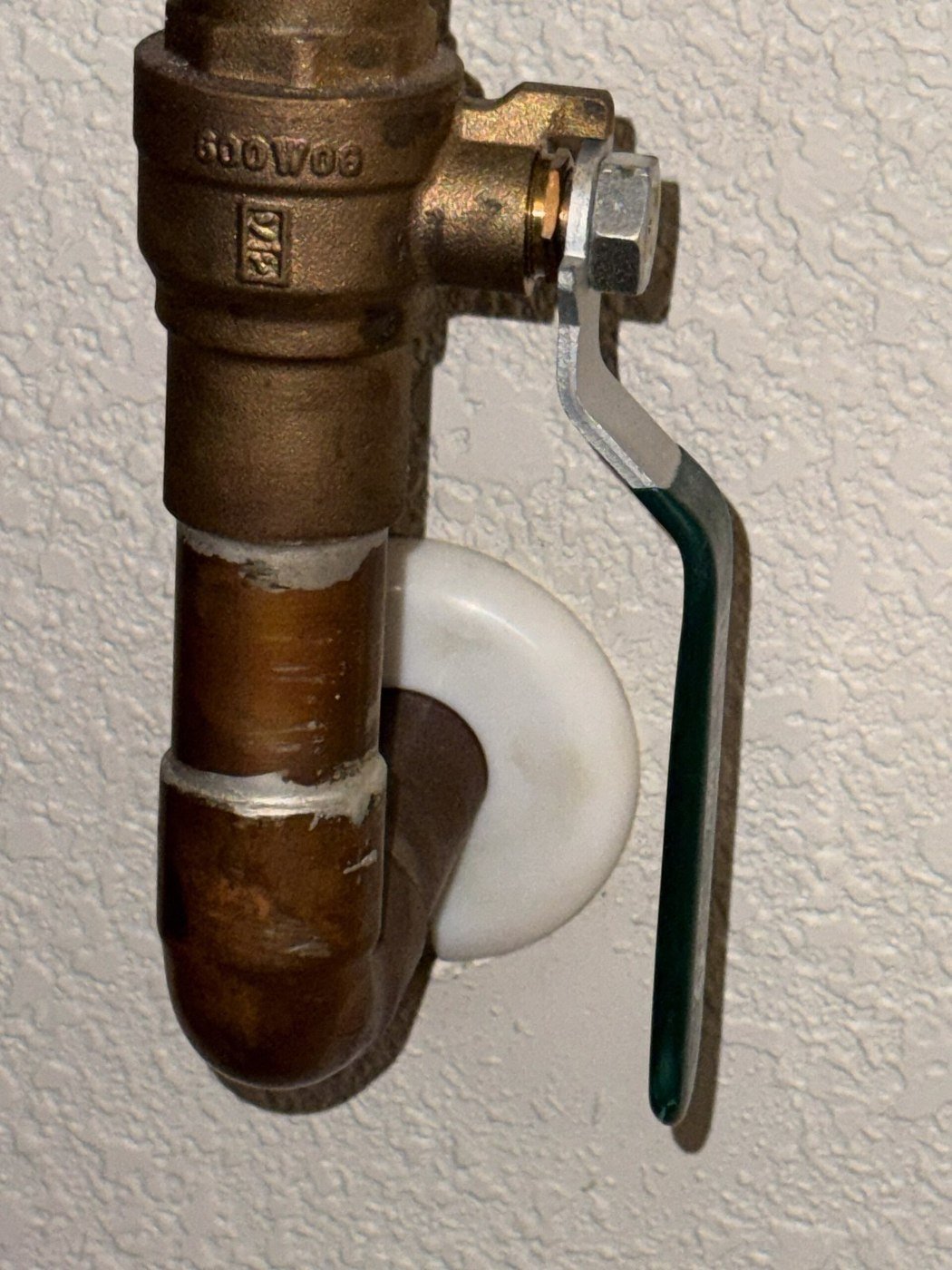
Ask for identification of the household shutoff and instructions appropriate to the property. Keep that information where the responsible people can find it. Do not experiment with utility-owned valves, unfamiliar controls or a stiff valve simply to test your memory of an online guide.
A building may have several shutoffs serving different purposes. Labeling a filter bypass as the whole-house shutoff could create confusion during an incident. Keep a photo and a plain location description with the confirmed purpose, and distinguish any treatment-system valves from the property's main control.
If records are missing, make identification part of the preparation visit. That visit can also address access. A useful shutoff instruction is hard to follow when the area is blocked by storage or when the person responding cannot enter the room.
Try one location record before doing the whole house
An example note might read, “Garage supply beside the exterior door. The room is not normally heated. A sleeve covers part of the visible run, but the route beyond the wall is unknown.” That description gives a plumber a starting point. It does not claim that the pipe has frozen before or that the sleeve is inadequate.
Add the photo filenames and the question you want answered. For this example, ask whether the route needs a different protection plan and whether the concealed section should be checked. Keep an ordinary preparation question separate from an active leak or a pipe that has stopped delivering water during cold weather.
Then record who owns the follow-up. In an owner-occupied home, that might be the plumber arranging a visit. In a rental, it may be the property manager responding to a dated maintenance request. Include how to reach that person if conditions change before the planned visit.
Use the same approach at the next location. A short list of specific observations is easier to act on than a folder of unexplained photos. When an answer arrives, attach it to the location record and note which question it resolves.
Turn the walkthrough into a short follow-up list
End with the unanswered items, the responsible person and the next action. That may mean confirming an outdoor faucet's instructions, arranging a plumbing assessment or clarifying the rental manager's winter preparations. Save the reply with the original observation rather than replacing the observation with an assumed fix.
After any work, record what changed and who completed it. A visible repair or new covering does not establish the condition of every concealed run. Keep the assessment's scope with the receipt, especially if the house contains additions or plumbing installed at different times.
For a seasonal home being reopened after an absence, our cabin water reopening guide covers the separate questions about supply, treatment equipment and records. Cold-weather preparation and safe reopening are related, but one checklist doesn't answer both jobs.
If a faucet has already stopped flowing during a freeze, our frozen-pipe first-actions guide covers utility checks, safe shutoff considerations and when to call for thawing help.