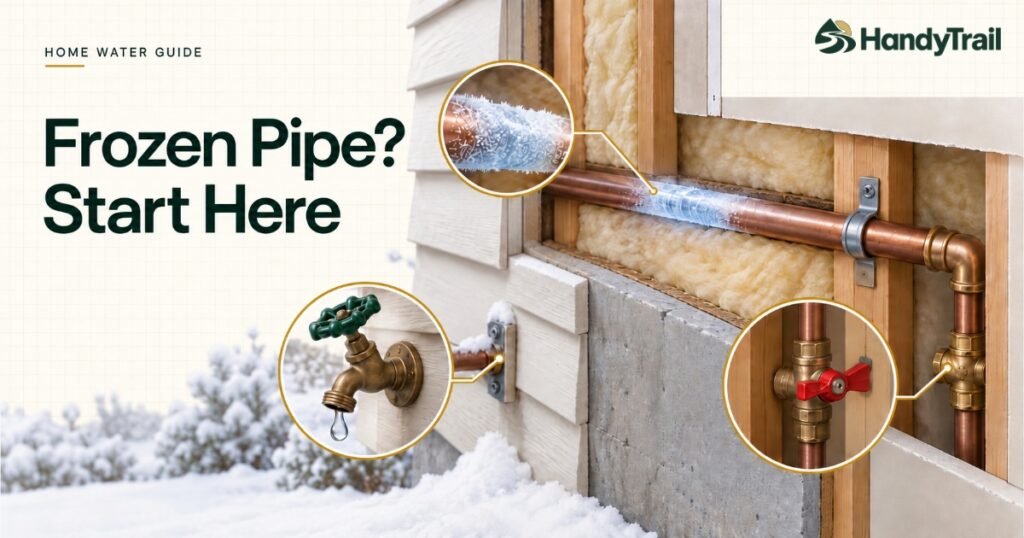
A faucet that stops flowing during freezing weather needs a careful first check. Ice in a pipe is one possibility, but a utility interruption, closed valve or equipment problem can also stop the water. Start with what you can safely observe instead of applying heat to the first cold pipe you find.
If a pipe is visibly broken, water is escaping, or thawing reveals a leak, close the known household shutoff if it is safely accessible and operates normally. Keep clear of wet electrical equipment and call for help. Do not enter a flooded crawlspace to reach a valve.
Check the scope of the interruption
Look for a notice from your water utility or building manager. If safe and convenient, ask whether nearby properties also have a service interruption. Several affected homes suggest a different call route from one bathroom faucet that has stopped while the rest of the house works.
Record which fixtures already showed the problem and whether hot, cold or both were affected. You do not need to leave several taps running or repeatedly operate a struggling appliance to collect this information. In a private-well home, also record whether power or equipment alarms changed.
The American Red Cross’s frozen-pipe guidance identifies little or no faucet flow as a reason to suspect freezing, especially around cold exposed routes. The symptom is a clue, not proof of one exact frozen location.
Know the shutoff before a pipe starts leaking
Find the household valve using your existing label or property information. Do not force a seized valve, remove covers from utility equipment or operate a shared-building shutoff without the responsible person. If you do not know how to isolate the affected supply safely, make that part of the service request.
Be ready for conditions to change as ice melts. A pipe can have damage that becomes apparent only when water flows again. Move valuables away from a possible drip path if that is safe, and keep the area accessible for a plumber without opening walls or cutting insulation around unidentified wiring.
The National Weather Service’s cold-weather recovery guidance includes checking pipes after a cold event. Recovery is an observation period, not a reason to assume that returning water has ruled out damage.
Keep any thawing attempt within safe limits
For an accessible pipe in a dry area with no evidence of a break, the Red Cross describes keeping the affected faucet open while gentle warming is applied. Its examples include a hair dryer or warm towels; it warns against open-flame devices. Do not turn that advice into a universal permission for every location or pipe assembly.
Do not use a torch, charcoal burner or fuel-fired heater to thaw plumbing. Keep electrical devices away from water, follow their instructions and never leave them unattended. Warming ordinary room air and opening a safe cabinet to that air may be more appropriate than reaching behind equipment; move cleaners away from children and pets first.
Stop and call a qualified plumber if the section is hidden, inaccessible, damaged or not responding. Do not heat a meter or excavate a buried service line. Ask the utility which part of the service it handles and who should assess the rest.

- Check the interruption: Affected fixtures + utility or building notices.
- Protect against a burst: Known safe shutoff; keep away from wet electrics.
- Choose a safe response: Accessible dry pipe only; no open-flame heat.
- Verify recovery: Observe for leaks and plan the exposure repair.
| Observation | Keep this information |
|---|---|
| Where flow stopped | Fixture and hot/cold route already observed |
| Outside context | Utility notice, power loss or shared-building issue |
| Visible condition | Leak, damage, wet wiring or inaccessible pipe |
| Isolation | Known valve and whether it operates safely |
| Return to use | Who checked it and what must still be repaired? |
Describe the problem clearly when you call
Give the provider the affected fixtures, approximate onset, nearby cold exposure and whether the utility reported an outage. State whether water is actively leaking and whether the household valve can be operated. Ask whether the company offers pipe-thawing work and what access it will need.
A useful request is specific: “The upstairs cold tap stopped overnight; downstairs still worked; there is no visible leak; the line route is behind an exterior wall.” That is an illustrative description, not a diagnosis of your home or a guarantee that only one section froze.
For rentals and condos, notify management before work on shared pipework. Confirm who authorizes isolation, access and restoration. A service visit may solve an immediate flow problem while leaving a separate insulation or building-envelope repair to arrange.
Check the return to use and prevent a repeat
After thawing or repair, follow the professional’s instructions for restoring the supply and watching for leaks. Keep the affected area observable during that return. Do not leave a suspected damaged line pressurized and hidden behind stored belongings.
Record any changed component and the cause the professional actually found. Then address the exposure through a suitable prevention plan. Insulation, drafts, heating and the pipe route need to be considered together; a successful thaw is not proof that the next freeze will be harmless.
Frequently asked questions
Does no water during a freeze prove a frozen pipe?
No. Check utility or building notices and the scope of the interruption. A closed valve or equipment issue can also interrupt flow.
Can I use a torch to thaw the pipe?
No. Do not use open flames or fuel-fired heating devices for pipe thawing. Hidden, damaged, wet or inaccessible conditions require appropriate professional help.
Is the job finished when water starts flowing again?
Not necessarily. Damage can become apparent during thawing. Follow the repair or restoration instructions, observe for leaks and address the original cold exposure.