A ceramic water filter can screen out particles through tiny pores, but the word ceramic doesn’t tell you everything the filter removes. Some ceramic cartridges include carbon or other media. Others mainly provide a physical barrier. Choose by verified claims for the complete cartridge, not by the material alone.
This matters most when the filter is being considered for untreated well water or an emergency supply. A clear glass and a slower flow don’t prove that the water is safe to drink.
Pore size is only part of the answer
The pore rating describes the manufacturer’s particle specification. It does not by itself establish removal of every microorganism, dissolved chemical or metal. Nominal and absolute ratings can also mean different things, so compare the manufacturer’s definition and test evidence.
A ceramic element may be part of a system with separate treatment stages. Identify those stages. Carbon inside a cartridge can change taste or provide specific chemical reduction, but it still needs evidence for the claim you care about.
Start with the water you actually have
For public water, use the utility report and any relevant household testing to define the problem. For a private well, start with a laboratory result and local advice. A filter suitable for an aesthetic complaint is not automatically suitable for a positive bacteria result.
Ask the seller which contaminants the installed system is independently certified to reduce. Make sure the listing covers the exact cartridge and system combination, not a different ceramic product from the same company.
If your concern is microbial safety, don’t infer a virus claim from a bacteria claim. The organisms differ, and product performance claims need to be specific. During an advisory, follow the issuing authority’s instructions even if a countertop filter is already in use.
Cleaning changes the maintenance decision
Doulton’s product-instruction library separates gravity systems, housings and specific ceramic elements. Match the element identifier before choosing a cleaning or wear-check procedure. A cleaning instruction for one element does not approve scrubbing a different cartridge.
Some ceramic elements are designed to be cleaned. Others have different service instructions. Scrubbing an element because another brand allows it can damage a product that was not designed for that treatment.
For a cleanable model, use the stated cleaning method and replacement limit. Check whether the manufacturer provides a gauge or minimum remaining wall thickness. Never keep removing material indefinitely just to recover flow.
Keep the clean-water side and collection container clean too. A treatment cartridge doesn’t protect water from contamination introduced afterward. Wash hands before handling clean parts and use the system’s approved cleaning and sanitizing procedure.
A damaged element can allow water around the barrier it was meant to provide. Inspect it as the instructions require, especially after a drop, a freeze or rough handling. Don’t patch a crack with household glue and return it to drinking-water service.
Ask whether seals and connectors are replaceable. A sound element with a missing or damaged seal may still allow bypass around the intended treatment path.
Gravity and pressurized arrangements need different expectations
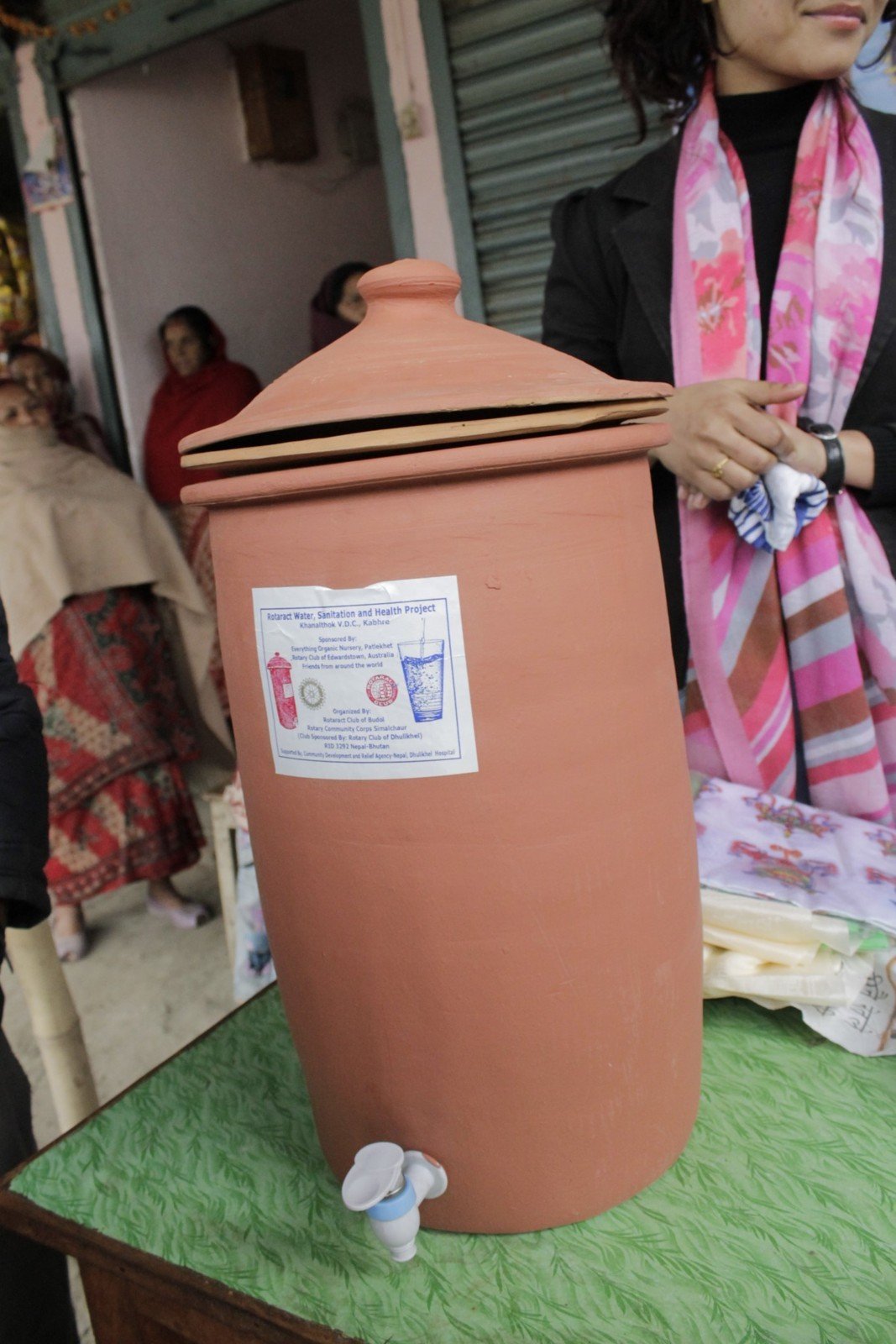
Some ceramic filters work by gravity, with water added to an upper vessel and collected below. Others are cartridges in a different system. The permitted source water, flow, cleaning and seals depend on the assembly, not simply on the ceramic element.
For a gravity unit, ask how much treated water you need at busy times and how much can be collected under the stated operating conditions. A quoted output doesn’t mean the reservoir refills instantly after everyone fills a bottle. Check whether the collection vessel has enough useful capacity and whether the household can refill and clean it comfortably.
A slow flow also isn’t a safety certificate. It may reflect the design, accumulated material or a maintenance problem. Likewise, faster flow after an element is damaged isn’t a welcome performance upgrade. Judge behavior against the manufacturer’s instructions and stop using damaged parts rather than treating any available flow as acceptable.
Compare ownership rather than one purchase price
Include the element’s replacement price, permitted cleaning cycles, normal output and time needed for care. A gravity-fed unit may suit a small household that accepts slow output. It may be inconvenient when several people want to refill bottles together.
A useful purchase question is whether the system can deliver the amount of treated water your household uses while following every maintenance limit. If the answer requires skipping cleaning or extending cartridge life, choose a different arrangement.
Ceramic is a construction choice. The verified claim, condition of the barrier and care of the clean-water container determine whether that choice fits your water problem.
The difference between particle ratings is useful background when a ceramic specification lists only microns.