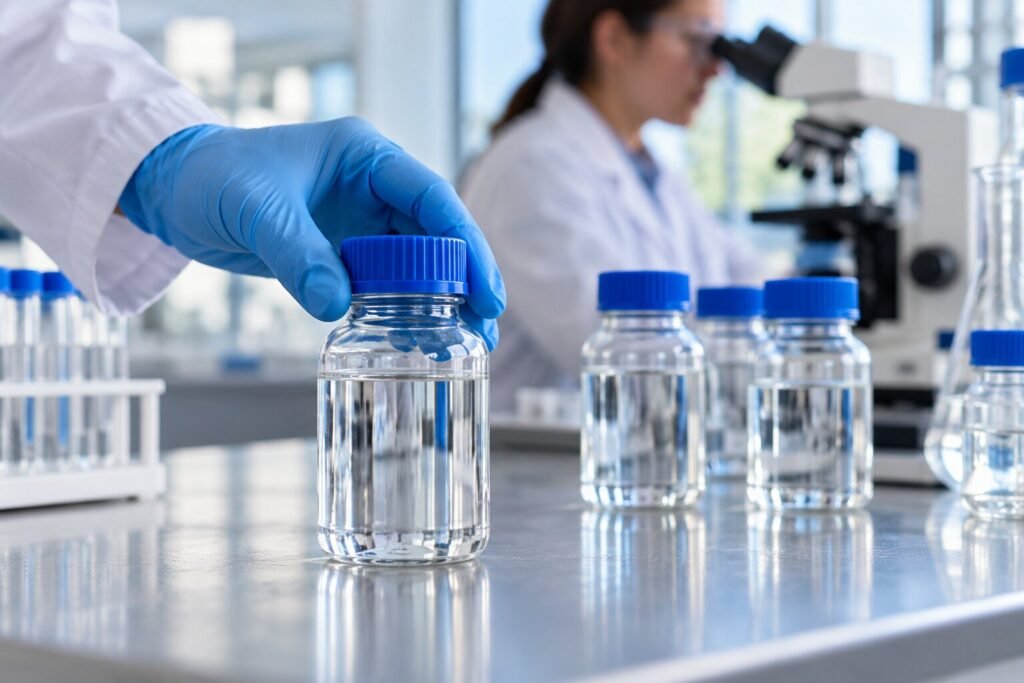
Choose a drinking-water laboratory that is appropriately certified for the analyses you need, then confirm its collection and delivery requirements before buying a sample kit. A broad claim of accreditation or a large menu of tests doesn't by itself establish that every analysis fits your question.
EPA maintains links to state drinking-water certification programs and certified laboratory information. Start with the relevant state program rather than assuming that the first search result is the appropriate service.
Define the question before the panel
Tell the laboratory whether you use public water or a private well and what you need to investigate. A routine well check, a lead concern involving household plumbing, and a specific contamination event may need different analyses and procedures.
CDC recommends at least annual well testing for total coliforms, nitrates, total dissolved solids and pH, plus locally relevant concerns. Your health department can help decide what else belongs in the panel.
Don't choose by the longest analyte list alone. Ask which results would inform the decision and which questions the panel doesn't answer. A hardness test doesn't establish that microbes are absent.
Verify the relevant certification
Use the EPA state-program directory to find current information. Confirm the laboratory's certification and the relevant scope through the appropriate state program.
Ask about the exact analysis rather than assuming certification covers every substance listed on a website. If work will be sent to another laboratory, ask who performs it and how that affects certification, timing, and reporting.
For a regulatory, property-sale, or other formal requirement, confirm what the receiving authority accepts before arranging collection. The laboratory and authority should clarify the applicable conditions, not a generic blog checklist.
Check the practical logistics
Ask which bottles are supplied, whether preservatives are present, who may collect the sample, and what delivery window applies. Confirm opening hours and arrangements for shipping or drop-off.
Don't rinse a prepared bottle or discard a preservative unless the laboratory directs you to do so. The exact procedure depends on the analysis. Our sample delivery guide helps organize the plan without replacing the laboratory's instructions.
If several analyses require different containers or handling, keep them clearly identified. Arrange the logistics before opening the kit so a sample isn't left waiting while you search for a courier.
Compare two laboratory offers without losing the test you need
Suppose one offer includes a broad minerals panel and another names the particular contaminant you are investigating. More analytes aren’t automatically a better fit. Confirm that the relevant analysis is included and that the laboratory’s current certification covers it for the purpose of your test.
A practical comparison keeps three questions together. Can this laboratory perform the required analysis, can you collect and deliver the sample correctly, and who will explain the result? A convenient location may matter, but it cannot replace the first question.
- Ask for the exact analyte name and certification scope, not just a general accreditation statement.
- Check the supplied bottles, preservatives and whether homeowner collection is permitted.
- Confirm holding time, drop-off hours and any shipping arrangement before ordering.
- Ask whether collection, delivery, rush work and interpretation have separate charges.
If the service includes collection at your home, identify the outlet and whether it is before or after treatment. If you plan to collect yourself, ask what to do when a timing or handling requirement cannot be met. Reporting a deviation gives the laboratory a chance to assess or repeat the sample rather than presenting uncertain work as a normal result.
Keep the certification check and service quote with the final report. That record is especially useful if a later treatment provider requests a different analysis and you need to see what the original panel actually measured.
Compare the full service
Ask whether the quoted price includes bottles, shipping, collection assistance, the complete report, and interpretation. A lower panel price can mean a different service rather than the same service at a discount.
Confirm the expected reporting time and what happens if a sample is rejected or needs recollection. Don't confuse a promised turnaround with a guarantee that every sample arrives in an acceptable condition.
If the result may affect immediate water use, ask who will contact you and who can advise on the next steps. A laboratory report and public-health advice serve related but different purposes.
For the budget, compare well-test laboratory charges and sampling-visit costs as separate line items. Keep the named analytes, report purpose, collection and delivery requirements beside each quoted price.
Read the report without losing context
Save the collection date, location, treatment status, units, detection information, and any qualifications. Our lab-report guide explains how to keep those details together.
A not-detected result means the reported substance wasn't detected under the stated method and reporting conditions. It doesn't establish that every possible contaminant is absent. Likewise, one treated-tap result doesn't describe all untreated outlets.
Keep the laboratory's contact and the procedure with the result. The right laboratory is useful not just for producing a number, but for helping you collect a sample that answers the question you actually have.